When to Clean Out Bird Houses: A Practical Guide
Discover the best times to clean out bird houses, safe cleaning methods, and maintenance tips to support healthy nesting seasons for backyard birds.


Clean out bird houses after nesting ends and before the next brood arrives. Target late winter to early spring, or 6–8 weeks after the last fledglings. Gather gloves, a small scoop, a stiff brush, and a mild cleaning solution; rinse, dry thoroughly, and inspect for damage before rehanging. If conditions delay cleaning, wait until temperatures stay above freezing for safe drying.
When to clean out bird houses
Knowing when to clean out bird houses is essential for both bird welfare and yard hygiene. The timing isn’t universal; it depends on climate, species, and local nesting cycles. According to Cleaning Tips, the best window aligns with post-nesting downtime and preparations for a fresh brood. A practical rule is to target the period after the last birds depart but before new eggs are laid. In many regions this means late winter to early spring, yet you should adjust for local conditions. Cleaning Tips analysis shows that sticking to a consistent cleanup schedule helps reduce pest access and supports healthier nesting. If weather delays cleanup, plan for dry spells with daytime temperatures above freezing so moisture can dry quickly and mold risks are minimized. When choosing a date, consider species: some birds are sensitive to disturbance; avoid cleaning during peak breeding for sensitive species. Finally, document your schedule so the habit becomes part of annual yard care.
Including the phrase when to clean out bird houses naturally here reinforces the key timing concept and helps searchers understand the practical window for action.
Tools and materials you’ll need
Before you start, gather a few essential tools and supplies to make the job efficient and safe. Protective gloves prevent soil and nest residue contact, while a small nest scoop helps remove debris without disturbing any hidden eggs. A stiff brush is ideal for scrubbing interior surfaces, and a mild, unscented cleaning solution (such as a vinegar-water mix) sanitizes without toxic fumes. Keep a bucket, paper towels, and clean water on hand for rinsing. If you’ll be cleaning above ground, a stable ladder or platform is useful but not required for ground-level boxes. Optional items like a spray bottle can help apply the cleaning solution, and weatherproof sealant may be used later for repairs after the box dries. Always work in a well-ventilated outdoor area and wear breathable clothing to stay comfortable during the cleanup.
This section sets expectations for the gear you’ll need and emphasizes safety and cleanliness as you prepare to tackle the task.
Step-by-step overview
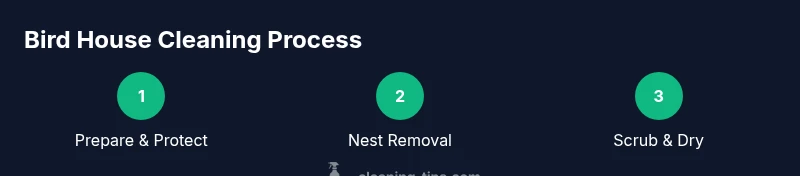
The cleaning process can be organized into a clear flow to minimize disturbance to wildlife and maximize safety. Start with preparation, then remove old nesting material, scrub interior surfaces, rinse, and thoroughly dry the box. Inspect for cracks, loose hinges, or weathering, and perform simple repairs as needed. Finally, reassemble, reinstall at an appropriate height and orientation, and store tools for next season. This overview frames the detailed steps that follow and keeps you focused on a methodical, bird-friendly approach.
Safety and best practices for outdoor bird houses
Outdoor bird houses present exposure to weather, pests, and mold. Always wear gloves and eye protection during cleaning to shield against dust and droppings. Use non-toxic cleaning solutions and avoid aggressive chemicals that could harm birds or degrade wood over time. Do not attempt to clean boxes while active nests or eggs are present; wait for the nesting cycle to complete. If you encounter wasps, bees, or other stinging insects, back away and handle the box only after consulting local wildlife guidelines. Ensure the area is dry and the box is allowed to dry fully before rehang, as lingering moisture invites mold and mildew. Finally, consider seasonal maintenance such as applying a non-toxic, water-based sealant after drying to extend the life of the house.
Inspection and maintenance after cleaning
After cleaning and drying, inspect the bird house for signs of wear, cracks, or rot. Tighten any loose screws, reseal weathered joints, and replace damaged hardware. If the wooden box shows significant deterioration, replacements may be more reliable than repairs. Repainting or refinishing should use non-toxic paints and be done only when the box is fully dry and birds are not present. Rehang the box in a sunlit location with some shade to balance temperature, ensure proper drainage, and keep entry holes clear of debris. Finally, document any repairs or replacements for future reference so you know when a box needs more substantial upkeep.
Encouraging safe re-use and year-round care
To promote healthy nesting seasons, schedule annual checks that align with local bird activity and climate. Clean then inspect, repair, and test-fit the box’s mounting to prevent wobble or predator access. Use predator guards on poles and ensure the box is mounted at the recommended height for your species. Keep a small toolkit handy for quick fixes between seasons, and store cleaning supplies away from children and pets. By establishing a routine, you reduce the risk of disease and increase the likelihood of successful brood cycles for local birds.
Tools & Materials
- Protective gloves(Nitrile or thick garden gloves; avoid thin latex for durability)
- Nest removal scoop or small trowel(For removing nests and debris without scraping wood)
- Stiff brush(Wire or stiff-bristled bottle brush works well)
- White vinegar(Dilute 1:1 with water for a mild disinfectant)
- Water(For rinsing and diluting cleaners)
- Unscented mild soap(Optional; can help remove oil or sap)
- Paper towels or disposable rags(For drying and cleaning up residue)
- Spray bottle(Helpful if applying a vinegar solution)
- Ladder or stable platform(Use safely if boxes are mounted high)
- Weatherproof sealant (non-toxic)(Apply after drying if you notice wear)
Steps
Estimated time: 60-120 minutes
- 1
Prepare and protect
Put on gloves and gather tools. Set up a clean outdoor workspace with good ventilation and shade if possible. This reduces the chance of accidental contamination and helps you work efficiently.
Tip: Lay down a drop cloth to catch debris and make cleanup easier. - 2
Remove old nest material
Carefully take out nest debris and any material that has broken down inside the box. Place it in a sealed bag for disposal and avoid crushing fine particles that could become airborne.
Tip: Inspect for signs of pests while removing material. - 3
Scrub interior surfaces
Scrub all interior surfaces with the stiff brush and a mild solution (vinegar-water or soap-water). Focus on corners and perches where grime tends to accumulate.
Tip: Rinse away loosened debris with clean water before drying. - 4
Disinfect lightly
Apply a diluted vinegar solution or mild soap to minimize pathogens. Avoid full-strength bleach and steam clean only if box is fully dry afterward.
Tip: Never oversaturate wood; excess moisture can damage the box. - 5
Rinse and dry thoroughly
Rinse interior and exterior with clean water and wipe dry with towels. Allow the box to dry completely in a sunny, breezy spot before reinstalling.
Tip: Open doors or remove lids to speed dry time. - 6
Inspect for damage
Check for cracks, warped wood, loose screws, or rot. Replace or repair as needed using non-toxic materials and hardware.
Tip: Fix any structural issues before re-hanging to prevent future problems. - 7
Rehang with care
Position the box at the recommended height and orientation for the target species. Ensure ventilation and drainage are unobstructed.
Tip: Consider predator guards and stable mounting to reduce tampering. - 8
Store tools and record
Store cleaning supplies safely and note any repairs or replacements for next season. A quick log helps maintain consistency.
Tip: A simple checklist can save time year after year.
Questions & Answers
When is the best time to clean out bird houses?
The best time is after nesting is finished and before new broods begin, typically late winter to early spring depending on your region. Avoid cleaning during active nesting to prevent disturbing birds.
Clean after nesting ends and before the next brood, usually late winter to early spring, depending on your area.
What cleaners are safe for bird houses?
Use mild, unscented cleaners such as a vinegar and water solution or a small amount of unscented soap. Avoid strong chemicals and never spray pesticides near birds.
Use a vinegar-water mix or mild soap; avoid strong chemicals near birds.
How should I dry the box after cleaning?
Dry the interior and exterior thoroughly in a sunny, breezy area. Remove any moisture from joints and ensure there is good airflow before rehanging.
Let it dry completely in sun and air before rehang.
What if I find mold inside the box?
Scrub with a mild solution, rinse, and dry completely. If mold persists or the wood is damaged, consider replacing the box.
Clean, rinse, and dry; replace if mold returns or wood is damaged.
Should I repaint or seal the bird house?
Use non-toxic, water-based paint or sealant only when the box is fully dry and outside of nesting season. Avoid sealing entrance holes.
Use non-toxic finishes and only when dry; don’t seal the entrance.
Can I clean multiple boxes at once?
Yes, as long as you have enough space, ventilation, and time. Treat each box separately to prevent cross-contamination and ensure thorough drying.
Yes, but handle each box one by one to stay thorough.
Watch Video
The Essentials
- Plan cleanup after nesting ends.
- Use safe, non-toxic cleaners.
- Inspect and repair promptly.
- Rehang at species-appropriate height.