Clean Restaurant: A Step-by-Step Cleaning Guide
Learn a practical, step-by-step approach to keeping a restaurant clean, safe, and compliant. This guide covers zoning, daily routines, weekly deep cleans, and staff training for a spotless kitchen and dining area.


By following a zoned cleaning plan, you will establish a clean restaurant that meets safety standards and delights guests. Start with a defined kitchen layout, assign color-coded tools, and create daily, weekly, and monthly tasks. This step-by-step approach helps you train staff, track progress, and maintain consistent sanitation across every area of the operation.
Why clean restaurant matters
According to Cleaning Tips, a clean restaurant is the foundation of safe service, customer trust, and compliant operations. When sanitation is overlooked, minor spills can become bigger health risks, and minor odors can become deterrents for patrons. A clean restaurant signals professionalism and care, which boosts guest confidence, repeat visits, and positive word-of-mouth. Health inspectors look for visible cleanliness, proper storage, and documented procedures; meeting these expectations reduces the risk of violations and shutdowns. Beyond compliance, cleanliness also protects staff by reducing slip hazards, exposure to allergens, and cross-contamination between raw and ready-to-eat foods. In practice, a systematic approach—daily wipe-downs, routine sanitizing, and regular deep cleans—creates a healthier dining environment. The Cleaning Tips team emphasizes that consistency matters more than intensity, and that small, repeatable actions build lasting habits across shifts as staff rotate in and out.
Key sanitation principles for restaurants
The core of a clean restaurant rests on consistent sanitation—both cleaning and sanitizing. Start by separating cleaning from sanitizing where possible, and always follow the label instructions for any sanitizing product. Prioritize food-contact surfaces and high-touch areas (think doors, handles, prep counters) where contamination risk is highest. Use clean, color-coded tools for different zones to prevent cross-contamination, and ensure surfaces are visibly clean before applying sanitizers. Monitor contact times per label and rotate cleaners to avoid residue buildup. Training should emphasize hygiene basics: hand washing, preventing cross-contact, proper storage, and avoiding the reuse of dirty towels. A practical mindset is to perform quick daily checks before service and more thorough weekly tasks, reinforcing habits that protect both guests and staff.
Layout and zoning for efficient cleaning
Create distinct zones within the kitchen, dining area, bar, and restrooms to minimize cross-contamination. Establish clean zones for ready-to-eat surfaces and a separate area for raw-food handling, with color-coded tools and cloths assigned to each zone. Plan cleaning routes to avoid backtracking—clean from the top down and from back-of-house toward guest areas. Proper layout also means investing in accessible storage, clearly labeled bins, and a rotating schedule that ensures no area is neglected. When zones are well defined, staff can perform faster, more consistent cleaning and inspections become routine rather than reactive.
Cleaning checklist by area
A practical, area-based checklist helps ensure nothing is missed. In the kitchen, start with air vents and light fixtures, then sanitize prep surfaces, cutting boards, and utensils after each use. In the dining area, wipe tables and chairs, sanitize high-touch surfaces, and sweep and mop floors daily. In the restrooms, disinfect toilets, sinks, and floors multiple times per shift. End-of-day tasks include emptying trash, restocking towels, and securing cleaning supplies. A weekly deep clean should target ovens, hoods, and drains, while shelving and stored food containers receive periodic sanitization. Keep a central log of completed tasks and adjust the routine as needed based on inspections and guest feedback.
Tools, supplies, and safe cleaners
Stocking a reliable toolkit is essential for consistency. Use color-coded microfiber towels and cloths to prevent cross-contamination, along with color-coded mops and buckets. Prepare spray bottles with food-safe cleaners and EPA-registered sanitizers and keep SDS sheets accessible. Gloves, aprons, and eye protection should be available for staff, and a central cleaning cart simplifies trips between zones. For heavy lifting and floor care, include brushes, squeegees, and a sturdy mop. If you use bleach or potent disinfectants, ensure proper ventilation and correct dilution per the label. Finally, maintain an organized inventory so supplies are always in reach and never used beyond their shelf life.
Training staff and maintaining consistency
A clean restaurant relies on trained, accountable teams. Start with an onboarding program that covers zone definitions, cleaning sequences, and safety protocols. Use short, hands-on demonstrations and checklists to reinforce routines, then schedule regular audits and feedback sessions. Encourage staff to own parts of the cleaning process, rotate duties to prevent boredom, and reward consistent performance. Document all tasks and keep a visible log so supervisors can spot gaps quickly. Regular refreshers help prevent complacency and promote a culture of cleanliness that protects guests and employees alike.
Authority sources and practical references
For authoritative guidance, consult government and university resources on food safety and workplace hygiene. Useful references include regional health departments and national agencies. This section captures general best practices from reputable outlets to support your restaurant cleaning program and provide a framework for audits and training.
Weekly cleaning schedule example
A practical weekly schedule ensures deep cleaning happens consistently without overwhelming staff. Assign days to focus on high-risk areas, like ovens and hoods, and balance tasks across shifts. A sample plan might include: Monday — wipe down walls and vent covers; Tuesday — deep clean ovens; Wednesday — sanitize shelves and storage containers; Thursday — floor scrubbing and mopping; Friday — restroom sanitization; Saturday — drain and grease trap checks; Sunday — rest and light touch-ups. Adapt this cadence to your operation size, and document compliance in a shared log.
Tools & Materials
- Color-coded microfiber towels(Different colors for different zones to prevent cross-contamination)
- Mops with washable heads(Color-coded heads, replace regularly)
- Buckets with wringer(One per zone or color-coded per policy)
- Spray bottles with food-safe cleaners(Label with zone color and dilution ratios)
- EPA-registered sanitizers(Follow label contact times and concentrations)
- Gloves (nitrile recommended)(Size-graded and readily accessible)
- SDS binder and safety data sheets(Keep accessible near cleaning station)
- Thermometer or test strips(Optional for sanitizer concentration checks)
- Brushes, squeegees, and floor pads(For floors, drains, and grouting)
Steps
Estimated time: Total program time varies by operation size: daily tasks typically 20–40 minutes per shift, weekly deep-clean sessions 2–4 hours, and monthly maintenance 4–6 hours.
- 1
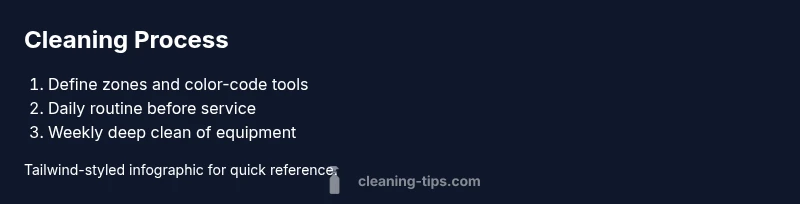
Define zones and color-code tools
Map kitchen, dining, bar, and restrooms into clear zones. Assign colors to surfaces and implements so staff always use the correct tools in each area. This upfront step prevents cross-contamination and streamlines training.
Tip: Post the color scheme near the entry and on the cleaning cart. - 2
Create a formal cleaning schedule
Draft daily, weekly, and monthly tasks with assigned staff and specific time blocks. A written plan reduces guesswork and ensures consistent coverage across shifts.
Tip: Publish the schedule where all staff can see it and update it after inspections. - 3
Assemble and label cleaning kit
Gather tools and cleaners in a centralized cart. Label bottles and cloths by zone, and ensure SDS sheets are available for every product used.
Tip: Keep a quick-reference label chart on the cart for new hires. - 4
Start daily kitchen cleaning routine
Begin with high surfaces, then wipe and sanitize food-contact areas after preparation and before service. Move methodically across zones in a top-to-bottom, left-to-right pattern.
Tip: Work from the back of the house toward guest areas to limit cross-traffic. - 5
Close out with end-of-day cleaning
Complete a thorough wipe-down, sanitize floors, empty trash, and secure all chemicals. Verify that towels and rags are laundered and stored properly.
Tip: Lock cleaning supplies and secure access to chemicals at the end of each shift. - 6
Perform weekly deep clean
Target ovens, hoods, vents, drains, and shelving with appropriate cleaners. Rinse thoroughly and document any equipment wear.
Tip: Use non-abrasive cleaners on stainless steel to prevent scratching. - 7
Monthly maintenance and audits
Inspect equipment, replace worn brushes and cloths, and review cleaning logs. Use findings to adjust schedules and training.
Tip: Keep an audit checklist and celebrate improvements with the team. - 8
Train staff and maintain accountability
Onboard new employees with zone-based training, conduct periodic refreshers, and use peer checks to sustain performance.
Tip: Involve staff in reviews to foster ownership and accountability.
Questions & Answers
What is the most important area to clean in a restaurant?
The kitchen workspace and food-contact surfaces are the top priority. Regular cleaning and sanitizing of prep counters, cutting boards, and utensils reduce contamination risk and help maintain safe service.
In a restaurant, focus first on the kitchen and any surfaces that touch food.
How often should a restaurant perform deep cleaning on equipment?
Deep cleaning of heavy equipment like ovens, hoods, and drains should occur on a weekly or monthly schedule depending on usage and local health guidelines. Maintain records to demonstrate compliance.
Deep clean equipment weekly or monthly based on use and local rules.
Do I need to hire a professional cleaner for a restaurant?
Not always. A well-planned in-house cleaning program can handle daily and weekly tasks, while professionals can handle specialized deep cleans or complex equipment maintenance.
In many cases, an in-house program suffices, with professionals for deep cleans as needed.
What should a cleaning log include for inspections?
The log should include date, area cleaned, tasks performed, responsible staff, and any notes about issues or required follow-up. Visual photos can help during inspections.
Keep a date-stamped record of what was cleaned, by whom, and when.
Where can I find approved sanitizers for food-contact surfaces?
Consult local health department guidelines and product labels for approved sanitizers safe for food-contact surfaces. Maintain a list of compliant products and ensure proper dilution and contact times.
Check local guidelines and product labels for approved sanitizers and proper usage.
Watch Video
The Essentials
- Define zones to minimize cross-contamination.
- Use color-coded tools for quick, error-free cleaning.
- Set a clear daily/weekly/monthly cleaning cadence.
- Train staff thoroughly and keep logs for audits.
- Regular audits drive consistent, long-term cleanliness.