Clean Commercial Cleaning: Best Practices for Facilities
A comprehensive step-by-step guide for cleaning in commercial environments. Learn to plan, equip, and execute effective cleaning programs while meeting health standards, trusted by Cleaning Tips.


Learn how to implement clean commercial cleaning in a real-world facility, including setting standards, choosing tools, scheduling tasks, and verifying results. Prepare a sanitation plan, staff training, and simple quality checks to keep high-traffic areas, offices, lobbies, and restrooms consistently spotless. This guide provides a practical, step-by-step process with safety considerations.
Understanding the goals of clean commercial cleaning
Effective clean commercial cleaning starts with clear objectives: health, safety, aesthetics, and operational continuity. According to Cleaning Tips, a well-defined program reduces downtime and protects occupants by focusing on high-touch surfaces, controlled disinfectant use, and consistent methods across shifts. In commercial environments—offices, lobby areas, restrooms, kitchens—cleaning is more than appearance; it's a risk-control measure that supports business operations and brand reputation. This section explains why setting measurable goals matters and how to translate them into actionable standards that guide every cleaning task, from daily wipe-downs to periodic deep cleans. By documenting targets for dust control, grime removal, and sanitizer effectiveness, managers create a framework that frontline teams can follow with confidence.
Additional guidance emphasizes balancing speed with thoroughness. When cleaners understand why a task matters (for example, reducing slip hazards in entryways or lowering bacterial load on door handles), they apply judgment consistently across shifts while still following a defined standard. The result is not just cleaner surfaces but a healthier, more reliable workplace experience, which in turn supports occupant well-being and business performance.
Designing a scalable cleaning program for facilities
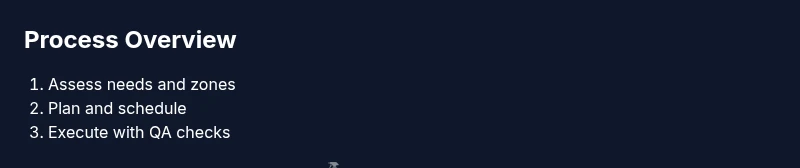
A scalable program aligns with facility footprint, occupancy patterns, and service-level expectations. Start with a facility map dividing spaces into zones (high-traffic, shared, private) and establishing standard operating procedures for each. Use color-coded checklists and simple metrics to track coverage and outcomes. The Cleaning Tips team emphasizes modular design: you should be able to add or compress routines as enrollments, events, or seasonal use change. This approach helps you maintain consistent cleanliness across multiple sites while keeping training and supply chains manageable.
To scale effectively, build in flexibility: define core tasks that never change, then add optional tasks for peak periods or special events. Documenting the rationale for each task helps new staff understand why certain steps exist and how to adapt when staffing or products are limited. A scalable program also supports audits and compliance by providing repeatable, auditable processes that supervisors can monitor remotely or in-person.
Room-by-room workflows: office areas, restrooms, lobbies, and break rooms
Workflows should be tailored to each room type while maintaining consistency. For offices, daily touch-point cleaning (phones, keyboards, desks) reduces contamination risk, with weekly deep cleans for upholstery and vents. Restrooms require a tighter schedule: cleaning and disinfection of toilets, sinks, faucets, and floors with validated contact times. Lobbies demand high-visibility cleaning to preserve first impressions, including glass, floors, and seating areas. Break rooms benefit from daily surface wiping, appliance cleaning, and waste removal to prevent cross-contamination from food-related residues. A well-defined room-by-room workflow minimizes confusion and ensures every area receives appropriate attention, regardless of staff shifts or unexpected coverage gaps.
Choosing tools, chemicals, and safety practices
Tools and chemicals should support both efficacy and safety. Choose EPA-registered disinfectants and surface-appropriate cleaners, paired with color-coded microfiber cloths and mops to prevent cross-contamination. Safety practices include wearing gloves and eye protection, ensuring proper ventilation, and storing chemicals in labeled cabinets away from food areas. Always follow label directions for dilution, contact time, and maximum usage. Keeping SDS readily accessible helps staff make quick, informed decisions during busy shifts. Integrating safety data with your scheduling ensures that high-risk tasks are performed with the right protective measures in place.
Training, onboarding, and supervision for consistency
Effective cleaning programs rely on well-trained teams. Develop a structured onboarding process that covers product use, zone-specific procedures, PPE, and safety protocols. Regular refresher trainings reinforce standard methods and introduce updated products or procedures. Supervisors should conduct random checks and provide constructive feedback, reinforcing consistency across shifts. A clear escalation path for concerns—such as product shortages or equipment failures—keeps the program running smoothly and reduces downtime.
Quality assurance, documentation, and continuous improvement
Quality assurance involves simple, repeatable checks and transparent reporting. Use checklists to document completion, surface cleanliness, and any deviations from the standard. Regular data reviews identify patterns, enabling pre-emptive maintenance or retraining. Continuous improvement means updating SOPs to reflect new products, emerging pathogens, or changing facility needs. Communicating updates to staff and stakeholders maintains alignment and trust across the organization.
Common challenges and mitigation strategies
Facilities often face staffing variability, supply shortages, and changing occupancy. Mitigation starts with robust SOPs, cross-training, and contingency plans for absences. Stock essential consumables and maintain a rotating schedule to prevent backlogs. When disruptions occur, prioritize high-risk zones (restrooms, entrances) and communicate clearly with occupants about any temporary adjustments to routines. By anticipating obstacles and keeping lines of communication open, you can sustain high cleaning standards even under pressure.
Tools & Materials
- All-purpose cleaner(Low-residue formula suitable for multiple surfaces)
- EPA-registered disinfectant(Follow label for contact time (e.g., 1-5 minutes))
- Microfiber cloths (color-coded)(Different colors per zone to prevent cross-contamination)
- Mops and buckets(With wringer; use replaceable pads)
- Squeegees and window brushes(For glass surfaces and mirrors)
- Personal protective equipment (gloves, goggles, apron)(Use nitrile gloves; replace if torn)
- Chemical safety data sheets (SDS)(Keep accessible to staff)
- Trash bags (biohazard where applicable)(Sturdy bags; seal after use)
- Wet floor signs(Place during cleaning and drying times)
- Ventilation options (fans, vents)(Aid drying and odor control)
Steps
Estimated time: 2-4 hours
- 1
Define cleaning standards and scope
Set clear targets for each zone (high-traffic, shared, private) and for surfaces (touchpoints, floors, glass). Document expected outcomes and acceptable cleanliness levels. This creates a uniform baseline across shifts.
Tip: Link standards to health and safety goals; this helps frontline staff prioritize tasks. - 2
Map facility zones and create schedules
Create a zone map and assign tasks to each zone with frequency. Use color codes to reflect priority and integrate with a master cleaning calendar.
Tip: Publish schedules in a shared digital tool accessible by supervisors and cleaners. - 3
Select and prep tools and chemicals
Choose approved cleaners and disinfectants; verify dilution and contact times. Prepare color-coded cloths and labeled storage; ensure PPE is stocked and reachable.
Tip: Keep a small on-site SDS binder and review it with all new staff. - 4
Develop zone-specific procedures
Write step-by-step SOPs for each zone that cover surface cleaning, disinfecting, and drying. Include any sequence: dusting before wiping, then mopping, then polishing where applicable.
Tip: Follow the 'clean from top to bottom' principle to prevent recontamination. - 5
Train staff and assign roles
Conduct hands-on training, verify understanding with quick checks, and assign clear roles for each shift. Include safety, product use, and reporting procedures.
Tip: Use color codes and laminated quick-reference guides in each area. - 6
Execute tasks according to schedule
Perform cleaning in the planned order, allow proper contact times for disinfectants, and document completion. Communicate any deviations to supervisors.
Tip: If time constraints arise, prioritize high-risk zones first. - 7
Record outcomes and quality checks
Log completed tasks, surface scores, and any issues. Use a simple scoring rubric to flag missed areas for follow-up.
Tip: Close the loop by reviewing logs in weekly meetings. - 8
Review, update, and communicate changes
Regularly review SOPs, incorporate feedback, and update training material. Communicate changes to staff and stakeholders to maintain alignment.
Tip: Set quarterly reviews for continuous improvement.
Questions & Answers
What is the difference between cleaning and disinfecting in a commercial setting?
Cleaning removes dirt and grime, while disinfecting kills pathogens on surfaces. In commercial spaces, both steps are essential, with disinfection typically following thorough cleaning and requiring proper contact times as specified on product labels.
Cleaning removes dirt; disinfecting reduces pathogens after cleaning. Use the product as directed and allow the recommended contact time.
How often should restrooms be cleaned in an office building?
Restrooms should be cleaned and disinfected at least twice daily, with more frequent service during peak occupancy. High-use days may require additional touch-point cleaning and inspections.
Aim for two daily cleanings, increasing as needed during busy periods.
What training should new cleaners receive?
New cleaners should receive safety training, product usage instructions, zone-specific SOPs, and hands-on practice with supervision. Regular refreshers help maintain consistency and safety.
Provide safety, product use, and SOP training, plus periodic refreshers.
What is the typical contact time for disinfectants?
Disinfectants require specified contact times on their labels, commonly ranging from 30 seconds to 10 minutes. Do not rinse off prematurely unless the label allows it.
Follow the label for contact time; don’t rinse early unless directed.
How can I measure cleaning effectiveness?
Use simple proof-of-clean checklists, periodic surface swab if feasible, and occupant feedback. Track trends over time to identify gaps and drive improvements.
Use checklists, gather feedback, and monitor trends to improve.
Are green cleaning products effective in commercial spaces?
Green products can be effective when chosen correctly and used as directed. Ensure they meet performance requirements for the surfaces and pathogens you target, and follow any label-based safety guidelines.
Green products can work well if they’re appropriate for the surfaces and used as directed.
Watch Video
The Essentials
- Define clear standards and zone-based tasks.
- Invest in durable, color-coded tools.
- Train staff thoroughly and document tasks.
- Track results and adjust plans regularly.
- Prioritize safety and communication throughout.