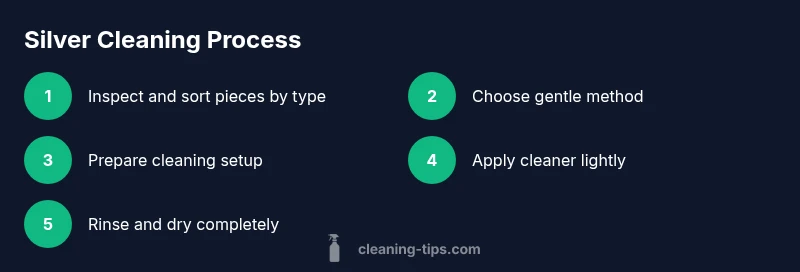
How Do We Clean Silver: A Practical Cleaning Guide
Learn safe, effective methods to clean silver, from tarnish removal to routine maintenance. This Cleaning Tips guide covers home remedies, polish options, and storage tips to keep silver bright and protected.


To clean silver effectively, start with a gentle tarnish remover such as a baking-soda paste or a mild silver polish. Test on a hidden area first, avoid abrasive scrubbing, and rinse well with clean water. Dry completely and store in a dry, airtight container to slow future tarnish over time.
Why tarnish forms on silver and how it affects value and appearance
According to Cleaning Tips, tarnish forms when silver reacts with sulfur compounds in the air, especially in humid environments. This natural process creates a thin layer of silver sulfide that dulls shine and obscures fine details. Even when silver is stored carefully, gradual tarnishing can occur as pollutants and humidity fluctuates. Understanding the chemistry helps you pick cleaning methods that restore luster while protecting delicate finishes. In this guide, we will explore when tarnish is superficial and when a deeper cleaning may be warranted, and we’ll outline safe, practical steps for jewelry, flatware, and decorative pieces. By recognizing tarnish early and choosing the right method, you can extend the life and appearance of your silver collection.
Tools & Materials
- Soft microfiber cloth(For gentle drying and buffing)
- Non-abrasive silver polish(Optional for heavy tarnish on smoother surfaces)
- Baking soda(Used for paste or foil method; store in a dry place)
- Aluminum foil(Line container for the foil method; shiny side up)
- White distilled vinegar(Optional for certain gentle cleaning tricks; avoid on stones)
- Lukewarm water(Rinse and soak as needed; avoid hot water on delicate finishes)
- Soft brush or old toothbrush(For intricate engravings and crevices)
- Glass container or metal tray(Safe holding vessel during cleaning)
- Mild dish soap(For routine washing of household items only if needed)
Steps
Estimated time: 60-90 minutes
- 1
Inspect pieces and separate by type
Begin by inspecting each item to determine if it’s jewelry, flatware, or decorative. Separate gemstones or pearls from metal-only pieces, and set aside items with delicate engravings or patinas that require gentler handling. This minimizes the risk of accidental damage during cleaning.
Tip: Always handle silver with clean hands and avoid prolonged contact with oils from skin. - 2
Choose a cleaning method based on the piece
For most items, a gentle approach works best: either a mild polish or the baking-soda/foil method for tarnish. Jewelry with stones or pearls should usually avoid immersion; opt for a light polish with a soft cloth or a dedicated jewelry cleaner designed for stones.
Tip: Test any method on a hidden area before full cleaning. - 3
Prepare cleaning solution or setup
If using baking soda, line a shallow dish with aluminum foil and prepare hot water with a small amount of baking soda. For polishing, place a pea-sized amount of polish on a soft cloth and apply gently in small circular motions. Keep solutions away from electronic or wooden surfaces that may react.
Tip: Do not mix cleaners; never combine multiple chemical cleaners in one container. - 4
Apply cleaning technique to items
Dip a cloth or brush into the solution and apply gently to the silver, focusing on tarnished areas. For the foil method, submerge items so they touch the foil but do not stack them, allowing tarnish to transfer away from the surface.
Tip: Avoid scrubbing aggressively; friction can scratch delicate finishes. - 5
Rinse and inspect for remaining tarnish
Rinse with lukewarm water to remove cleaning residues. Inspect in good lighting; if dull spots remain, repeat the chosen method on those areas rather than re-cleaning the entire piece.
Tip: Rinsing fully prevents soap and residue buildup that dulls shine. - 6
Dry thoroughly and buff to shine
Pat dry with a clean microfiber cloth and then buff lightly to restore gloss. Ensure no moisture remains in crevices or engravings to prevent water spots and tarnish from forming again.
Tip: A soft puff of air from a hairdryer on cool can help dry intricate areas. - 7
Consider a protective storage plan
Store cleaned silver in a dry, airtight container or wrap in anti-tarnish paper to slow future tarnish. Include a desiccant pack where possible and avoid humid environments like bathrooms.
Tip: Avoid direct contact with rubber bands or latex; they can cause discoloration over time. - 8
For heavy tarnish or antiques, seek care
In cases of severe tarnish on antiques or pieces with historical finishes, consult a professional conservator. Aggressive polishing can remove patina or damage delicate details.
Tip: Document the piece’s condition before any professional treatment. - 9
Routine maintenance to prevent future tarnish
Develop a regular light cleaning schedule to avoid buildup. Wipe down after handling and store properly to minimize long-term tarnish and keep silver looking bright.
Tip: Consistency beats occasional heavy cleaning for most household pieces. - 10
Review and adapt your method
Different finishes (high-polish, matte, etched) respond differently to cleaners. Adjust your approach based on the finish and the age of the piece to prevent damage while maintaining shine.
Tip: When in doubt, start with the gentlest method and escalate if needed.
Questions & Answers
What causes silver to tarnish?
Tarnish forms when silver reacts with sulfur compounds in the air, producing silver sulfide that dulls shine. Humidity, air pollutants, and the presence of certain foods or cosmetics can accelerate this process. Regular, gentle cleaning helps maintain brightness without risking damage.
Tarnish happens when sulfur compounds react with silver in the air. Keeping pieces clean and dry slows this process.
Can I use toothpaste to clean silver?
Generally, toothpaste is not recommended for silver because it can be mildly abrasive and scratch delicate finishes. If you choose to use it, select a non-gel, non-abrasive toothpaste and test on a hidden area first.
Toothpaste can scratch silver, so avoid it unless you’ve tested a tiny area first.
Is the aluminum-foil method safe for all silver items?
The aluminum-foil method works well for many tarnished pieces, but avoid it on items with gemstones, pearls, or epoxy finishes. It’s also not ideal for heavily engraved or fragile antiques where abrasion could occur.
Foil cleaning isn’t perfect for every piece; skip it for gemstones or delicate antiques.
How often should I clean silverware?
For everyday silverware, a light wipe and quick buff every few weeks helps prevent tarnish. Deeper cleaning can be done monthly or as soon as tarnish appears, depending on storage and usage.
Clean lightly every few weeks to stay ahead of tarnish.
What should I do with heavily tarnished antiques?
Heavy tarnish on antiques may require professional conservator care to preserve patina and details. Avoid aggressive polishing that could erase historical finishes.
For antiques, consider a conservator to protect value and detail.
What’s the difference between silver plate and solid silver cleaning?
Silver-plated items have a thin layer of silver over another metal, so aggressive cleaning can wear away the silver layer more quickly. Solid silver requires gentler care to avoid scratches and preserve patina.
Plate items need gentler care since the silver layer is thinner.
Watch Video
The Essentials
- Choose gentle methods first to preserve patina and engravings
- Test cleaners on hidden areas before full cleaning
- Rinse, dry, and store properly to slow tarnish