Using Cleaning Vinegar in Laundry: Safe, Effective Tips
Learn how to safely use cleaning vinegar in laundry for odors, stains, and fabric softening. This guide covers dilution, fabric safety, and practical tips from Cleaning Tips to help you wash smarter.


You can use cleaning vinegar in laundry for odor control, stain pretreatment, and gentle fabric softening when used correctly. This quick answer outlines safe dilution ratios, where to apply vinegar, and fabrics to avoid. Follow the steps to add vinegar to wash cycles, pretreat stains, and rinse thoroughly to prevent odor or residue.
Is cleaning vinegar appropriate for laundry?
According to Cleaning Tips, cleaning vinegar (the standard household variety with about 5% acidity) can be a useful ally for certain laundry tasks when used correctly. The acidity helps break mineral odors and residues and can act as a mild deodorizer and fabric softener in some situations. However, it isn’t a universal fix: some fabrics, stains, and colors require extra care. Always check garment care labels before treating, and start with a patch test on an inconspicuous area. This article will walk you through when to use cleaning vinegar, how to dilute it safely, and practical best practices to minimize damage and maximize results. The guidance here is designed for homeowners and renters who want practical, low-cost solutions, with insights you can apply in everyday laundry routines.
How vinegar works in laundry
Vinegar is acetic acid in water, which can help break down certain kinds of residues and neutralize odors. In laundry, it can soften fibers slightly, reduce static, and dampen lingering smells from your wash. The effect is milder than commercial softeners or enzymatic stain removers, but for routine odor control and mild staining it can be effective. The Cleaning Tips Team notes that outcomes depend on fabric type, wash conditions, and the presence of other chemicals in the load. Because vinegar is acidic, it can alter pH balance in some fabrics, so avoid high-heat cycles and prolonged exposure on delicate fibers. This section lays the groundwork for safe usage and credible expectations.
Choosing the right vinegar and how to dilute
Use distilled white vinegar for most laundry tasks; it's clear and less likely to stain fabrics. Apple cider or other flavored vinegars may add color or scent that isn’t desirable in laundry. For dilution, a common approach is to mix in small quantities with water before applying to fabrics or adding to the washer. Keep measures conservative on delicate or dark fabrics. Cleaning Tips recommends starting with milder dilutions and testing on a hidden area before broader use. This section helps you pick the right product and dilution strategy to protect fabrics.
Pretreating stains with vinegar: practical steps
Pretreating with vinegar works best on mineral or mild organic stains. Prepare a diluted solution (for example, 1 part vinegar to 2–3 parts water) and apply it to the stain with a clean cloth or sponge. Let it sit for 5–10 minutes, then blot and rinse with cold water before washing as usual. Always perform a patch test first, especially on darker fabrics, to avoid color transfer. The goal is to lift or neutralize the stain without setting it. This section provides actionable, fabric-friendly pretreatment methods.
Adding vinegar to the wash cycle: when and how
Vinegar can be added during the wash to improve odor and lightweight softening. For a standard load, pour a small amount of diluted vinegar into the drum or dispenser during the main wash cycle. Do not pour concentrated vinegar directly onto fabrics. For loads with strong odors or hard water buildup, a slightly larger but still modest amount may be used. If your washing machine has a dedicated fabric softener compartment, you can place diluted vinegar there as an alternative to commercial softeners. This portion explains practical integration into your routine.
Odor control and fabric softening with vinegar
Vinegar helps neutralize odors by breaking down odor-causing molecules. It can provide a mild softening effect by reducing residue on fibers, though it’s not a guaranteed substitute for dedicated fabric softeners on all fabrics. If you notice a vinegar scent initially, it usually dissipates after a complete rinse cycle and proper drying. The goal is to leave clothes smelling fresh without overpowering fragrances. This section covers expectations and how to optimize results.
Fabric care and color safety: what to avoid
Not all fabrics tolerate vinegar equally. Avoid concentration on silk, wool, acetate, or delicate blends—these fibers can be sensitive to acidity. Never mix vinegar with bleach or hydrogen peroxide in the same load, as harmful gases can form. Always test on an inconspicuous area before broader use and use cool or warm water rather than hot for most loads. Cleaning Tips emphasizes conservative use and careful fabric assessment to prevent dye bleed or fabric damage.
Common mistakes and troubleshooting
Common missteps include using undiluted vinegar on fabrics, adding vinegar to bleached or chlorine-loaded loads, and skipping patch tests. If odor persists after washing, run an extra rinse or second wash cycle with diluted vinegar to ensure residues are removed. Troubleshooting tips include verifying water temperature compatibility with the garment, checking garment labels, and adjusting the amount of vinegar based on load size and soil level. The goal is repeatable results with minimal risk to fabrics.
Practical tips to incorporate vinegar safely into your routine
A simple routine can make vinegar use easy and predictable. Start with one load per week as you test fabrics, then gradually expand if results are positive. Keep vinegar in a clearly labeled bottle, away from heat, and never store near bleach. Record what works for your washer and fabrics so you can reuse a proven approach. Cleaning Tips advocates a cautious, data-informed approach to integrating vinegar into regular laundry care.
Tools & Materials
- Cleaning vinegar (5%–8% acidity)(Choose standard household cleaning vinegar; label should specify 5% acidity.)
- Regular liquid laundry detergent(For wash cycle and to help dissolve vinegar odor if needed.)
- Measuring cup (1 cup)(Use to dilute vinegar before applying to fabric.)
- Spray bottle(For applying diluted vinegar to stains or odors.)
- Color-safe cloth or sponge(Used to blot stains after treatment.)
- Leather gloves (optional)(Protect hands when handling concentrated products.)
Steps
Estimated time: 40-60 minutes
- 1
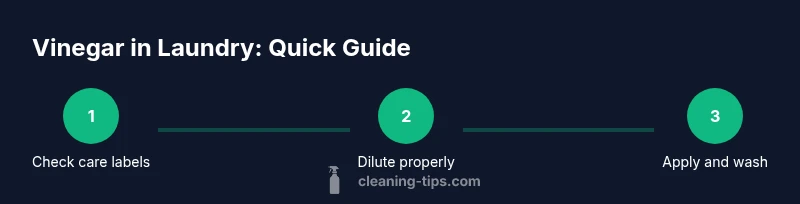
Check garment care labels
Begin by reviewing fabric care labels on each item. Some fabrics restrict acidity or require special washing conditions. If in doubt, test on a hidden seam with a small amount of diluted vinegar solution and observe for color fastness or distortion over 10 minutes.
Tip: Patch-testing on inconspicuous areas minimizes risk before broader application. - 2
Choose vinegar and prepare a safe dilution
Select distilled white vinegar for most loads to avoid color transfer. Prepare a mild dilution such as 1 part vinegar to 2–3 parts water for pretreatment, or a lighter dilution (1:4) for general odor control during washing.
Tip: Start with weaker dilutions and adjust based on fabric type and soil level. - 3
Patch test on an inconspicuous area
Before treating any stain or odor, apply the diluted solution to a hidden area and wait 5–10 minutes. If there’s any color change or texture change, discontinue use on that item.
Tip: Always err on the side of caution with delicate fabrics. - 4
Pretreat stains with diluted vinegar
Apply the prepared vinegar solution to the stain using a cloth or spray bottle. Allow 5–10 minutes for the solution to penetrate, then rinse the area with cold water before washing as usual.
Tip: blot gently to lift the stain rather than rubbing hard. - 5
Add vinegar to the wash cycle
Pour a small amount of diluted vinegar into the washing machine drum or dispenser during the main wash. Do not pour concentrated vinegar directly onto fabrics to prevent damage.
Tip: Consider adding a rinse cycle if your load has persistent odors. - 6
Consider an extra rinse for odor removal
If odors linger after the first wash, run an additional rinse cycle with diluted vinegar solution. This helps flush out residues and leaves fabric smelling fresher.
Tip: Extra rinsing is especially helpful in hard water areas. - 7
Use vinegar for fabric softening in the rinse
In some loads, a small amount of vinegar in the final rinse can reduce static and soften fibers. Do not rely on vinegar alone for all fabrics; some may respond better to dedicated softeners.
Tip: Avoid using with high-heat drying on delicate fabrics. - 8
Dry and review results
Dry the clothes as directed on the care label and evaluate odor, softness, and color. If any issues occur, revert to milder dilutions or discontinue use on that item and test again later.
Tip: Keep notes on which fabrics and dilutions worked best for future loads.
Questions & Answers
Can you use cleaning vinegar in laundry?
Yes, when diluted and used with care, vinegar can help with odors, mild stains, and fabric softening in many loads. Avoid delicate fabrics and always patch-test first.
Yes, you can use cleaning vinegar in laundry if you dilute it and test fabrics first.
Is vinegar safe for color-safe fabrics?
Generally safe in small amounts and proper dilution, but always patch-test and monitor colorfastness on each item.
Usually safe with dilution, but patch test first.
Where should vinegar be added in the wash?
Add diluted vinegar to the wash drum or dispenser during the main cycle; never pour concentrated vinegar directly on fabric.
Pour diluted vinegar into the drum or dispenser, not directly on fabric.
Can vinegar replace fabric softeners?
Vinegar can substitute in some cases for mild softening and odor control, but results vary; for hard-to-soften fabrics, a dedicated softener may perform better.
Sometimes, but not always.
What about mixing vinegar with bleach?
Never mix vinegar with bleach; combining them can release chlorine gas and irritants.
Never mix vinegar with bleach.
Does vinegar help remove stains?
Vinegar can help with some mineral or mild organic stains when diluted and used as a pretreatment; it isn’t effective for all stain types.
It can help some stains, but not all.
Watch Video
The Essentials
- Check fabric care labels before use.
- Dilute vinegar; never apply neat to fabrics.
- Patch test and start with mild dilutions.
- Use vinegar for odors and mild stains, not all stains.
- Never mix vinegar with bleach.