How to Do Dry Clean at Home: A Practical DIY Guide
Learn how to do dry clean at home safely using consumer kits, spot treatments, and fabric care tips. This step-by-step guide covers tools, steps, safety, and maintenance for lightly soiled garments.


This guide helps you learn how to do dry clean at home using consumer kits, spot treatment, and fabric care tips. You'll identify which fabrics are suitable, prepare your workspace, select the right kit, and run a safe, controlled cycle. Expect refreshed clothes, reduced odors, and a professional-like result with careful steps.
What is DIY dry cleaning at home and when to use it
Dry cleaning at home is a practical option for refreshing garments between professional cleanings. In many households, consumer kits rely on a small amount of solvent inside a disposable bag, paired with an absorbent pad to lift soils. If you’re asking how to do dry clean at home, start with fabrics that are labeled suitable for home treatment and avoid items with leather, suede, or heavy stains. The Cleaning Tips team notes that at-home dry cleaning can reduce odors and freshen wool blends, synthetics, and certain cottons when used as directed. It is not a substitute for professional cleaning for items marked “dry clean only” or garments with persistent stains, delicate finishes, or dye transfer concerns. Use this method as a convenience between professional visits, and always prioritize garment labels and fabric performance to avoid damage.
Using consumer dry-cleaning kits safely
Consumer dry-cleaning kits typically include a cleaning solvent or pad, a drying cloth, a plastic bag, and clear instructions. Pick a kit that matches your garment’s fabric and avoid items with metal finishes that could snag. Work in a well-ventilated area, with no heat sources nearby, and lay a protective towel or old sheet on the surface. Read the kit instructions carefully—cycle duration, load size, and post-cleaning airing times vary by brand. For best results, perform a test on an inconspicuous seam to check for colorfastness and fabric durability. If you notice any adverse reaction, stop and consult a professional.
Limitations and fabric compatibility
At-home dry cleaning is a refresh, not a guarantee. Heavy soils, oil-based stains, or odors may persist after a home cycle, and fabrics such as silk, suede, or leather usually require professional care. Always read care labels and look for the dry-clean symbol or letters indicating solvent type. The method works best on wool-blend suiting, polyester blends, and cotton-poly blends that are not visibly damaged. Repeated cycles can cause wear, shine, or color changes, so limit usage and alternate with spot cleaning, airing, or professional services for increasingly delicate items.
Preparing garments and spot-treat
Before placing items in the kit, inspect seams and linings for wear. Close zippers and fasteners to prevent snagging. Turn velvet, suede, and leather items inside out or place them in pillowcases where possible. For spots, pre-treat with stain removers recommended for the fabric type or use a small amount of approved solvent on a clean cloth. Do not rub aggressively; dab to avoid stretching. Place only one or two items in a kit at a time to ensure even cleaning and to prevent overloading. Afterwards, air out garments in a well-ventilated area to remove any remaining solvent smell.
Aftercare and maintenance
Once the cycle finishes, remove pieces promptly and hang to air-dry away from direct sunlight. Use garment brushes or lint rollers to remove any lint or dust that may have loosened during the process. Store freshly cleaned items in a clean closet and avoid folding for long periods that could crush fabrics. If odor lingers, consider repeating the cycle with a lighter load or switch to spot cleaning next time. Regular care and prompt treatment of stains will help extend the interval before professional cleaning is needed.
Troubleshooting and when to seek professional help
Occasionally, at-home dry cleaning can leave halos or watermarks on dark fabrics, especially if color transfer occurs. If color bleed is observed, stop and air-dry away from other items. If pilling, loss of softness, or persistent odors appear after a couple of attempts, it’s safer to consult a professional cleaner. For heavily soiled or delicate items, professional cleaning remains the recommended option. Use the home method sparingly and reserve it for light refreshment rather than deep cleaning.
Tools & Materials
- Consumer dry-cleaning kit(Choose a kit appropriate for the fabric types you own (look for ‘P’ or similar symbols on labels))
- Ventilated workspace(Well-ventilated area such as a laundry room; avoid any enclosed spaces with poor airflow)
- Protective towels or old sheet(Place under items to catch drips and protect surfaces)
- Lint roller or garment brush(Used after the cycle to remove loosened fibers)
- Test cloth (white cotton or microfiber)(For colorfastness testing on an inconspicuous area)
- Stain remover compatible with fabrics(Only use as directed for spot treatment)
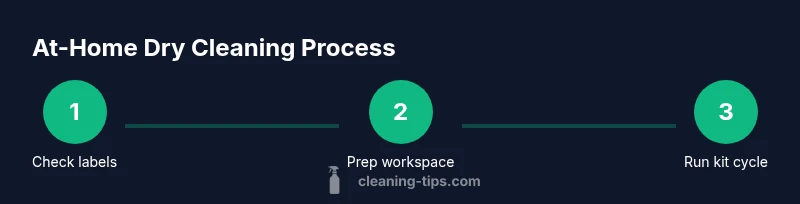
Steps
Estimated time: 60-90 minutes
- 1
Check garment care labels
Review the label for dry-clean instructions, solvent type, and any warnings. If the label indicates dry-clean only for certain fabrics (like silk or leather), assess whether DIY is appropriate based on fabric type and stain severity. When in doubt, opt for professional cleaning to protect the garment.
Tip: Always start with a test on a hidden seam to gauge colorfastness and fabric response. - 2
Choose the kit and set up workspace
Select a kit that matches your fabric types and read the instructions carefully. Set up a clean, ventilated area and lay down towels to protect surfaces. Have a timer handy to track cycle duration and ensure a consistent process across items.
Tip: Prepare gloves and a clean cloth for quick spots if needed. - 3
Spot-treat and prep garments
Pre-treat obvious spots with a fabric-safe remover on a small area. Close zippers and fasteners to prevent snagging. Place garments in the kit bag in a single layer to allow even cleaning and prevent crowding.
Tip: Test any stain remover on a hidden area first. - 4
Run the kit cycle with proper loading
Initiate the cycle exactly as instructed by the kit, keeping the load light to moderate. Do not overload the bag or force a longer cycle; improper loading can reduce effectiveness and cause uneven cleaning.
Tip: Check periodically if the kit includes a midway shake or redistribution step. - 5
Air out and inspect results
Open the bag promptly after the cycle ends and hang garments to air in a ventilated area away from direct heat. Inspect for odors, shine, or uneven cleaning; repeat only if the fabric tolerates another light cycle.
Tip: If odors persist, avoid repeated cycles on delicate fabrics. - 6
Evaluate next steps
Decide whether to repeat the process on lightly soiled items or switch to spot cleaning. For items with lingering stains or heavy soils, plan a professional cleaning. Keep a log of which fabrics respond best to home dry-cleaning methods.
Tip: Reserve at-home cleaning for maintenance between professional visits.
Questions & Answers
Is at-home dry cleaning safe for all fabrics?
Most fabrics labeled for home kits are safe when you follow the instructions. Avoid leather, suede, silk, and heavily soiled items that require professional cleaning.
Most fabrics are safe with careful use, but leather, suede, and heavily stained items should go to a professional cleaner.
Can I use any kit on all clothes?
No. Always check the garment care label and kit guidelines. Some fabrics and finishes need professional care despite having a dry-clean symbol.
Not every kit fits every fabric; always match the kit to the garment.
Will at-home dry cleaning remove odors?
It can refresh fabrics and remove light odors, but stubborn smells may persist. For tough odors, professional cleaning may be necessary.
It helps with light smells, but deeply ingrained odors might need a pro clean.
How long does the process take?
Most home cycles are relatively quick, but total time includes setup and air-drying. Plan for about an hour to an hour and a half overall.
Usually about an hour or so from setup to finish.
Are there safer alternatives to solvents?
Yes—water-based refreshers and careful spot cleaning can be safer options for delicate fabrics, or use professional services for tougher soils.
There are gentler options for spot cleaning and refreshing clothes.
Watch Video
The Essentials
- Follow garment labels to guide home dry-cleaning suitability
- Test colorfastness on hidden areas before cleaning
- Don't overload the kit bag; keep cycles light and controlled
- Air out garments after cleaning to prevent solvent odor
- Use DIY methods sparingly for delicate or heavily soiled items