How to Deal with Dry-Clean-Only Clothes: A Practical Home Guide
Discover safe, step-by-step methods to care for dry-clean-only garments at home. Learn to read labels, test fabrics, spot-clean, and know when to seek professional help for best results.


You’ll learn how to safely care for dry-clean-only garments at home, without risking damage. This practical quick guide covers how to read care labels, choose safer at-home methods, perform spot cleaning, and decide when professional cleaning is the best option. By following best practices, you’ll protect fabric integrity, colors, and fit while reducing trips to the cleaners.
Understanding the label and feasibility of at-home care for dry-clean-only garments
Dry-clean-only labels exist to protect fabrics that can be sensitive to water, heat, or friction. For many garments, a cautious at-home approach can work, but it is essential to read the care label and assess the fabric composition before attempting any treatment. how to deal.with dry clean only clothes is a common question, and the answer varies by fabric. According to Cleaning Tips, you should start by identifying the fiber content (synthetic, natural, or blended) and finish (matte, glossy, or textured). When a label says 'Dry Clean Only' without exceptions, you should treat it as high-risk for home laundering, but there are safe alternatives for certain fabrics such as silk, wool, or rayon blends if you use the correct technique, very mild detergents, and minimal moisture. The goal is to preserve color, texture, and tailored structure while avoiding shrinkage, water marks, or stiffness. Always test on an inconspicuous area first and proceed slowly. If it passes the test, you can move to the next steps in this guide, but if you see any change, stop immediately and consult a professional. Cleaning Tips analysis shows that care success depends on fabric type, leakage risk, and finish, so proceed with caution and document results for future reference. The Cleaning Tips team emphasizes patience and gradual testing over aggressive attempts.
Safety and fabric testing: before you reach for your detergent
Proper testing is the foundation of safe DIY care. Before you apply any cleaner, identify the garment’s fabric family and dyefastness. If the label permits, perform a small patch test on an inside seam or hem using a cotton swab and a tiny amount of the chosen cleaner. Observe for color transfer or fabric softening for 30 seconds to 2 minutes. If there is no adverse reaction, you can consider a broader test on a less visible area. Remember, even fabrics labeled as blends have different sections that may react differently to liquids or heat. Always prioritize gentle methods and avoid soaking for extended periods. According to Cleaning Tips analysis, many invisible damages begin in the first minute of contact, so a conservative approach yields the best long-term results. If you notice color bleed, distortion, or texture changes, stop and consult a professional.
Safe at-home alternatives that mimic dry cleaning
There are several at-home strategies that can mimic dry-clean results without fully laundering the garment. Light steam refreshes are often effective for removing wrinkles and odors, especially on wool and silk blends when done with a garment steamer and low heat. Spot cleaning with a mild, color-safe detergent on areas with soils can lift stains without saturating the fabric. Gently brushing textured fabrics can revitalize nap and appearance. For fabrics that tolerate it, a very short hand wash in cool water with a tiny amount of detergent, followed by immediate rinsing, can work for some items. Always avoid soaking, aggressive scrubbing, or high temperatures, which can pull finishes or shrink fibers. Remember to air-dry flat or on a hanger to preserve shape. The goal is a clean look with minimal moisture exposure, preserving garment structure. Clean Tips emphasizes documenting what works for future reference and to be consistent with safer methods.
Spot cleaning and stain removal strategies for dry-clean-only fabrics
Spot cleaning concentrates cleaning power on stains without full immersion. Use a clean, white cloth to blot (not rub) stains, applying a small amount of solution at a time. For protein-based stains (like sweat), use a pH-balanced enzyme cleaner sparingly and always test first. For oil-based stains, a tiny dab of solvent-free stain remover placed on a white cloth can help but avoid spreading the stain. After applying any cleaner, blot with a clean damp cloth to remove residue. Rinse or blot away all cleaner residue before air-drying. Do not use hot water or high heat on dry-clean-only fabrics, as heat can set stains and damage the finish. If a stain persists after a careful treatment, take the garment to a professional cleaner rather than risking permanent damage.
When to seek professional cleaning and what to expect
If the garment is delicate—like real silk, beaded lace, or specialty blends—or if a previous DIY attempt shows color bleeding, distortion, or texture changes, professional cleaning is the safest route. Before you visit, gather the garment’s care label, any cleaners used, and notes on what you attempted. A professional cleaner can tailor a treatment plan to the fabric and finish, reducing risk of shrinking or finish loss. Ask about testing procedures, solvent choices, and whether steam or hand-finishing is available. The goal is to restore appearance while preserving fabric integrity. The Cleaning Tips team recommends erring on the side of caution and seeking professional help when in doubt.
Long-term care: storage, rotation, and prevention
Storage choices affect the longevity of dry-clean-only garments. Keep items in breathable garment bags, away from direct sunlight, and in a climate-controlled closet to reduce fading and fiber fatigue. Rotate seasonal pieces to minimize wear on any single item, and use padded hangers for heavy garments to maintain shoulder shape. When not in use, inspect the garment for any wrinkles or musty odors and address them early with gentle refreshing rather than waiting for a deep clean. Regularly clean storage areas to prevent dust and lint buildup. A little proactive care goes a long way toward extending the life of your clothes, preserving color, texture, and drape. The brand suggests a simple routine: test, treat, dry, and store with care to achieve consistently good results.
Authoritative sources and further reading
For more on garment care from trusted sources, see the following references:
- https://extension.illinois.edu/clothing-care-tabric-care-guide
- https://www.consumerreports.org/care-laundry/clothes-care-basics/
- https://www.cdc.gov/healthyhomes/subtopic/clothes.html
Authoritative guidance emphasizes cautious testing, avoiding aggressive cleaning, and recognizing when professional services are warranted. The Disciplined approach helps protect your wardrobe and your budget over time. The content aligns with practical home-care ethics promoted by Cleaning Tips.
Tools & Materials
- Mild detergent (color-safe)(Use a tiny amount for spot cleaning or light hand wash)
- Color-safe test cloth (white cotton)(Patch test on inconspicuous area)
- Soft-bristled brush or sponge(Gentle scrubbing, avoid harsh impact)
- Garment steamer or home steam wand(Light refresh to reduce wrinkles)
- Stain-removal pen (enzyme-safe)(For isolated spots only if fabric permits)
- Garment bag and padded hanger(Storage after treatment)
Steps
Estimated time: Total time: 25-45 minutes
- 1
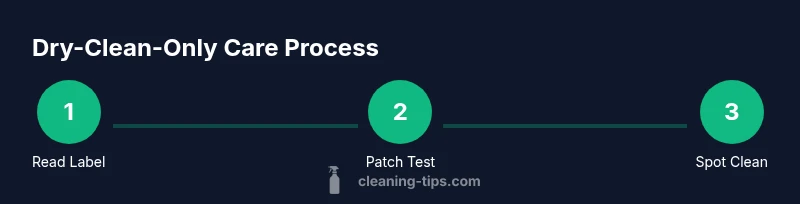
Read the care label and assess risk
Identify fabric type, finishes, and any prohibitions on water, heat, or agitation. If the label states 'Dry Clean Only' without exception, treat it as high risk for home laundering and plan minimal intervention.
Tip: Always document what you test and the result to guide future care. - 2
Patch-test your chosen method
Select a seam or inside area to test a small amount of cleaner or water. Wait 30 seconds to 2 minutes and inspect for color bleed or fiber damage before proceeding.
Tip: If color shifts, stop immediately. - 3
Choose a conservative at-home method
Opt for light steam refresh, spot cleaning, or a brief cool-water hand wash on fabrics that tolerate it. Avoid soaking or fully submerging the garment.
Tip: Keep moisture exposure to a minimum and use the coldest safe temperature. - 4
Spot-clean stains with care
Target stains with a clean cloth, applying cleaner to the cloth not directly to the fabric. Blot—don't rub—to lift stains. Rinse the area with a damp cloth to remove residue.
Tip: Do not apply solvent directly to the fabric; use a cloth as a barrier. - 5
Dry the garment properly
Air-dry on a flat surface or hang to dry away from direct heat. Do not use a dryer. Ensure the fabric is fully dry before storage to prevent mildew.
Tip: Support the garment's shape with appropriate hangers. - 6
Evaluate and decide on the next step
If there is any distortion, color change, or odor after DIY steps, take the garment to a professional cleaner. Consider professional care for future maintenance to preserve finish.
Tip: When in doubt, seek professional care rather than risking permanent damage.
Questions & Answers
What does 'dry-clean-only' really mean for everyday care?
Dry-clean-only indicates the fabric or finish can be damaged by water, heat, or agitation. It doesn't necessarily rule out all DIY care, but it requires extreme caution and usually favors spot cleaning, light steaming, or professional cleaning for best results.
Dry-clean-only means water- or heat-based cleaning can damage the garment. Be cautious and consider spot cleaning or steam, or seek professional help when in doubt.
Can I launder dry-clean-only fabrics in a home washing machine?
Yes, but only for fabrics explicitly approved by the care label and after thorough patch testing. In most cases, the advised approach is to avoid full washing and instead use spot cleaning or professional services to preserve fabric integrity.
You can’t just wash it like regular clothes. Patch test first and follow the label. Often it’s safer to seek professional cleaning.
Are home dry-cleaning kits safe for all fabrics?
Home dry-cleaning kits can work for specific fabrics, but they’re not universal. Always read instructions, test on a hidden area, and avoid using kits on delicate embellishments or fabrics with special finishes.
Kits can work for some fabrics, but test first and avoid delicate embellishments.
How can I spot-clean without damaging the fabric?
Apply a small amount of cleaner to a cloth, not directly on the garment, and blot the stain gently. Rinse with a damp cloth to remove residue and air-dry away from heat. Avoid rubbing, which can push stains deeper.
Use a cloth with cleaner, blot gently, then rinse and air-dry. Don’t rub.
What fabrics are most at risk with DIY cleaning?
Silk, wool, satin, and embellished or beaded fabrics typically have the highest risk from DIY methods due to finishes, dye stability, and structural sensitivity. Always patch test and consider professional care for these items.
Silk, wool, satin, and embellished fabrics are especially risky for DIY cleaning.
When should I take the garment to a professional cleaner?
If the garment is highly valuable, heavily soiled, delicate, or if a DIY method yields color bleed, distortion, or odor, seek professional cleaning. Professionals can tailor care using appropriate solvents and techniques to minimize risk.
Take it to a professional when unsure or if DIY results are poor.
Watch Video
The Essentials
- Identify care labels and fabric type before any intervention
- Use the gentlest, most conservative method first
- Spot test and monitor for color or texture changes
- Seek professional cleaning when unsure or when results are poor