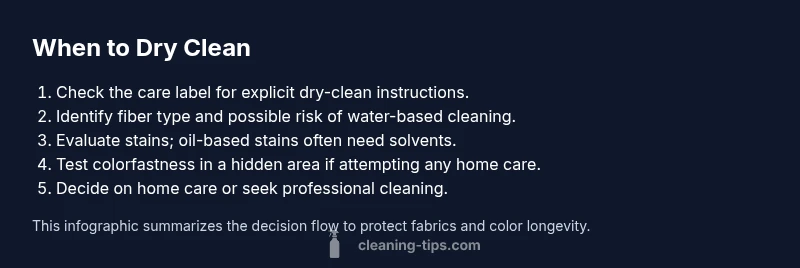
When to Dry Clean: A Practical Guide
Understand when to dry clean and when to skip it with a practical, step-by-step guide. Learn to read care labels, test fabrics, and choose safe cleaning options that protect your wardrobe.


By the end you’ll know exactly when to dry clean versus home wash, based on fabric type, care labels, and stain characteristics. This guide provides quick decision rules, practical at-home alternatives, and tips for preparing garments for professional cleaning.
Why dry cleaning matters: understanding fabric care and stains
Clothes carry different care needs, and understanding those needs helps you protect fit, color, and texture over time. Some fabrics respond poorly to water, while others tolerate gentle washing. Delicate fibers like silk, wool, cashmere, velvet, and certain blends can shrink, pill, or dye migrate if washed incorrectly. Professional dry cleaning is designed to lift oils and residues without distorting fiber structure, helping preserve drape and finish.
Stains complicate the picture. Oil-based stains—grease from cooking, cosmetics, or lotions—often resist water and soap, so treating them with regular washing can spread the stain or set it deeper. Dry-cleaning solvents are formulated to break down oils while minimizing color loss, which is why many stain removal approaches start there. The Cleaning Tips team emphasizes that care labels are your best first signal: if the label says “dry clean only,” attempting home methods can risk irreversible damage.
Beyond preserving appearance, dry cleaning can help with odor removal, subtle fabric interactions (like nap or pile), and shape retention in structured garments. Use the information here to decide whether a garment should be cleaned at home or by a professional, and always test a small, hidden area if you’re unsure.
The care label deciphering guide
Care labels use symbols that vary by country, but most indicate four core actions: wash, bleach, dry, and iron. In many garments, a circle denotes dry cleaning, with letters inside indicating the solvent type (P or F or P with letter). A crossed circle means do not dry clean. A tub icon with lines signals machine washing; a hand in a tub means hand wash. A triangle relates to bleaching; a crossed triangle means no bleach.
For textiles labeled dry clean only, there may be additional instructions: use a gentle solvent, avoid steam, and store in a cool, dry place. Some items combine statements like “Dry Clean Only” with “Low heat.” A few labels are generic and rely on professional judgment; when labels are unclear, seek guidance from a cleaner or refer to reputable sources such as university extension programs. The Cleaning Tips team notes that a label is a user’s contract with the garment—it communicates risk tolerance and care expectations, and should guide your next action. If you see conflicting signals between label content and results after spot cleaning, err on the side of professional care to protect the garment.
When to consider dry cleaning instead of washing
If the label reads dry clean only, or if the fabric is fragile (silk, wool, cashmere, velvet, or blends with delicate finishes), dry cleaning is often the safer route. Structured garments with linings, shoulder pads, or delicate trims rarely tolerate agitation or high heat. Leather or suede items, fur, and items with metallic threads should be treated by specialists who understand solvent interactions. Oil-based stains, such as makeup, sunscreen, or cooking grease, frequently respond better to solvents used in dry cleaning than to water-based washing. For heavily soiled items, or garments with perfume, smoke, or mold odors, professional cleaning can restore appearance and freshness more reliably than home methods. The Cleaning Tips team reinforces that a cautious approach minimizes risk of shrinkage, color loss, or texture damage over time.
To decide quickly, ask: Is the label “dry clean only”? Is the fabric wool, silk, or velvet? Is the stain oil-based or set-in? If any answer is yes, plan a professional clean; otherwise, consider home care with gentle methods.
How to spot safe alternatives: home spot cleaning and gentle methods
Home care can work for many garments with flexible fabric and non-oil-based stains. Start with a gentle approach: gently blot stains rather than rubbing, test a hidden area first, and use appropriate cleaners. For water-safe fabrics, a mild detergent and cool water on a soft sponge can lift light soils. Always air-dry flat when possible to avoid distortion. Avoid high heat near delicate fibers, and never press with a hot iron on silk or wool without a press cloth. When oil-based stains are present, attempt a colorfast test first, then consider a solvent-based spot cleaner designed for fabrics. If stain color persists, moving to professional cleaning may protect the garment’s finish and color longevity. The goal is to preserve fibers and finish without compromising fit or texture.
Remember: spot cleaning is not a substitute for professional cleaning on dry clean-only items, and not all stains respond to at-home care. When in doubt, opt for professional service to protect your investment.
How to assess cost, availability, and environmental impact
Cost and access to dry cleaning vary by garment type, region, and service quality. Typically, coats, suits, and heavily structured garments incur higher cleaning costs due to labor and solvent usage. Availability depends on your locale, with some areas offering same-day options and others requiring drop-off. Environmentally conscious shoppers can look for cleaners that publish solvent usage data and offer green alternatives, such as improved filtration or less toxic solvents. The environmental impact of dry cleaning is a practical consideration for frequent wearers and households aiming to minimize chemical exposure. Balance convenience, garment value, and personal health priorities when deciding how often to dry clean. The Cleaning Tips team notes that choosing responsible cleaners can reduce the environmental footprint while extending garment life.
Steps to prepare for a dry-cleaning visit
Before you take items to a cleaner, take a few preparatory steps to protect your clothes and ensure effective service. Empty all pockets, remove any pins or jewelry, and fasten zippers and buttons. If possible, turn delicate fabric items inside-out to protect surface finishes during transport. Secure heavily soiled areas with a note describing the stain and when you noticed it, and request the cleaner to handle those stains with caution. Place items in a clean bag to prevent snagging. If you have a preferred solvent type or a special finish (like a satin sheen), communicate that clearly at drop-off so the cleaner can adjust process parameters accordingly. Finally, review the care label again and confirm any restrictions with the shop staff. This preparation reduces the risk of unexpected outcomes and supports a better cleaning result.
Common mistakes to avoid
Common mistakes include attempting home washing for dry clean-only items, using high heat or aggressive scrubbing on delicate fabrics, and neglecting to remove odors prior to cleaning, which can lead to residue after processing. Do not mix items with very different fabrics in the same cleaning bag, as this can cause abrasion or uneven results. Avoid storing items damp or folded in ways that create crease lines that are difficult to remove after cleaning. If a stain reappears after cleaning, consult the cleaner rather than retrying home methods. Maintaining a careful routine and communicating with your cleaner helps ensure the garment retains its original look and feel.
Quick at-home tests you can perform safely
Perform colorfast and solvent-safety tests in a discreet area before applying any cleaner. Dab a small amount of cleaner to a hidden seam or hem, then wait a few minutes to observe color changes or fabric damage. Always read the product’s label for compatibility with your fabric. If the fabric shows any adverse reaction, stop and seek professional help. Keep stain removal products away from children and pets, and follow all safety guidelines on the product label. These precautions prevent accidental damage and ensure you choose the safest cleaning method available for your garment.
What to expect after cleaning and how to maintain garments
After cleaning, inspect the garment for odor removal, stain resolution, and fabric texture. If it feels stiff, request light ironing or an airline to restore drape; avoid high heat that could damage fibers. Allow items to air dry fully before packing away to prevent mildew. Store dry-cleaned garments in breathable garment bags and ensure they are clean and fully dry before hanging. For future care, maintain a light routine with spot care rather than washing the entire item frequently. By adopting a thoughtful maintenance plan, you prolong the garment’s life and preserve color and structure.
Tools & Materials
- Care label guide(Keep garment-specific symbols as reference)
- Lint roller(Remove surface debris before cleaning)
- White cloth or cotton swabs(Test colorfastness on inconspicuous area)
- Mild solvent or stain remover safe for dry-clean only fabrics(Use sparingly and only on compatible fibers)
- Delicate garment bag(For transport to cleaners)
- Gloves(When handling chemicals)
Steps
Estimated time: 60-90 minutes
- 1
Check the care label and fabric type
Read the label first and identify the fabric. If the label says 'dry clean only' or if the garment is silk, wool, or velvet, plan for professional cleaning. This initial step prevents accidental damage from improper treatment.
Tip: Always start with the label; it sets the boundary for safe methods. - 2
Assess stains and odors
Determine whether stains are oil-based or water-based. Oil-based stains often respond poorly to washing and may require specialized solvents. Note any persistent odors, as some odors resist simple washing and benefit from professional deodorizing.
Tip: blot rather than rub to avoid pushing stain fibers deeper. - 3
Test colorfastness
In a hidden area, apply a small amount of cleaner or solvent appropriate for the fabric and observe color change after a few minutes. If there is any color transfer, discontinue and seek professional help.
Tip: Use a white cloth and test in an inconspicuous spot. - 4
Evaluate non-cleaning alternatives
For many fabrics, light surface soils can be managed with spot cleaning or gentle hand washing. Consider water temperature, detergent choice, and fabric compatibility before proceeding.
Tip: Choose a detergent labeled for delicates and test first. - 5
Decide on treatment path
If the garment is dry clean only or exhibits any risk in testing, choose professional cleaning. If it passes colorfastness and is safe for water-based methods, proceed with caution at home.
Tip: Don't mix methods on a single garment; keep to one plan per item. - 6
Prepare the garment for cleaning
Remove accessories, empty pockets, and zip up. Place items in a breathable bag or container to prevent snagging and friction during transport or storage.
Tip: Loose studs and trims can snag during cleaning; secure them before proceeding. - 7
Communicate with the cleaner
If you choose professional cleaning, provide notes about stains, odor, and any fabric sensitivities. Clear communication helps the cleaner tailor the process to your garment’s needs.
Tip: Include a brief stain description and any history of previous treatments.
Questions & Answers
What fabrics commonly require dry cleaning?
Fabrics such as silk, wool, cashmere, velvet, and tailored coats frequently require dry cleaning to preserve texture, shape, and color. Delicate trims or embroidery can also push items into professional care territory.
Fabrics like silk and wool often need dry cleaning to keep their shape and texture, especially with delicate trims.
Can I dry clean at home?
Home dry-cleaning kits exist, but they don’t work for every fabric. They’re generally limited for lighter fabrics and non-oil-based stains. For dry-clean-only fabrics or oil stains, professional cleaning remains the safer option.
Home kits aren’t suitable for dry-clean-only fabrics or oil stains; professionals are safer for those.
How often should I dry clean clothes?
Frequency depends on wear, stain exposure, and fabric type. Garments like suits and outerwear may need less frequent cleaning, while items with frequent stains or odors might require more regular visits. Avoid over-cleaning to reduce wear.
Frequency depends on use and fabric; avoid over-cleaning to protect fibers.
Is dry cleaning better for odor removal?
Dry cleaning can effectively remove certain odors by removing residues and oils. However, persistent odors may require additional airing, steaming, or specialized treatments. A professional cleaner can advise the best approach.
It helps for many odors, but stubborn smells may need extra steps from a professional.
Are there environmental concerns with dry cleaning?
Solvent-based dry cleaning methods can raise environmental concerns. Look for cleaners that disclose solvent types and energy-efficient processes or offer greener options. Environmental impact varies by garment and frequency of cleaning.
Some solvents raise environmental concerns; choose cleaners with greener options when possible.
What should I do if a stain returns after dry cleaning?
If a stain reappears, don’t re-wash aggressively at home. Contact the cleaner for an assessment and potential re-treatment. Some stains require specialized solvents or repeat treatments.
If a stain returns, contact the cleaner for a safe re-treatment instead of attempting home removal.
Watch Video
The Essentials
- Know fabric type before cleaning
- Follow care labels first
- Spot test on hidden areas
- Oil stains often require solvents
- Choose professional cleaning for riskier items