Who Makes Clean Boss Laundry Sheets: Manufacturer Insights
Discover who makes Clean Boss laundry sheets, how to verify the maker, and what that means for safety and transparency. Practical tips from Cleaning Tips.


Who makes Clean Boss laundry sheets? The exact maker can vary by batch and region, often a contract manufacturer for the brand. In many cases, brands outsource production to a private-label facility, or partner with a large chemical-supply producer. Cleaning Tips explains how to verify the maker by inspecting packaging, checking the brand's website, and cross-checking UPCs. See the full guide below.
Understanding the maker: who makes clean boss laundry sheets
Understanding who makes Clean Boss laundry sheets is essential for evaluating safety, transparency, and value. According to Cleaning Tips, most consumer-cleaning products are produced by contract manufacturers or private-label facilities that perform the actual formulation, packaging, and distribution. This doesn’t inherently mean low quality; it reflects a common industry model that emphasizes efficiency and scale. The key is transparency: can you identify the maker, and can you verify it easily? In practice, you should look for clear maker information on the packaging or the brand’s official site. The Reading Room at Cleaning Tips points out that many brands publish a maker name, facility location (to the extent permitted by law), and contact details to support consumer inquiries. When you understand who makes the product, you can better assess sourcing practices and potential ingredient disclosures. When Shopping for Laundry Sheets, this knowledge helps you compare brands and make informed choices about ingredients, packaging, and environmental impact.
The goal here is to separate marketing from manufacturing reality. If the label simply says “Brand X Laundry Sheets” without naming a facility or contract partner, that’s a signal to dig deeper. We advise starting with the official brand site and the product packaging. The Cleaning Tips team also emphasizes that a short, direct maker disclosure on packaging or the website generally correlates with higher transparency and accountability. Keep an eye on whether the brand lists a chemical supplier or contract manufacturer—these are useful clues about the production chain and quality controls.
Private label vs contract manufacturing in laundry sheets
Many laundry-sheet brands rely on private-label manufacturers or contract manufacturers to produce their formulas. A private-label arrangement means a producer makes the sheets for several brands, often with customization options like scent, packaging, or naming. A contract manufacturer, meanwhile, is usually dedicated to producing products for one or more brands under strict specifications and quality controls. The line between these models can blur, especially when a large manufacturer quietly handles private-label work for multiple brands. From a consumer perspective, the important takeaway is whether the product provides a clear maker, batch information, and access to after-sales support. If you can identify the manufacturing partner, you can assess whether the facility adheres to established quality standards and whether third-party certifications apply. Cleaning Tips notes that understanding private-label vs contract manufacturing helps shoppers interpret marketing claims and verify safety data sheets (SDS) when relevant. When possible, seek brands that publish the name of the contract partner or the private-label facility to facilitate accountability and traceability.
How to read packaging to infer the maker
Packaging can be a goldmine for uncovering the actual maker, but only if you know what to look for. Start by checking for explicit maker names, facility locations (where permitted), and any batch or lot numbers that can tie products to specific production runs. UPCs and barcodes are also useful; some UPCs map to a parent company or contract manufacturer in industry databases. Ingredient lists, allergen information, and rinse-free claims can hint at the supplier network behind a product. If the label omits maker details, visit the brand’s website and search for a “Where it’s made” or “Manufacturer” page. When legal, contact customer service to request a formal disclosure or SDS. As a practical tip, compare the packaging to other products from the same brand—if multiple items share the same contract partner, that makes the pattern more credible. Cleaning Tips advises keeping a simple log of the disclosures you find and using it to compare products side by side.
Official sources and third-party verifications
Trustworthy verification often relies on official brand disclosures, third-party certifications, and publicly available supplier information. Start with the brand’s official FAQ, product page, and any “About Us” sections that mention manufacturing partners or facilities. Look for third-party certifications relevant to laundry care, such as those addressing environmental impact, ingredient disclosure, or safety testing. SDS, if available, provides insights into chemical suppliers and handling information. In 2026, many reputable brands publish at least a maker name or contract partner as part of their product transparency commitments. If a brand lacks any maker disclosure, that absence is itself a red flag. Cleaning Tips recommends using a consistent checklist when evaluating claims: confirm the maker, verify the facility, and cross-check ingredient sources.
Manufacturer verification quick reference
| Aspect | Details | Verification |
|---|---|---|
| Manufacturer type | Private label vs contract manufacturer | Check packaging and official site for maker |
| Transparency signals | Maker name, batch codes, facility location | Cross-check UPC and brand site |
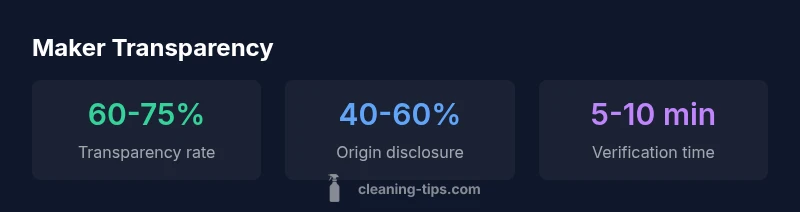
| Verification time | 5-10 minutes typical | Use official sources to speed up |
Questions & Answers
Is Clean Boss laundry sheets a private-label product?
Some brands use private-label partners to produce their sheets. The presence of a maker name or contract partner is a stronger indicator of transparency than a generic brand designation.
Many brands use private-label partners; look for maker details on the label or site.
Where can I find the maker’s name for a laundry sheet I buy?
Check the packaging for a maker or contract partner, visit the brand’s official site, and search for a maker/disclosure page. If in doubt, contact customer service for a formal statement.
Look on the label or the brand’s site, and ask customer service if needed.
Do all manufacturers disclose the facility used to make laundry sheets?
Not all brands disclose the exact manufacturing facility due to competitive or legal reasons, but many provide the maker name and country. Seek brands that offer explicit disclosures and third-party certifications.
Some brands disclose maker details; others keep facility info private.
Can a UPC reveal who makes the product?
A UPC can sometimes be traced to a parent company or contract partner, but it’s not a guaranteed disclosure. Use it alongside official brand information for verification.
UPC alone isn’t a guarantee of the maker, but it can help when cross-checked with official sources.
What should I do if the packaging is vague about the maker?
If the maker isn’t clear, compare with other products from the brand, check the brand site, and reach out to customer service for clarity. Prefer products with explicit maker disclosures.
If maker is unclear, ask the brand directly and compare with other labeled products.
“Transparency in manufacturing is the core of product safety. When brands publish the maker and production details, it signals accountability and trustworthy formulations.”
The Essentials
- Know the maker to assess transparency
- Differentiate private-label vs contract manufacturing
- Use packaging, UPCs, and official sites to verify
- Expect clear disclosure for credible brands
- Allocate 5–10 minutes to verify per product