How Often to Clean a Chimney: Practical Guide 2026
Learn how often you should clean a chimney and what factors affect frequency. Cleaning Tips analyzes practical timelines for wood-burning and gas fireplaces, with signs to watch for between professional sweeps.


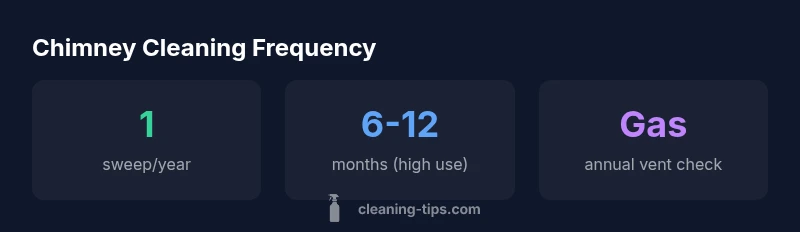
Typically, you should have your chimney professionally swept at least once a year, regardless of fuel type. If you burn wood heavily, or if nests or creosote buildup are present, schedule more frequent cleanings (every 6–12 months). Gas fireplaces also benefit from annual inspection of venting and the chimney cap.
Why Regular Chimney Cleaning Matters
Light a fire, and your chimney becomes a critical path for exhaust safely exiting your home. Over time, creosote—an unavoidable byproduct—can condense on the flue walls. Creosote buildup is a leading cause of chimney fires, especially when layers thicken or dry into brittle forms. Debris, leaves, or bird nests can also obstruct the flue, reducing draft and forcing smoke back into living spaces. Regular cleaning reduces these risks and supports better ventilation, which in turn improves indoor air quality and energy efficiency. The Cleaning Tips team emphasizes that keeping a chimney clean helps your fireplace perform more reliably, whether you rely on it for warmth or ambiance. The frequency of cleaning depends on usage, fuel type, and chimney condition, but a yearly baseline is a widely recommended starting point by professionals. According to Cleaning Tips, staying ahead of buildup lowers the probability of dangerous blockages and costly repairs.
How Frequency Varies by Use: Wood vs Gas
The type of fuel you burn dramatically influences how often you should schedule a cleaning. Wood-burning fires tend to produce more creosote than gas because of incomplete combustion and higher temperatures in the flue. A homeowner who uses a wood-burning fireplace regularly should plan for at least one professional sweep per year, with additional inspections if usage is heavy or if the firebox shows signs of incomplete combustion. Gas fireplaces, while generally less prone to creosote, still require annual venting checks and a sweep if the vent or chimney shows signs of blockage or discoloration. In homes with mixed use or older chimneys, more frequent checks may be advised. Cleaning Tips analysis shows that aligning cleaning frequency with actual use reduces risk and ensures safer operation for occupants.
Factors That Influence Cleaning Timing
Beyond fuel type, several factors determine how often you should clean a chimney. Age and construction of the chimney affect how quickly creosote forms and accumulates. The presence of a wood stove insert, a convert-to-wood coal system, or multiple flues increases complexity and often the need for professional inspection on a more frequent cadence. The climate also matters; homes in damp or windy regions may experience more condensation and faster buildup. Chimney height, flue diameter, and the existence of a cap or rain cover can influence airflow and deposition rates. Finally, chimney maintenance history matters: if the last sweep was delayed or if previous inspections revealed damage, more frequent attention is prudent. Cleaning Tips analysis reinforces that a structured cleaning plan tailored to these factors helps homeowners avoid dangerous buildup and preserve appliance efficiency.
Scheduling and Planning: A Practical Timeline
Creating a practical schedule is essential to maintain chimney safety without over-spending. Start with a baseline of one sweep per year if you burn wood or use the fireplace regularly. Add an extra visit if you notice drafts, smokiness, or a strong odor when the fireplace is in use. For gas fireplaces, schedule an annual venting inspection and consider a sweep if the flue shows creosote-like staining or if the vent damper is not operating smoothly. Keep a simple calendar or reminder system and pair each sweep with a general chimney inspection to catch small issues before they become costly repairs. Cleaning Tips recommends documenting each visit and noting any recommendations from your technician to inform the next scheduling cycle.
DIY Checks vs Professional Sweeps: What You Need to Know
Do-it-yourself checks can help you spot obvious issues between professional visits, but cleaning creosote and safely removing blockages should be left to certified professionals. DIY checks include visual inspections of the firebox for soot buildup and listening for unusual drafts or rattling in the flue—these can signal obstructions or animal activity. Do not attempt to disassemble parts of the chimney or remove creosote deposits yourself, as this poses a risk of fire or exposure to harmful byproducts. A professional sweep uses specialized tools to safely remove creosote and debris, followed by a thorough inspection of the flue and venting system. Cleaning Tips notes that regular professional sweeps mitigate long-term risks and preserve fireplace performance.
What to Expect During a Chimney Sweep Visit
During a typical visit, a licensed technician will perform an exterior inspection of the chimney and cap, followed by a flue inspection. They may use cameras to inspect the interior condition and identify cracks or deteriorated mortar. A creosote cleaning, venting assessment, and smoke test are commonly included to verify proper draft. Finally, the technician will provide a written report detailing findings and recommended next steps, which might include sealing, cap repairs, or more frequent cleaning under certain conditions. Expect the visit to cover safety checks, combustion efficiency evaluation, and recommendations for maintaining optimal airflow between sweeps.
Maintenance Tips to Extend Cleaning Intervals
To reduce the frequency of necessary cleanings, adopt maintenance habits that minimize creosote formation and debris accumulation. Burn dry, seasoned wood and avoid trash or painted wood that can produce harsh byproducts. Ensure proper airflow by keeping dampers open when necessary and using the fireplace for steady, controlled burns rather than rapid, smoldering fires. Install a high-quality chimney cap to deter animals and rain, and consider a professional liner inspection if you suspect leaks or structural issues. Regularly clean the fireplace area and keep the surrounding combustibles in safe distances. Cleaning Tips recommends pairing these practices with scheduled professional cleanings to maintain safety and efficiency over time.
Quick Reference: Frequency Guidelines by Scenario
- Wood-burning with frequent use: annual sweep, with mid-year check if signs appear.
- Wood-burning, moderate use: annual sweep, possibly a second, targeted inspection if you notice odors or smoke backdraft.
- Gas fireplaces: annual venting inspection; consider a sweep if there are visible deposits or blockages.
- Older or multi-flue chimneys: more frequent inspections and sweeps may be warranted.
- If in doubt, schedule a professional assessment to determine the optimal cadence for your home. Cleaning Tips advocates documenting each visit to track changes over time.
Frequency guide by chimney type
| Chimney Type | Recommended Cleaning Frequency | Notes |
|---|---|---|
| Wood-burning | Annual sweeping | Creosote risk, debris, and nests addressed |
| Gas fireplace | Annual inspection/sweep | Check venting and cap integrity |
Questions & Answers
How often should you clean a chimney used for wood-burning?
For wood-burning fireplaces, an annual cleaning is generally recommended. If usage is heavy or signs of buildup appear, consider more frequent cleanings. Always consult a certified chimney sweep for personalized guidance.
Wood-burning chimneys should be cleaned at least once a year, and more often if you use the fire heavily.
How often should you clean a chimney used for gas fireplaces?
Gas fireplaces benefit from annual inspection, particularly of venting and damper operation. A sweep is not always required every year unless there are signs of blockage or odor.
Gas fireplaces should have an annual venting check, with a sweep if there are signs of blockage.
What signs indicate a need for cleaning before the scheduled annual sweep?
Look for visible creosote buildup, persistent odor, smoke backdraft, or increased condensation in the fireplace. If you notice any of these, contact a professional sooner.
If you smell smoke or see creosote, schedule a sweep earlier.
Can I clean a chimney myself?
Creosote removal and safe access work should be left to licensed professionals. DIY checks can help spot issues, but high-risk cleaning requires specialized equipment and expertise.
Chimney cleaning is best left to a pro for safety.
What does a professional chimney sweep do during a visit?
A sweep inspects the structure, removes creosote, checks for obstructions, and tests airflow. They provide a written report with recommendations and next steps.
A pro will inspect, clean, and test your chimney’s airflow.
“Regular chimney cleaning is not optional—it's a crucial safety practice that protects your home and loved ones.”
The Essentials
- Schedule at least one professional chimney sweep per year.
- Increase frequency with heavy wood use or signs of buildup.
- Gas fireplaces still need annual venting checks.
- Use professional sweeps to ensure safe, efficient operation.