Dog Clean Teeth Cost: A Practical Guide for Pet Owners
A data-driven guide to the dog clean teeth cost, detailing price drivers, typical ranges, and practical strategies to save without compromising care.


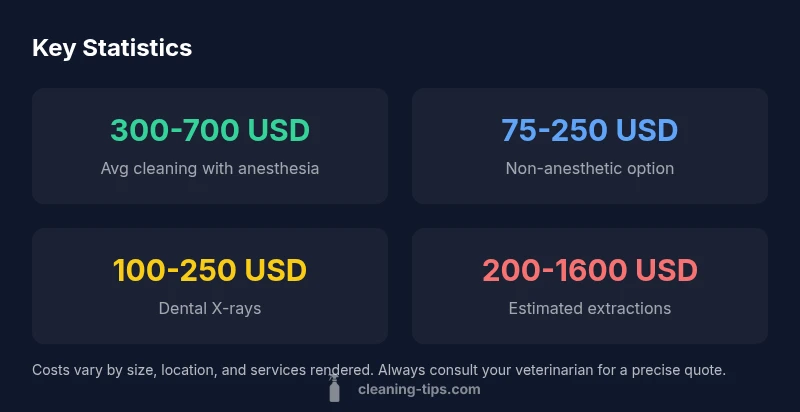
According to Cleaning Tips, the typical total cost for a dog's dental cleaning with anesthesia ranges from $300 to $700, depending on size, location, and whether extra work is needed. Non-anesthetic options exist but are less thorough and often cheaper, typically about $75 to $250. Additional services like X-rays or extractions can push the bill higher, sometimes over $1,000.
What affects the dog clean teeth cost
Understanding the dog clean teeth cost begins with recognizing how multiple factors interact to determine a final bill. The dog's size and breed influence anesthesia dosing and chair time; small dogs may require less anesthesia but could incur higher per-pound costs due to specialized care. The extent of tartar and gum disease affects the duration of cleaning and whether extra procedures are needed. Location matters; urban clinics in high-cost areas generally charge more than rural practices. Finally, the clinic type—general practice, veterinary specialty, or mobile dentistry—also shapes your price. These variables interact, so two dogs of the same weight can have different final costs depending on their dental health and the chosen provider. For pet owners, understanding these drivers helps in budgeting and avoiding sticker shock during the visit, while ensuring your dog receives appropriate care.
Typical price ranges by service type
Prices vary with service type, whether anesthesia is used, and what comes with the cleaning. A standard cleaning with anesthesia at a veterinary clinic is most common and usually falls within a mid-range price band. Non-anesthetic options exist, but they are less thorough and may not be appropriate for dogs with significant tartar or oral disease. Additional services—like dental X-rays or tooth extractions—are charged separately and can substantially raise the total. When evaluating a quote, ask what is included under the listed price and whether any procedures are optional or recommended based on your dog’s dental health. Always compare items line by line to avoid surprises at checkout.
The role of anesthesia and pre-anesthetic testing
Anesthesia is a major driver of dog clean teeth cost. Most veterinarians perform a pre-anesthetic assessment to minimize risk, which can add to the upfront cost. Tests may include a basic blood panel and sometimes ECG or imaging, depending on the dog’s age and health status. These evaluations are critical for safety but can add hundreds of dollars to the bill. Some clinics offer package pricing that bundles the cleaning with necessary pre-screening; others itemize each service. If your dog has underlying health issues or is a senior, expect more careful monitoring and higher overall costs. Discuss anesthesia plans, monitoring protocols, and contingency costs with your vet before the procedure.
Additional procedures that raise the bill
Beyond the cleaning itself, several add-ons commonly appear on the final invoice. Dental X-rays help identify problems below the gum line that a surface cleaning cannot address. Tooth extractions may be necessary if teeth are loose, decayed, or abscessed. Antibiotics or pain medications may be prescribed post-cleaning, especially if there was infection or mobility. The total cost can rise quickly if multiple teeth require extraction, or if complications arise during the procedure. Understanding these potential charges helps you plan finances and communicate with your veterinarian about priorities.
Geographic and clinic-type cost differences
Prices can vary by region and clinic type. Urban areas and high-cost regions tend to have higher baseline fees, while rural clinics may offer lower prices but fewer add-on options. Mobile dental services may have convenience fees but could be cheaper than a full hospital visit in some cases, though availability varies. Specialty dental clinics may charge more due to advanced imaging and specialized staff. When planning, consider travel time, the clinic’s reputation, and whether the clinic uses in-house anesthesia or coordinates with a veterinary anesthesiologist. A pragmatic approach is to request a written estimate that breaks down each component and to ask about any available financing options.
How to read a dental invoice and ask the right questions
Invoices can be cryptic if you don’t know what to ask. Start by confirming that the quoted price includes cleaning, ultrasonic scaling, polishing, and anesthesia if applicable. Ask whether X-rays or extractions are considered separate line items and what the estimated number of extractions would be. Inquire about pre-anesthetic tests and their necessity for your dog’s health. If there are changes to the plan during the procedure, request an updated estimate in real time. Finally, compare the total price to national averages and your budget, and don’t hesitate to shop around for a second opinion if a price seems unexpectedly high.
At-home care vs professional cleaning: long-term costs
Proactive at-home dental care can reduce long-term costs by delaying or lessening the need for professional cleanings. Regular brushing, dental chews, water additives, and dental diets can slow tartar buildup. However, these measures do not fully replace professional cleanings, especially for dogs with established dental disease or heavy tartar. Citations for at-home care benefits come from veterinary guidance and pet health researchers, and savings accrue over time by maintaining better oral health. Plan professional cleanings on a schedule advised by your vet, and complement it with daily preventive care to optimize costs and outcomes.
Cost-saving strategies and bundled services
To control dog clean teeth cost without sacrificing care, consider bundled preventive dental packages offered by some clinics, which might include annual exams, cleanings, and discounted X-rays. Look for loyalty programs or multi-dog discounts if you have more than one pet. If you foresee multiple necessary visits in a year, discuss payment plans or financing options with your clinic. Request written quotes and ask about any exclusions or “extras” that would trigger higher charges. Finally, maintain a record of your dog’s dental health so you can track changes over time and avoid unnecessary procedures.
When to schedule and how to plan financially
The best way to manage costs is proactive planning. Schedule dental cleanings as recommended by your veterinarian, ideally before tartar becomes heavy or before a dental infection develops. If your dog is anxious about visits, discuss sedation options and comfort measures to minimize stress and procedural time. Create a budget that accounts for routine cleanings, possible X-rays, and occasional extractions for older dogs or breeds predisposed to dental issues. By planning ahead, you can minimize surprises and maintain your dog’s dental health with confidence.
Estimated price ranges for common dog dental cleaning services
| Service Type | Typical Range (USD) | Notes |
|---|---|---|
| Dental cleaning with anesthesia (vet clinic) | 300-700 | Most common option; price depends on size and needs |
| Non-anesthetic dental cleaning (awake) | 75-250 | Less thorough; not suitable for all dogs |
| Dental X-rays | 100-250 | Often recommended for full assessment |
| Tooth extractions (additional) | 200-1600 | Depends on number of teeth and complexity |
| Pre-anesthetic testing | 75-300 | Labs or monitoring before anesthesia |
Questions & Answers
Is a non-anesthetic dental cleaning effective for dogs?
Non-anesthetic cleaning exists but is not suitable for all dogs and may be less thorough. It should not replace professional cleaning under anesthesia when indicated by dental risk. Always consult your veterinarian about the best approach for your dog.
Non-anesthetic cleanings exist, but they aren’t right for every dog. Talk to your vet to decide the best method.
Are dental X-rays always necessary during cleaning?
X-rays are not always required, but they provide a clearer view of tooth roots and bone health. Many veterinarians recommend them as part of a comprehensive dental evaluation, especially for older dogs or those with signs of dental disease.
X-rays aren’t always required, but they help you understand hidden problems and guide treatment.
Can home dental care replace professional cleaning entirely?
Home care is essential for prevention but cannot fully replace professional cleanings, especially for dogs with established tartar or dental disease. Regular brushing and chews reduce buildup, while professional cleanings address deeper tartar and infections.
Home care helps a lot, but professional cleanings are still needed for thorough cleaning.
What factors cause price differences between clinics?
Prices vary due to location, clinic type, anesthesia protocol, and whether extras like X-rays or extractions are included. Reading the quote carefully and asking for a line-item breakdown can reveal where costs differ.
Differences come from location, clinic type, and included services. Get a clear breakdown.
How can I budget for my dog's dental care?
Start with the baseline cost for your dog’s size and typical services, then add an emergency cushion for extractions or X-rays. Consider bundled preventive care plans if offered by your clinic and explore financing options.
Plan for your dog’s baseline costs and an emergency cushion; look for bundles or financing.
“Regular dental cleanings, when recommended by your veterinarian, help prevent costly tooth loss and systemic health issues in dogs.”
The Essentials
- Know baseline costs for standard services
- Expect anesthesia to raise the price considerably
- Ask for itemized quotes and required add-ons
- Consider at-home care as a cost-saving adjunct
- Shop around and compare clinics to find value