How Clean Are Cats Compared to Dogs: A Practical Cleanliness Comparison for Pet Homes
An analytical guide comparing cat and dog cleanliness, covering grooming, shedding, odors, litter care, and daily routines with practical tips from Cleaning Tips.


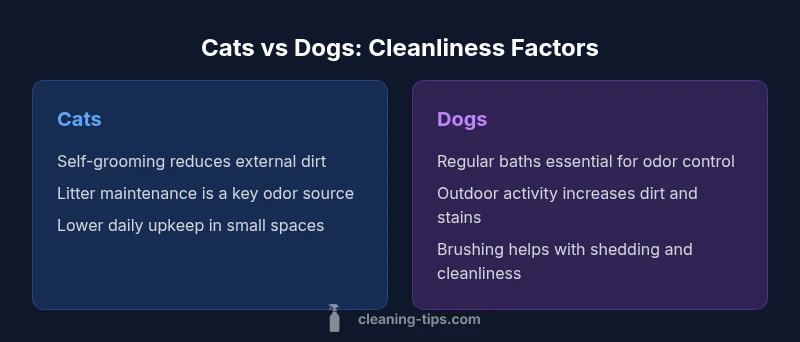
Both cats and dogs can be kept clean with a consistent routine, but cats often require less frequent bathing and rely on self-grooming, while dogs typically need more regular baths and targeted odor control, especially after outdoor activities. Cleanliness hinges on grooming, litter or potty management, bedding hygiene, and daily upkeep, not just species. According to Cleaning Tips, tailored routines beat generic pet stereotypes every time.
Framing the question: What does 'clean' mean for pets?
How clean are cats compared to dogs? To answer this question, we must define cleanliness beyond surface appearance. Cleanliness for pets encompasses grooming frequency, odor management, litter or potty hygiene, saliva and dander control, bedding care, and the overall impact on indoor air quality. For homeowners and renters, a clean pet environment means fewer odors, less allergen exposure, and easier maintenance of floors, furniture, and textiles. The Cleaning Tips team emphasizes that cleanliness is a systems problem: it depends on routines, space design, and the tools you choose. In practical terms, a clean pet is one that is groomed, kept in a hygienic habitat, and integrated into a home cleaning schedule that fits daily life. As you evaluate cats versus dogs, focus on how each species’ natural behaviors affect your cleaning workload, rather than assigning a blanket label of “clean” or “messy.” Our framework considers cats’ self-grooming, dogs’ activity level, litter management, and the home’s layout. According to Cleaning Tips, implementing consistent routines reduces surprises and supports healthier living spaces for every household.
Grooming routines and how they affect cleanliness
Grooming is the cornerstone of pet cleanliness, and it differs significantly between cats and dogs. Cats are renowned for self-grooming, often keeping fur clean between baths; however, this habit doesn’t eliminate the need for brushing, especially long-haired breeds, which can trap loose fur and trigger hairball issues. Regular brushing reduces shed load and distributes natural oils, leaving skin healthier and coat glossier. Dogs generally require more hands-on grooming: brushing to remove loose fur, bathing to manage odor after outdoor adventures, nail trimming for safety, and dental care to minimize mouth odor and bacteria that transfer to household surfaces. A humane grooming routine not only improves your pet’s comfort but also minimizes the amount of dirt and microbes that circulate in the home. When you map grooming to your living space—high-traffic carpets, upholstery, and kids’ rooms—you can schedule maintenance that minimizes disruption while maximizing cleanliness. The Cleaning Tips team notes that routine grooming is a cost-effective, high-impact lever for overall home hygiene. More frequent grooming may be needed for active dogs or seasonal shedding, but even modest effort yields measurable benefits.
Shedding, dander, and indoor air quality
Shedding and dander are central to indoor air quality and perceived cleanliness. Cats typically shed year-round, with peaks during seasonal molts; brushing can dramatically reduce loose fur that accumulates on furniture and in HVAC filters. Dander, a prime allergen for some household members, tends to fluctuate with coat type and grooming frequency. Dogs shed differently by breed and climate, and their dander contributes to indoor allergen levels if not managed. Practical steps include frequent vacuuming with a high-quality HEPA filter, washing pet bedding in hot water, and using air purifiers in common living areas. Regular cleaning also helps manage saliva on surfaces, a factor often overlooked in pet cleanliness. The Cleaning Tips analysis suggests that consistent grooming routines, combined with surface cleaning and air-quality improvements, minimizes allergen exposure for sensitive individuals. Implement a simple daily wipe-down of common touchpoints and an occasional deep-clean of upholstery to maintain a healthier home environment.
Odor control: litter boxes vs. grooming products
Odor control is a major cleanup consideration for both cat and dog households, but the source of odors differs. Cats primarily accumulate odor from litter boxes, grooming products, and sometimes litter dust that escapes into the air. Regular litter maintenance—scooping, changing litter, and using sealed containers—reduces odor buildup and improves room freshness. For dogs, outdoor activities, damp fur after rain, and breath contribute to indoor smells. Bathing at appropriate intervals, using pet-safe shampoos, and maintaining a clean grooming kit can significantly cut odors. Ventilation matters, too: opening windows or using exhaust fans helps move moist air out and fresh air in. The Cleaning Tips team emphasizes pairing a consistent grooming routine with proactive odor management: choose unscented, hypoallergenic products, clean water dishes daily, and maintain clean towels and mats where pets rest. A practical odor plan also includes ruling out moisture problems in basements and laundry rooms, which can compound smells over time.
Surfaces and stains: carpets, upholstery, and bathrooms
Pet-related stains and soils accumulate on soft furnishings quickly, especially in households with active cats or dogs. Cat urine, dog mud tracks, and saliva stains demand prompt action to prevent permanent staining and odor. Enzymatic cleaners break down organic residues, making them especially effective for urine and fecal odors and are preferable to general cleaners on fabrics and carpets. For surfaces, wipe-downs and spot cleaning with appropriate cleaners help remove residual soils. Floors deserve attention too: a routine schedule of mopping or vacuuming with a pet-specific setting can reduce tracked-in dirt and debris. When cleaning upholstery, treat high-traffic areas and consider throw covers or washable slipcovers to simplify ongoing maintenance. The goal is to minimize porous surface staining and ensure your home remains inviting and easy to sanitize, even with pets. Cleaning Tips recommends a quick weekly surface wipe-down and a deeper monthly refresh for durable fabrics and carpets.
Cleaning frequency and tool kits: cat vs dog households
A practical cleaning plan starts with frequency and the right toolkit. Cat households typically benefit from daily quick tidying: sweeping or vacuuming high-traffic zones, washing litter accessories, and refreshing pet bedding weekly. A basic kit includes a pet-safe cleaner, enzyme-based stain remover, a lint roller, a handheld vacuum, microfiber cloths, and a dedicated mop or steam cleaner for hard floors. For dog households, anticipate higher cleaning demands: more frequent vacuuming to manage shedding, regular bathroom breaks for indoors with puppies or elderly dogs, and periodic bathes to manage odor. A robust schedule might include a mid-week wipe-down of frequently used surfaces and a weekend deep-clean session for carpets and upholstery. The Cleaning Tips team emphasizes building routines that fit your living space and energy level. Investing in durable cleaning tools reduces long-term costs and saves time. If you live in a smaller space, prioritize easy-to-clean surfaces like sealed floors and washable fabrics; larger homes may benefit from a central vacuum system and strong air filtration to mitigate pet-related pollutants.
Health considerations and hygiene: bacteria, pathogens, and shared spaces
Hygiene extends beyond visible dirt; it includes microbial exposure that can affect both pets and humans. Regular grooming and cleaning routines help reduce bacterial load, especially around eating areas, bedding, and sleeping zones. For households with allergy-prone members or immune-compromised individuals, routine medical guidance combined with home hygiene becomes essential. Wash toys, bowls, and bedding regularly; disinfect feeding areas to reduce cross-contamination. For astray or stray pathogens that can accompany outdoor excursions, routine vet visits and parasite prevention are critical for pets’ health and your home hygiene. The CDC and NIH emphasize maintaining clean indoor environments to limit zoonotic risks, while EPA guidelines support careful use of pet-safe cleaners and proper ventilation to improve air quality. The Cleaning Tips team recommends integrating surface cleaning with environmental controls like HEPA filtration and adequate ventilation to create a healthier living space for people and pets alike.
Real-world scenarios: apartment living, families with kids, and allergies
Living with cats or dogs in an apartment presents unique cleanliness challenges. Limited space means odors can concentrate quickly, so proactive ventilation, smart litter placement, and targeted cleaning become even more important. Families with kids often require extra attention to shared spaces, with a focus on stain resistance and quick cleaners for spills, plus routines that minimize pet-food mess around dining areas. Allergy sufferers typically benefit from higher-quality air filtration, frequent washing of pet textiles, and careful management of pet dander and saliva exposure. In all scenarios, a practical plan blends grooming, environmental controls, and routine housekeeping. The Cleaning Tips approach is to tailor a clean-in-pet strategy to your home’s size, layout, and resident allergies, so cuddle time remains enjoyable without compromising hygiene.
Practical cleaning plan: a weekly routine you can customize
A flexible weekly cleaning plan keeps cleanliness sustainable. Start with a 15-minute daily reset: quick vacuum in common areas, wipe pet bowls and feeding areas, and launder towels or blankets pets use. Midweek, perform a thorough surface cleanse of hard floors and wipe down furniture. At the weekend, run a deeper carpet or upholstery cleaning, wash pet bedding, and refresh litter areas—changing litter boxes more often if needed in multi-pet households. Invest in high-quality screens or air purifiers to improve air quality and reduce dander in living spaces. Create a simple, color-coded schedule to assign tasks to household members, ensuring everyone participates. Over time, you’ll find a rhythm that minimizes odors and stains and makes pet care a manageable, routine part of home maintenance. A credible cleaning plan should align with your pet’s temperament, your home’s layout, and your personal comfort with grooming tasks.
Authority sources: Clean-living references help anchor this plan with real-world guidance. For reliable information about indoor air quality and hygiene, visit credible sites such as the CDC (cdc.gov), EPA (epa.gov), and NIH (nih.gov). These sources support a balanced approach to pet cleanliness that protects both humans and animals while remaining practical for busy households. The Cleaning Tips team recommends starting with a baseline plan and gradually expanding routines as you identify what works best for your space.
Comparison
| Feature | Cats | Dogs |
|---|---|---|
| Grooming Frequency | Weekly brushing and self-grooming | Regular brushing and baths as needed |
| Odor Source | Coat and litter-related odors | Outdoor activity and breath-related odors |
| Allergen Exposure | Moderate dander; litter exposure varies by breed | Higher exposure due to saliva and dander |
| Stain Risk on Fabrics | Lower on hard surfaces; stains more noticeable on fabrics if spills occur | Higher risk on upholstery and carpets after outdoor activities |
| Cleaning Time Investment | Moderate daily upkeep; weekly deep clean | Higher weekly upkeep during shedding seasons |
Strengths
- Cats generally require less ongoing maintenance than dogs
- Self-grooming reduces some daily cleaning tasks
- Smaller daily footprint on furniture when well cared for
- Can be easier to manage in compact living spaces
Weaknesses
- Litter box maintenance adds a separate cleaning task
- Dog odors can be stronger without regular baths and ventilation
- Pet stains on upholstery may require more frequent cleaning for some breeds
Cats are typically cleaner to maintain overall, but both pets require consistent routines to keep homes hygienic
Cats generally demand less bathing and may shed less in some homes, while dogs need more regular grooming and odor management. A tailored cleaning plan that fits your space and lifestyle yields the best cleanliness results for either pet.
Questions & Answers
Which is easier to keep clean, a cat or a dog?
In most cases, cats are easier to keep clean due to their self-grooming habits and lower odor when properly cared for. Dogs, especially active or large breeds, require more direct grooming, regular baths, and odor control. Real-world cleanliness comes down to consistent routines tailored to your pet and living space.
Cats are usually easier to keep clean because they groom themselves, while dogs need more hands-on grooming and odor control.
How often should I bathe a cat vs a dog?
Most cats do not require frequent bathing unless they have a skin condition or get especially dirty. Dogs benefit from regular baths, especially after muddy outdoor activities. Tailor bathing frequency to breed, activity level, and individual needs, using pet-safe shampoos.
Bathing is more frequent for dogs; cats usually bathe themselves unless there’s a specific need.
Do cats cause less allergen exposure than dogs?
Allergen exposure varies by individual and environment. Dander and saliva contribute to allergens from both species, but dogs may introduce more outdoor dirt. Regular grooming, air filtration, and washing pet textiles help reduce exposure for allergy-prone households.
Both can trigger allergies, but cleaning routines can minimize exposure for either.
What cleaning tools are essential for pet households?
A robust kit includes a high-quality vacuum with a pet setting, enzyme cleaners for stains, microfiber cloths, a litter scoop with a lid, and pet-safe cleaners. An air purifier with a HEPA filter helps improve indoor air quality in active pet homes.
Invest in a pet-friendly vacuum and enzyme cleaners for tough stains.
Are litter boxes a major odor source?
Litter boxes can be a primary odor source if not maintained. Scoop daily, change litter regularly, and clean the box with appropriate cleaners. Add good ventilation and consider closed litter boxes to reduce odors in living spaces.
Yes, proper litter maintenance is key to odor control.
Can grooming reduce allergies?
Grooming helps reduce dander and saliva residue, which are common allergen sources. Regular brushing for cats and dogs, combined with washing bedding and using air filtration, can help manage allergic reactions for sensitive individuals.
Grooming can help limit allergen spread in your home.
The Essentials
- Define cleanliness by grooming, odor, and surface care.
- Build a pet-specific cleaning routine that fits your space.
- Use HEPA filtration and enzyme cleaners for stains and odors.
- Maintain litter areas and pet bedding regularly.
- Consult credible sources to optimize hygiene in pet households.