Who Is Cleaner: Cats or Dogs? A Practical Cleaning Comparison
A practical, in-depth comparison of cleanliness between cats and dogs, with actionable tips for homeowners and renters to keep a pet-friendly home tidy in 2026.


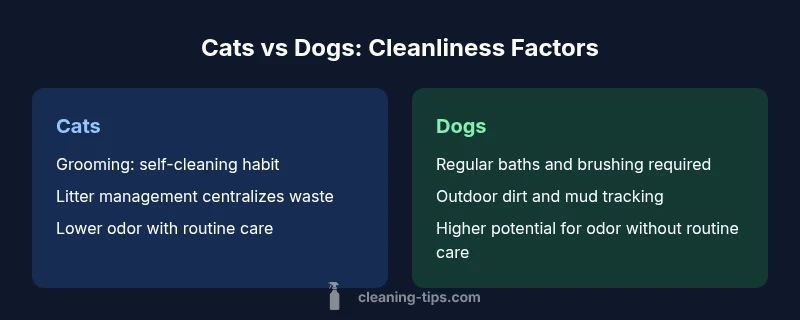
The question "who is cleaner cats or dogs" doesn’t have a universal answer. In most homes, cats are cleaner overall due to their self-grooming and litter-based potty system, while dogs require regular baths and indoor hygiene routines. Cleanliness depends on grooming, space, and how well odor, shedding, and mess are managed.
Why Grooming Habits Drive Cleanliness
According to Cleaning Tips, grooming habits are a major driver of household cleanliness when pets share a living space. This is because grooming reduces dander, skin flakes, and odors at the source, and shapes how often you need to intervene with cleaning tasks. In the cat world, self-grooming and a defined litter system often keep homes looking and smelling fresher between major cleaning cycles. The Cleaning Tips team notes that owners who invest in consistent routines report fewer stray hairs on surfaces and less odor buildup, even in multi-pet households. By contrast, dogs bring in more dirt from outdoor activity, muddy paw prints, and saliva-related stains, which can elevate cleaning workload. However, that workload is highly scalable with a clear routine: regular brushing, targeted spot cleaning, and smart use of pet-safe cleaners. The key is to tailor routines to your space: a small apartment with a cat can stay remarkably clean with weekly tasks, while a busy household with a dog may require repeated midweek touch-ups. Throughout this article, we compare these factors across living scenarios, shedding light on practical cleaning choices.
Key Factors That Affect Pet Cleanliness
Several factors determine how clean a home with cats or dogs stays, and many of these are within your control. First, grooming frequency and technique: cats groom themselves, but owners influence the rate of shedding and breath odor through brushing. Dogs benefit from routine brushing, ear care, and occasional baths to prevent strong odors. Second, living space and layout: a small apartment limits dirt spread if you have a cat that uses a litter box, while houses with yards might see more mud tracked in by dogs. Third, waste management: a litter box centralizes cat waste but requires regular cleaning; dog waste depends on outdoor trips and indoor potty training. Fourth, fabrics and surfaces: upholstery, carpets, and curtains absorb fur and dander; choosing pet-friendly fabrics and frequent cleaning reduces buildup. Fifth, seasonal changes: allergy seasons and weather patterns affect shedding rates and odor indoors. Understanding these variables helps homeowners design effective routines rather than reacting to mess after it appears.
Cat-Specific Cleanliness Considerations
Cats are often perceived as cleaner due to their compact, self-maintaining grooming. Regular brushing reduces loose fur and dander, while a clean litter box minimizes odors and avoided accidents. Litter management is a uniquely cat-centered cleaning task; ensuring the box is accessible, scoopable, and cleaned daily prevents buildup and keeps surfaces cleaner. Scratching posts and well-maintained nails also reduce damage to furniture, which in turn lowers the need for deep cleaning of upholstery and carpets. Habitat design matters: placing litter boxes away from food zones and choosing easy-to-clean litter helps sustain cleanliness in busy households. The key takeaway for cat owners is consistency—daily quick checks and weekly deeper cleanings create a noticeably tidy home environment and reduce ongoing cleaning workload.
Dog-Specific Cleanliness Considerations
Dogs bring different cleanliness challenges, largely driven by outdoor activity and body odor. Regular baths, ear care, and coat brushing are crucial, especially for breeds with longer hair or oily coats. Muddy paw prints, saliva marks on doors and walls, and slobber on bowls and furniture can increase cleaning tasks. Training plays a big role: indoors potty routines, crate training, and designated spaces for feeding help contain mess. Outdoor access should be managed to minimize dirt being tracked inside, and towels or mats at entryways can dramatically cut down on dirt transmission. Veterinary-guided grooming schedules and seasonal flea and tick prevention also influence overall cleanliness by reducing itch-scratch irritations that lead to additional surface cleaning.
Litter Box Management and Indoor Hygiene
For cats, the litter box is a central factor in indoor cleanliness. The number of boxes, their placement, and daily scooping directly affect odors and airborne particles. A general rule is one litter box per cat, plus an extra box in larger homes or multi-level layouts. Keeping lids clean and ensuring proper ventilation helps minimize smells. Weekly litter box maintenance should include removing clumps and washing the box with pet-safe cleaners. Pair litter hygiene with routine sweeping and vacuuming of nearby areas to capture stray particles. For households with both cats and dogs, create protected zones where litter boxes remain inaccessible to dogs, or use baby gates to shield the area. Proper disposal of waste and using odor-control additives can further reduce indoor residues.
Shedding, Fur, and Fabrics
Shedding drives most of the visible mess in pet homes. Regular brushing reduces the amount of fur that lands on furniture, carpets, and clothing. For cats, daily or every-other-day brushing is effective, especially during peak shedding seasons. For dogs, brushing frequency depends on breed and coat length; longer hair requires more frequent grooming to prevent mats that trap dirt. Vacuuming high-traffic areas several times a week, washing pet bedding regularly, and using microfiber or washable fabrics on furniture can significantly cut down on fur and dander. A strategic cleaning routine—focusing on fur-prone zones—will noticeably improve overall cleanliness.
Indoor Surfaces: Flooring, Furniture, and Fabrics
Hard flooring like tile or vinyl is easier to clean than plush carpets, but fur and dander still require attention across all surfaces. Regular mopping and lint rolling help remove pet hair from smooth surfaces, while vacuuming remains essential for carpets and upholstery. Fabric choices matter: consider slipcovers or washable covers for couches and chairs, and use pet-safe stain removers for spills. For homes with both cats and dogs, designating pet zones with easy-clean materials reduces cross-contamination and makes routine cleaning simpler. Temperature control and air filtration can also reduce odors and improve air quality in pet-heavy households.
Real-World Cleaning Routines: Weekly to Monthly
A practical cleaning cadence balances routine tasks with deeper seasonal work. Weekly tasks include brushing pets, sweeping or vacuuming floors, washing bedding, cleaning litter boxes, and wiping surfaces high in pet traffic. Monthly routines expand to washing curtains, detailing pet bowls, and deep cleaning upholstery using pet-safe cleaners. Seasonal tasks involve decluttering pet supplies, inspecting and cleaning air ducts if applicable, and refreshing odor-control strategies. Adopting a checklist approach helps households stay on track, minimizing last-minute scrambles when guests arrive or when pets have outdoor adventures. The aim is a predictable rhythm that keeps cleanliness manageable rather than reactive.
Misconceptions About Pet Cleanliness
Common myths suggest cats are always clean and dogs are inherently messy. In reality, cleanliness depends on routines, space, and behavior rather than species alone. Some cats may produce more litter-related odors in poorly ventilated areas, while some dogs roam muddy spaces that require frequent interior cleaning. Another misconception is that grooming alone solves all mess; indoor air quality, fabric choices, and floor type also play significant roles. A data-informed approach—tailored routines and targeted cleaning strategies—delivers the best outcomes for any home with pets.
Cleanliness Across Living Situations: Apartment vs House
Apartment living often favors cats due to compact spaces and the absence of outdoor yard transitions, which can reduce dirt tracking. Houses with yards, on the other hand, may see more mud and outdoor debris unless controlled. In either setting, space layout matters: separate zones for food, litter, and sleeping areas minimize cross-contamination. For renters, compact, easy-to-clean surfaces and washable curtains help maintain cleanliness without major investments. For homeowners, durable flooring and robust cleaning tools support long-term maintenance. The bottom line is to design a system that aligns with space, pet layout, and daily schedules to keep the home clean and comfortable.
Quick Wins to Improve Cleanliness in Mixed-Pet Homes
If you share a home with both cats and dogs, focus on joint routines that address shared needs. Use high-quality pet vacuums, place washable throws on furniture, and establish a near-daily wiping routine for common touchpoints like door handles and counters. Invest in air quality improvements, such as HEPA filters, to reduce dander in the air. Create separate zones: one cat-friendly area with a litter box and scratching posts, and a dog-friendly area with mats near entrances. Regular grooming and a consistent cleaning schedule tailored to the pets’ patterns will yield tangible cleanliness benefits.
Comparison
| Feature | Cats | Dogs |
|---|---|---|
| Grooming needs | Self-grooming, low-maintenance bathing (occasional) | Regular baths and brushing required (breed-dependent) |
| Waste management | Litter box centralizes waste and odor control | Outdoor/indoor potty options with variable odor control |
| Odor control | Typically lower odor with routine litter care and grooming | Higher odor potential without regular baths and indoor hygiene |
| Allergen considerations | Dander and saliva are common allergens; litter odors less impactful but present | Dander, saliva, and outdoor contaminants influence allergens |
| Cleaning frequency | Weekly to biweekly litter and surface cleaning | Frequent brushing, baths, and surface cleaning needed |
| Space impact | Minimal outdoor debris tracking; fur on surfaces manageable with routines | Mud and outdoor debris tracking; higher surface cleaning effort |
Strengths
- Cats generally require less frequent bathing and grooming
- Litter boxes confine cat waste to a dedicated area
- Dogs can be trained to reduce indoor mess with routines
- Routines can be tailored to space and pet activity
Weaknesses
- Litter box maintenance adds a dedicated cleaning task
- Cats can track litter and shed fur onto textiles
- Dogs may spread dirt through mud or outdoor activity
- All pets create dander and odor challenges that vary with breed and environment
Cats are generally cleaner overall; dogs can rival them with consistent grooming and indoor routines
Grooming habits and potty systems drive cleanliness more than species alone. With regular routines, both cats and dogs can maintain a tidy home, though cats typically require fewer baths and rely on litter management.
Questions & Answers
Which pet is easier to keep clean overall?
Cats are generally easier to keep clean overall due to self-grooming and a litter-based system. Dogs require more frequent grooming and baths, especially in muddy or outdoor settings. The right routine makes a big difference for both.
Cats tend to be cleaner overall because of grooming and litter boxes, but dogs can be kept clean with regular baths and grooming.
Do cats shed more than dogs on average?
Shedding varies by breed and season. Cats shed year-round, while many dogs shed more heavily during seasonal changes. Regular brushing helps manage fur around the home for both.
Cats shed, and many dogs shed seasonally; regular brushing helps control the mess for both.
Is litter box maintenance essential to cleanliness?
Yes. Litter box maintenance is a cat-specific responsibility that directly affects odor and surface cleanliness. Cleanliness improves when the box is scooped daily and washed weekly.
If you have a cat, you’ll need to manage the litter box to keep the home clean.
What cleaning products are safe for households with pets?
Use pet-safe cleaners that are non-toxic and labeled for household use. Avoid ammonia-based products on surfaces frequented by pets, and follow manufacturer instructions for ventilation.
Choose pet-safe cleaners and follow instructions to keep your home safe for both pets and people.
How often should I vacuum and mop in a pet household?
Vacuum high-traffic areas several times a week and mop or wipe surfaces regularly to control fur, dander, and dirt. Adjust cadence based on shedding levels and space size.
Vacuum main living areas a few times a week and mop regularly, especially in high-traffic zones.
Can grooming effectively reduce odors?
Regular grooming reduces odor by removing oils and skin flakes at the source. Baths should complement brushing and cleaning routines, not replace them.
Yes—consistent grooming helps cut down indoor odors when combined with cleaning.
The Essentials
- Adopt grooming-focused routines to improve cleanliness
- Litter management is a cat-specific cleanliess driver
- Regular baths and brushing are essential for dogs
- Vacuuming and fabric care reduce fur and dander buildup
- Tailor cleaning plans to space and pet activity