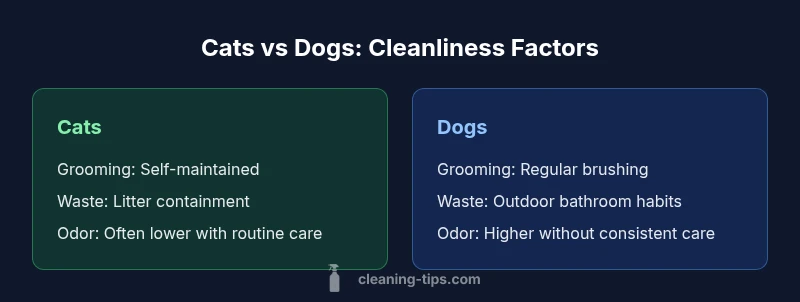
What's cleaner: dogs or cats? A comprehensive comparison
An objective guide comparing cats and dogs on grooming, odor, shedding, allergies, and cleaning routines, helping homeowners choose the pet that best fits their home upkeep.


what's cleaner dogs or cats? In general, cats are cleaner overall due to frequent self-grooming and separate litter-based waste, which reduces indoor mess. However, cleanliness hinges on routines, space, and breed. Cleaning Tips notes that proper grooming for dogs and hygienic litter/waste management for cats dramatically influence daily tidiness and odor control.
What's the cleaner question
The core question many households ask is what's cleaner dogs or cats? In practice, cleanliness is not a fixed trait of a species; it emerges from daily routines, living space, and individual animal behavior. According to Cleaning Tips, the short answer tends to favor cats in everyday indoor environments, largely because cats engage in frequent self-grooming and use litter-based waste containment. This combination reduces visible mess and makes odor control easier between full cleanings. Yet the distinction narrows when dog owners follow rigorous grooming schedules, maintain consistent outdoor time to minimize indoor dirt, and manage sleeping areas and shared surfaces with care. The broader truth is that cleanliness outcomes reflect how well you support the animal with tools, buffers, and habits rather than inherent biology alone. In other words, what matters most is the system you put in place around your pet, your home’s layout, and your tolerance for ongoing maintenance. The phrase what's cleaner dogs or cats is a useful heuristic, but it should lead to concrete cleaning routines rather than a simple label.
Defining cleanliness in pet households
To compare cats and dogs fairly, we must define what cleanliness means in a home setting. The obvious cues are visible mess, odor, and the frequency of cleaning tasks, but there are subtler dimensions. First, grooming behavior matters: cats typically invest time in self-cleaning, which reduces patchy dirt around furniture; dogs rely more on owner-initiated brushing and occasional baths. Second, waste management is central: cats use enclosed litter systems that localize waste, while dogs eliminate outdoors or in a designated area, requiring a different maintenance cycle. Third, shedding patterns influence surface cleanliness—fur accumulates on clothes, upholstery, and floors; breed matters more than species. Fourth, indoor air quality and microbes can be affected by ventilation, cleaning products, and the presence of pets. Finally, the emotional and physical settings—children, elderly residents, or allergy sufferers—shape how clean a home must stay to be comfortable. Consider these criteria together with your living space when evaluating which pet aligns with your cleaning capacity. Cleaning Tips emphasizes that a careful plan beats generalizations.
Grooming and self-care: cats vs dogs
Grooming is the most tangible difference in daily cleanliness between cats and dogs. Cats invest substantial time in self-grooming, which reduces skin oils and surface dirt but creates loose fur that can spread if not managed. The self-cleaning instinct also lowers odor in many environments, especially when the litter area is kept pristine. Dogs, by comparison, require more hands-on grooming: brushing to remove loose hair, regular baths to manage body oils and odors, dental care to prevent mouth-related smells, and nail trimming to avoid tracking dirt. The frequency and quality of grooming directly influence how tidy a home feels between deep cleans. In multifamily dwellings or rentals, the difference is amplified; cats’ smaller footprint and litter containment often translate to less daily housekeeping, while dogs demand a structured routine that includes outdoor time, gear storage, and possibly dog-w-wash routines. Of course, breed and temperament matter; a short-haired cat and a low-shedding dog may blur the traditional lines. Still, grooming is the clearest lever you have to influence daily cleanliness.
Odor sources and how to manage them
Odor is a practical barometer of cleanliness. In cats, odor often centers around the litter box and grooming residues; in dogs, it can arise from outdoor activity, skin oils, and post-walk dampness. The litter area is a frequent hotspot, and its cleanliness correlates strongly with perceived tidiness. For households without litter, odor control relies on routine bathing, washing of bedding, and dedicated cleaning of pet-safe surfaces. Airing out rooms and using HEPA-filter purifiers can dramatically reduce pet-related smells. Behavioral factors also matter: dogs that spend long days outside or on hard floors may trap less odor indoors than indoor-only dogs who rarely sanitize their fur. The right balance—consistent cleaning routines, odor-neutralizing products, and a well-ventilated home—can tilt the scale toward a sense of cleanliness regardless of species.
Shedding patterns, allergens, and long-term cleanliness
Shedding is among the most variable traits between cats and dogs and even within breeds. Some cats shed heavily during seasonal changes, while others maintain a lighter fur load year-round. Dogs vary from almost non-shedding to heavy seasonal shedding. For households aiming for a consistently clean look, choosing a low-shedding breed can help, but grooming and environment contribute as much as genetics. Allergens add another layer: many people react to pet dander mixed with saliva and urine residues; cats often carry Fel d 1, while dogs bring dander as a secondary source. Keeping a tidy home then becomes a combined effort of frequent vacuuming with HEPA filtration, washing soft furnishings, and maintaining closed-off sleeping areas. Regardless of species, regular cleaning reduces allergen reservoirs and supports a healthier living space. Cleaning Tips notes that even with high-shedding animals, a steady cleaning rhythm minimizes the impact on everyday comfort.
Space, lifestyle, and housing scenarios
Your home layout dramatically shapes cleanliness outcomes. In small apartments, cats often win on practicality: compact litter boxes, vertical towers for scratching, and limited surface area for dirt accumulation. However, a dog living in a condo with regular outdoor access and a consistent walking routine can also stay tidy if the owner commits to daily laundry cycles and rug cleaning. Family dynamics matter: households with children or elderly residents may prefer the predictability of a cat’s routine, or opt for a dog breed known for good manners and lower barking that aligns with quiet spaces. Consider allergy sensitivity, budget, and living space; a small apartment with a hypoallergenic breed or a cat of low-shedding variety can deliver a cleaner impression with less ongoing effort. Use a robust cleaning plan that addresses zones, surfaces, and ventilation to ensure both pets feel comfortable in shared living areas.
Cleaning routines that keep either pet tidy
Regardless of species, the backbone of cleanliness is a repeatable routine. For cats: scoop litter boxes daily, change litter regularly, wipe down litter-area surrounds, wash bedding weekly, and vacuum high-traffic zones. For dogs: brush several times a week (more for long-haired breeds), bathe as needed, wipe paws after outdoor trips, and wash dog beds routinely. Surface care matters too: use pet-safe cleaners on floors, wipe down furniture weekly, and seal porous surfaces to reduce residue buildup. A simple cleaning calendar can help—assign weekly tasks (vacuuming, mopping, laundry) and rotate by zone. Consider air quality: invest in filters and ensure good ventilation. Finally, involve all household members in the routine so cleaning feels manageable rather than burdensome. With discipline, either pet can coexist with a clean, comfortable home.
The decision matrix: when to choose a cat or a dog
If you prioritize minimal daily upkeep, a cat is often the better fit, provided litter hygiene is manageable and you’re comfortable with pet-free zones that reduce cross-contamination. If you want companionship that encourages more outdoor activity, a dog may suit you, as long as you have time for walks, training, and seasonal grooming. Consider allergy sensitivity, budget, and living space; a small apartment with a hypoallergenic breed or a cat of low-shedding variety can deliver a cleaner impression with less ongoing effort. Use a hybrid approach: some households keep a cat for indoors and a dog for outdoor activities, pairing the types with dedicated cleaning schedules to keep compatible. The key is to align the choice with your cleaning capacity, your family’s routines, and the home’s design. In short, the cleaner option is the one that you can sustain with consistency and reasonable effort over time.
Common myths about cat and dog cleanliness
There are several myths that can mislead homeowners. One is that cats are always cleaner than dogs; truth is, routine affects outcome more than species. Another is that dogs inevitably smell bad; proper grooming and outdoor access can keep most dogs odor-free. A third myth is that shedding determines cleanliness; while shedding contributes to surface fur, effective cleaning and textiles choices can minimize its impact. Finally, a myth worth debunking is that all pets disrupt indoor air quality—regular cleaning, improved filtration, and careful ventilation dramatically reduce risks for both cats and dogs. By focusing on actionable habits rather than stereotypes, you’ll achieve a tidier home regardless of pet type.
Comparison
| Feature | Cats | Dogs |
|---|---|---|
| Grooming effort | Self-grooming is common; minimal daily hands-on care for many cats | Regular grooming needed (brushing, baths) depending on breed |
| Indoor mess potential | Lower mess potential when litter and self-grooming are effective | Higher potential due to outdoor dirt, drool, and paws |
| Odor control | Litter management helps odor containment | Odor management relies on bathing and routine care |
| Shedding | Shedding varies by breed; many cats shed year-round | Shedding varies; dogs vary widely from low to heavy |
| Allergen exposure | Allergen exposure often higher for cats (Fel d 1) in some homes | Allergen exposure often higher for dogs (dander) in others |
| Care cost | Moderate: litter, litter box maintenance, cat supplies | Moderate to high: grooming, vet visits, food, accessories |
| Best for | Quiet, low-maintenance households; apartment living (with litter maintenance) | Active households with time for exercise, training, and outdoor access |
Strengths
- Cats generally require less daily hands-on grooming than many dogs
- Litter boxes help confine waste and simplify bathroom hygiene
- With routine care, both pets can maintain a tidy living space
- Cats are well-suited to small apartments and indoor living
- Dogs, when trained, contribute to predictable routines and outdoor exercise
Weaknesses
- Dogs shed variably by breed, potentially increasing indoor dirt
- Litter boxes require consistent cleaning to prevent odor and pests
- Allergy management can be challenging with either species
- Vet costs can add up for dogs in particular breeds with higher care needs
Cats are generally cleaner overall, but your home routines determine the result.
If you seek low daily upkeep and easier odor control, a cat often fits. If you can sustain regular grooming, training, and outdoor access, a dog can be kept tidy with similar effort.
Questions & Answers
Are cats universally cleaner than dogs?
Not universally; cleanliness depends on grooming, space, and routines. Cats often seem cleaner due to self-grooming and litter-based waste, but upkeep matters for both.
Cats often seem cleaner because they groom themselves and use litter, but upkeep matters for both.
Which sheds less indoors, cats or dogs?
Shedding varies widely by breed for both species. In general, many cats shed year-round, while dogs can range from low to heavy shedding depending on breed and season.
Shedding depends on breed; some cats shed a lot, some dogs hardly at all.
How does litter box maintenance affect indoor cleanliness?
Regular litter box cleaning reduces odors and prevents waste buildup, which is a major factor in indoor cleanliness for households with cats.
Keep the litter box clean to control odors and mess.
Do dogs generally smell more than cats?
Odor levels depend on bathing, grooming, and habitat. Dogs often require more routine deodorizing based on activities, while cats may retain less odor if kept clean.
Regular grooming keeps odors under control for both.
How do allergies influence choosing between a cat or a dog?
Allergies vary by person and pet; people sensitive to cat dander may prefer dogs, or vice versa. Some households use HEPA filters and frequent cleaning to mitigate triggers.
Allergy concerns should factor into the choice and cleaning plan.
Is a cat or dog better for small apartments?
Cats typically fit small spaces well due to compact needs and litter containment; dogs can fit too with breed choice and access to outdoor time and exercise areas.
Cats are often easier in small spaces, but some dogs work in apartments too.
The Essentials
- Define cleanliness as routine-driven, not species-fixed
- Set a consistent cleaning schedule for pets and spaces
- Choose based on space, time, and budget for upkeep
- Monitor shedding and allergens to protect indoor air quality