Bosch Clean Dishwasher: A Step-by-Step Cleaning Guide
Learn to keep your Bosch clean dishwasher in top condition with a practical, step-by-step cleaning routine. Safe cleaners, maintenance tips, and odor remediation explained for a healthier kitchen.


With a Bosch clean dishwasher, you can prevent odors and improve performance by following a simple, monthly cleaning routine. This steps-driven guide shows you how to prep, rinse, scrub, and run a cleaning cycle using safe cleaners, inspect critical components, and reassemble for optimal operation. Focus on the filter, spray arms, door seals, and rust-prone areas, and document any unusual wear. This approach aligns with Cleaning Tips guidance for a long-lasting, efficient Bosch dishwasher.
Why Bosch Maintaining a Clean Dishwasher Matters
According to Cleaning Tips, regular maintenance of a Bosch clean dishwasher reduces odors, protects against mineral buildup, and extends the appliance’s service life. The Cleaning Tips team found that many homeowners neglect interior cleaning, which can lead to clogged spray arms and uneven water distribution. A proactive routine helps ensure better cleaning results, quieter operation, and fewer service calls. In this section, we explore why a Bosch dishwasher benefits from consistent maintenance and how small, repeatable actions add up over time. You’ll learn practical habits that fit into a typical home schedule and keep your kitchen running smoothly.
How Bosch Dishwashers Differ: Why Targeted Cleaning Matters
Bosch dishwashers are engineered for efficient water use, precise spray patterns, and durable seals. Regular cleaning addresses the most vulnerable parts: the filter and sump, spray arms, door gaskets, and interior corners where moisture can linger. By focusing care on these areas, you reduce the likelihood of musty odors, white mineral films, and rust staining on stainless surfaces. This section highlights why a model-specific approach matters and how to tailor your routine to your dishwasher’s design and your water quality.
Prep Before You Clean: What to Gather and Check
Before you start, gather a few practical supplies and consult your model’s manual for any Bosch-specific cautions. A basic kit includes dishwasher-safe cleaner tablets or a vinegar-based solution, baking soda, a soft microfiber cloth, a non-abrasive sponge, a small brush or old toothbrush, and protective gloves. Check that the door is unlocked, power is off, and you can safely access the interior. If you have hard water, consider a rinse aid or water-softening precautions in your maintenance plan. This prep minimizes surprises during the cleaning cycle and helps you focus on the key components.
Detailing the Interior: Filters, Spray Arms, and Seals
Deep cleaning hinges on three components that often accumulate debris: the filter, the spray arms, and the door seals. Rinse and wipe the filter under running water to remove trapped food particles. Inspect spray arms for clogged-nozzle holes and clear them with a pin or thin brush. Wipe the door gasket with a damp cloth to remove residue and prevent mold growth. This section provides a practical, repeatable approach to inspecting and refreshing these critical parts without disassembly, keeping the dishwasher performing at its best.
Cleaning Agents: What’s Safe and Effective for Bosch Models
Using the right cleaners protects the interior and hardware. Dishwasher-safe tablets or a neutral, non-bleach cleaner is typically safe for Bosch interiors; avoid chlorine bleach inside the drum. White distilled vinegar can deodorize, but don’t mix cleaners with vinegar in a single cycle. Baking soda can help with odor and light scouring on the interior surfaces, but avoid abrasive powders that could scratch stainless steel. The goal is to choose pH-balanced agents that won’t damage seals or electronic controls.
The Step-By-Step Cleaning Routine: A Monthly Deep Clean (High-Level Overview)
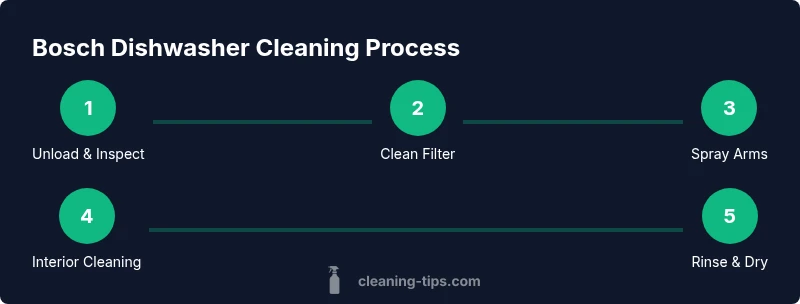
A monthly deep clean integrates several focused actions: empty the dishwasher, remove and rinse the filter, clean the spray arms, wipe the gasket, run a cleaning cycle with a safe cleaner, and finally rinse with a hot water cycle. This structured approach minimizes guesswork and helps you track maintenance. By keeping a simple checklist, you’ll build a routine that reduces odors, improves washing performance, and extends the life of your Bosch dishwasher.
How to Maintain Stainless Steel and Gasket Longevity
Stainless steel interiors and rubber door gaskets benefit from gentle care. Wipe away smudges with a microfiber cloth using a small amount of dish soap, then rinse and dry. Avoid abrasive pads that can scratch metal surfaces. For gaskets, inspect for cracks or missing folds and clean the channels to prevent moisture buildup. This ongoing attention preserves the appliance’s aesthetic and functional integrity over years of use.
Odor Reduction and Hard Water Management
Odors often stem from trapped food residues and slow-drying cycles. Regularly cleaning the sump and filter reduces odor sources. If you have hard water, consider a rinse aid and a periodic descaling routine as recommended by your manual and local water quality guidelines. This section outlines practical steps to keep your Bosch dishwasher smelling fresh and performing consistently, especially in areas with mineral-rich water.
Scheduling and Maintaining a Routine: A Practical Calendar
Consistency is the key. Create a monthly cleaning reminder and log each maintenance action to track trends and detect issues early. If you notice persistent odors, adjust your routine by increasing the frequency of filter checks or adding a descaling step. By embedding cleaning into your calendar, you minimize the risk of neglect and maximize performance across years of ownership.
Tools & Materials
- Dishwasher-safe cleaner tablets(Follow Bosch recommendations; fragrance-free if sensitive)
- White vinegar (5% acidity)(For deodorizing; do not mix with other cleaners in a single cycle)
- Baking soda(Deodorizing and gentle scrubbing aid)
- Soft microfiber cloth(For wiping door, seals, and exterior)
- Non-abrasive sponge(Gentle scrubbing of interior surfaces)
- Old toothbrush(Clean hard-to-reach spray-arm nozzles)
- Gloves(Protect hands from cleaners)
- Measuring cup(Helpful for precise cleaner quantities)
Steps
Estimated time: 60-90 minutes
- 1
Power down and unload
Turn off and unplug the dishwasher if possible, then remove racks to gain full interior access. This prevents accidental operation and gives you clear visibility of all components. Having an open interior makes it easier to inspect seals, filters, and spray arms before cleaning.
Tip: Take a quick photo of rack placement to guide reassembly. - 2
Open and inspect the filter
Remove the bottom rack and take out the filter assembly. Rinse under warm running water, using a soft brush if needed to dislodge stubborn residues. Inspect for wear and replace if damaged to maintain proper drainage and filtration.
Tip: If the filter is very clogged, soak it briefly in warm water with a touch of mild detergent. - 3
Clean the spray arms
Detach spray arms if possible and check each nozzle for clogs. Use a thin tool or pin to clear blocked holes, then rinse the arms thoroughly. Reattach securely to ensure even spraying during cycles.
Tip: Do not force parts; consult the manual if an arm is stubborn. - 4
Wipe door gaskets and interior corners
Gaskets can harbor mold and soap scum. Wipe with a damp cloth and rinse. Inspect the channels for residue and wipe clean to promote a tight seal and prevent leaks.
Tip: Dry the gasket after cleaning to reduce moisture buildup. - 5
Run a cleaning cycle with safe cleaner
Place a dishwasher-safe cleaner tablet or a recommended vinegar solution in the dispenser. Run an empty hot cycle to target buildup and odors. Allow thorough drying after the cycle completes before loading dishes.
Tip: Always run with an empty load to prevent residue on dishes. - 6
Rinse and dry interior
Manually rinse away any loosened residue and wipe down all interior surfaces. Leave the door ajar for a short time to promote complete drying and prevent musty smells.
Tip: Keep a little moisture in the interior surface to prevent cracking of seals from sudden drying. - 7
Reassemble racks and perform a quick rinse
Replace the racks, ensure a proper fit, and run a short hot rinse with nothing inside to remove any remaining cleaner traces. This final rinse helps ensure spotless performance on your next load.
Tip: Check that spray arms rotate freely after reassembly. - 8
Establish a maintenance cadence
Create a simple monthly calendar reminder for filter checks, arm nozzle inspections, and gasket wipes. Document actions taken to monitor trends and catch issues early.
Tip: Pair with a quarterly descaling if you have hard water.
Questions & Answers
How often should I clean the Bosch dishwasher filter?
Most models benefit from a monthly filter cleaning. Check your manual for your exact filter type and maintenance interval, and adjust if you notice slower draining or odors.
For most Bosch models, clean the filter monthly. If you notice slow draining or odors, increase frequency and consult your manual.
Is it safe to use vinegar in a Bosch dishwasher?
Vinegar can deodorize and help with mineral buildup when used sparingly in an empty cycle. Do not mix vinegar with other cleaners in the same cycle.
Vinegar is generally safe in small amounts for an empty cycle, but never mix with other cleaners in the same cycle.
Can I use baking soda for cleaning or odor control?
Baking soda can help deodorize and gently scrub interior surfaces, but avoid introducing it into the heating element area and never mix with bleach.
Baking soda is useful for deodorizing, but avoid the heating element and do not mix with bleach.
What should I do about musty odors?
Musty odors often come from trapped moisture and residues. Clean the filter, spray arms, and gaskets; run a cleaning cycle; ensure proper drying after cycles.
Clean the interior components and run a cycle to eliminate odors, and keep the door slightly ajar after use to dry it out.
Why is there a white film on dishes after washing?
A mineral residue from hard water or improper rinse aid can cause a white film. Adjust detergent/rinse aid and consider a descaling step if mineral buildup persists.
Hard water can leave a white film; adjust rinse aid and consider occasional descaling.
Does Bosch recommend a specific cleaning routine?
Yes, follow your model’s manual and use recommended cleaners. A monthly interior cleaning routine is commonly advised to maintain performance.
Bosch recommends using model-specific cleaning guidance and a monthly interior clean.
Watch Video
The Essentials
- Schedule monthly interior cleaning to prevent odors.
- Keep filters, spray arms, and gaskets clear of debris.
- Use safe cleaners and avoid mixing chemicals.
- Wipe seals and edges to maintain a tight seal.
- Document maintenance to build a reliable routine.