Bosch How to Clean a Dishwasher: A Practical Guide
Learn how to clean a Bosch dishwasher with practical, step-by-step directions: clean the filter, spray arms, and door seals, then run a maintenance cycle. Includes tools, safety tips, and a monthly routine to keep odor-free performance.


You’ll learn how to clean a Bosch dishwasher from top to bottom. This guide covers removing and washing the filter, inspecting and cleaning spray arms, wiping the door gasket, and running a maintenance cycle with a dishwasher cleaner. You’ll also get tips for preventing odors and buildup, plus a simple monthly routine to keep performance high without damaging components.
Why Regular Cleaning Matters for Bosch Dishwashers
Regular cleaning extends the life of any dishwasher, and Bosch models are no exception. Over time, food particles, mineral deposits, and soap residue can build up inside the tub, on the filter, and in spray arm jets, reducing cleaning performance, increasing energy use, and producing odors. A routine cleaning helps maintain water flow, ensures even distribution of detergent, and keeps seals pliable to prevent leaks. The Cleaning Tips team notes that a consistent care routine reduces the risk of costly repairs and keeps dishes coming out sparkling. By addressing buildup early, you’ll avoid stubborn clogs that are harder to remove later and maintain the appliance’s efficiency. Start with a simple monthly check, then adjust frequency based on usage, water hardness, and household size.
Understanding the Cleaning Cycle and Where to Start
Bosch dishwashers are designed to be low-maintenance, but a proactive cleaning routine yields the best results. The goal is to remove gunk from the filter, spray arms, and interior surfaces so water can circulate freely and detergents work effectively. Begin with the interior inspection, then perform a targeted cleaning of each component. Remember that many Bosch models share core design elements, so the same routine generally applies across models. This section sets the framework for the hands-on steps that follow and explains why each action matters for hygiene, odor control, and energy efficiency.
Inspect and Clean the Filter and Drain
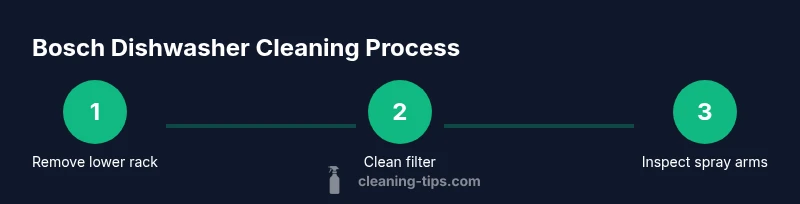
Remove the lower rack to access the filter housing. Rinse the filter under warm running water to remove trapped debris. If your model has a cylindrical or flat filter, loosen any locking mechanism per the user manual and rinse thoroughly. Use a soft brush to dislodge stuck particles from the filter housing and drain area. A clean filter helps maintain proper drainage and prevents food debris from circulating through cycles, which keeps dishes cleaner and reduces odors. Cleaning Tips suggests doing this monthly for most households, or more often in hard-water areas.
Clean the Spray Arms and Rinse Aids
Detach spray arms if possible according to your model’s instructions, or rotate them to inspect the spray holes. Use a thin tool or brush to clear clogged nozzles and ensure water can pass through freely. Rinse spray arms under warm water and reattach securely. Replacing clogged spray arms can restore spray patterns and improve cleaning performance. Remember to inspect rinse aids or additional jets if present, as buildup there can diminish overall washing power.
Wipe the Door Gasket and Interior Surfaces
Carefully wipe the door gasket with a damp cloth to remove mold, soap scum, and food particles that collect in the seal groove. Clean interior walls with a soft cloth and a mild cleaning solution, paying attention to corners where debris collects. Avoid abrasive cleaners that could scratch stainless steel or rubber components. Keeping the gasket and surrounding area clean helps prevent leaks and reduces odors.
Use Safe Cleaners: What to Use and What to Avoid
Choose cleaners labeled safe for automatic dishwashers and for stainless steel interiors. Use a dishwasher-safe cleaner that is formulated for automatic dishwashers and follow the product instructions. Avoid bleach-based cleaners or products not explicitly designed for dishwashers, which can damage gaskets or leave harmful residues. If your water is very hard, you may need to descale periodically with a citric acid-based product, following the manufacturer’s directions.
Descale and Freshen: Descaling Options
For mineral buildup, use a citric acid-based cleaner or a dishwasher-safe descaler according to label directions. Do not mix cleaners or use home remedies that create dangerous fumes. Run a cleaning cycle on a hot setting with the cleaner, then allow the machine to cool before opening. This helps refresh the interior and restore spray efficiency in hard water conditions.
Exterior, Rails, and Door: Keeping It Looking New
Wipe the exterior surfaces with a non-abrasive cloth. Clean the door edges, control panel, and handle, avoiding excess moisture near electronic components. If your model has stainless-steel panels, wipe with the grain to minimize streaks. Refer to the manual for any lubrication recommendations; many Bosch models require no lubrication, simply wipe and dry.
Monthly Maintenance Routine for Ongoing Performance
Set a monthly routine: inspect and clean filters, spray arms, and door seal; run a cleaning cycle; inspect for leaks; check spray pattern; wipe gaskets; record maintenance; adjust frequency for your usage. A consistent cadence reduces odors and helps dishes come out drier, cleaner, and more evenly washed.
Troubleshooting Common Odors and Residue
Persistent odors usually indicate trapped debris or mold in the filter, gasket, or tub. Re-clean the filter, spray arms, and gasket, and run an extra hot cycle with dishwasher-safe cleaner. If residue remains, check water hardness and the rinse aid level, and consider adjusting the detergent amount or schedule. Regular maintenance prevents most odors before they start.
Safety and Proper Handling: When to Seek Help
Always unplug or switch off power before handling internal components. If you notice leaks, unusual noises, or persistent odors after cleaning, consult Bosch support or a qualified technician. Do not attempt major disassembly beyond user-manual guidance. When in doubt, seek professional help rather than risking damage to wiring or seals.
Tools & Materials
- Dishwasher-safe cleaner(Choose products labeled for automatic dishwashers)
- Soft-bristled brush or old toothbrush(For filter housing and spray arms)
- Microfiber cloth(Lint-free for gaskets and interior surfaces)
- Gloves(Protect hands during cleaning)
- Warm water bucket or bowl(Rinse water for cloths and parts)
- Citric acid or descaler (optional)(Only if recommended by the manual)
- Vinegar (optional)(Use only if manual approves; do not mix with cleaners)
Steps
Estimated time: 60-90 minutes
- 1
Remove the lower rack to access interior
Carefully slide out the bottom rack and set it aside in a clean area. This grants access to the filter, drain, and interior walls. Use a gentle angle to avoid bending wires or damaging coatings.
Tip: Keep the rack nearby so you don’t misplace it; empty any food debris into the trash before removing the rack. - 2
Remove and rinse the filter
Locate the filter assembly, remove any locking mechanism per your model’s manual, and rinse under warm water. Inspect for cracks or damage while cleansing away trapped debris.
Tip: A soft brush can help loosen stubborn debris without damaging the filter mesh. - 3
Clean the filter housing and drain area
With the filter removed, scrub the housing and drain area with a brush and mild cleaner. Rinse thoroughly to remove all residue that could clog drainage.
Tip: Pay attention to corners where gunk tends to accumulate; a small brush reaches tight spots. - 4
Inspect and clear spray arms
Check spray arms for clogs in the jets. If needed, detach following the manual and use a thin tool to clear holes. Rinse arms completely before reattaching.
Tip: Ensure spray arms sit securely; loose arms reduce washing efficiency. - 5
Clean spray arm nozzles and reattach
After clearing holes, reattach spray arms firmly. Run a quick rinse to verify water streams are unobstructed and flowing evenly.
Tip: Test spray pattern by running a short cycle with empty dishwasher. - 6
Wipe the door gasket and interior surfaces
Use a damp microfiber cloth to wipe the door gasket and interior walls. Remove any soap scum or mold and dry the surfaces thoroughly.
Tip: Avoid harsh cleaners near gaskets to prevent deterioration. - 7
Run a hot cleaning cycle with the cleaner
Place a dishwasher-safe cleaner in the dispenser or run an empty cycle with the cleaner per label directions. A hot cycle helps dissolve oils and mineral buildup.
Tip: Let the cycle complete and cool before handling interior components. - 8
Descale if needed and recheck
If you have hard water, descale according to the product directions. After descaling, run another hot cycle to rinse away any residues.
Tip: Do not mix descaling products with other cleaners. - 9
Reinstall racks and run a test cycle
Return the racks to their slots and run a final hot cycle with no dishes to ensure everything operates smoothly and interior surfaces are dry.
Tip: A test cycle confirms there are no leaks and that clean water circulates properly.
Questions & Answers
Should I always run an empty cleaning cycle?
For routine maintenance, you’ll typically run an empty cleaning cycle with a dishwasher-safe cleaner to refresh the interior without risking food debris. If your manual allows it, you can sometimes run with a small amount of wash aid, but follow the manufacturer’s guidance.
Yes—use an empty cycle with a dedicated cleaner to safely refresh the interior.
Can I use vinegar or lemon juice to descale a Bosch dishwasher?
Vinegar and citrus acids may be discouraged by some manufacturers because repeated exposure can affect seals over time. If your Bosch manual allows, use a recommended descaler rather than household acids and avoid mixing with detergents.
Check the manual first; use only approved descalers if you’re unsure.
How often should the filter be cleaned?
Clean the filter at least monthly as part of a routine. If you notice slow drainage or odors, increase frequency until performance stabilizes.
Clean the filter monthly, or more often if you have hard water or heavy use.
Is it safe to use the dishwasher with the door open to clean it?
No. Do not operate the dishwasher with the door open. Always ensure it is powered off and dry before inspecting interior components.
Never run the dishwasher with the door open; inspect components only when it’s off.
What should I do if odors persist after cleaning?
If odors persist, re-check the filter, gasket, and drain for hidden debris. Consider a second hot-cycle cleaning with a separate cleaner and verify rinse-aid settings.
If smells linger, re-clean the key areas and run another hot cycle with cleaner.
Where can I get model-specific guidance for my Bosch dishwasher?
Refer to your Bosch dishwasher’s user manual or contact Bosch support for model-specific maintenance steps and safety instructions.
Check the manual or contact Bosch Support for model-specific care guidance.
Watch Video
The Essentials
- Inspect and clean the filter first for best results
- Check spray arms for clogs and ensure water flows freely
- Use only dishwasher-safe cleaners and follow label directions
- Create a monthly maintenance routine to prevent odors and buildup