Can You Clean and Reuse Air Purifier Filters: A Practical Guide
Learn when you can clean and reuse air purifier filters, how to do it safely, and when replacement is the right move. A comprehensive, step-by-step guide from Cleaning Tips.


Can you clean and reuse air purifier filters? In many cases you should not reuse a filter unless the manufacturer explicitly allows it. Most HEPA and carbon cartridges are replacement-only, while some pre-filters are washable. Always follow the manual and opt for replacement when in doubt. Consult your device's guide for specifics. Cleaning Tips recommends verifying compatibility before attempting any cleaning.
Understanding Filter Types: What can be cleaned and reused
If you’re wondering can you clean and reuse air purifier filters, you’re not alone. The short answer depends on the filter type and the manufacturer's guidelines. According to Cleaning Tips, the policy varies widely by model, and a quick glance at the user manual often saves you from a costly mistake. In general:
- Pre-filters are designed to capture larger particles and are often washable and reusable.
- HEPA and activated carbon cartridges usually are replacement-only, because cleaning can leave particles or degrade filtration efficiency.
- Some specialty filters combine materials or are sealed in a way that prohibits cleaning; always verify before attempting any process.
This mix of possibilities means you should treat each filter like a separate component. Even if two units look identical, one may be washable while the other is not. Always start by locating the model number and checking the official cleaning instructions. If the manual is unclear, contact customer support or the retailer for explicit guidance.
Other considerations: environmental conditions, how often you use the purifier, and the dust load in your home can influence whether a cleaned filter will regain performance. If you notice reduced airflow, strange odors, or visible degradation after cleaning, it’s safer to replace rather than reuse. In the end, the goal is to maintain clean air without risking mold growth or airborne particles bypassing a clogged filter.
Washable vs. replace-only: what to know
Washable pre-filters are common in many models and are designed to be cleaned and reused. They usually sit toward the exterior and handle the brunt of dust and large debris. By separating this from the main filtration media, you can extend the life of the more expensive components. However, not all washable pre-filters are created equal. Some are cotton or foam blends that tolerate gentle washing, while others use materials that can fray or shed fibers if scrubbed too hard. The main cartridge—the HEPA or carbon layer—often relies on a sealed structure that makes cleaning impractical or unsafe. If you attempt it, you risk bypassing the filter’s designed airflow path and diminishing overall filtration efficiency. Always confirm with the manufacturer to avoid voiding warranties or reducing performance.
Additionally, lifetime expectations vary by brand. Some units explicitly state that only pre-filters are washable or that certain carbon blends cannot be refreshed once exhausted. If you cannot find a clear answer, assume replacement is necessary and proceed accordingly. This careful approach helps keep your indoor air clean and reduces the chance of mold growth or re-circulation of pollutants.
Safe cleaning methods for washable pre-filters
When a pre-filter is designated as washable, use gentle methods that preserve its structure and filtration capabilities. Start by turning off and unplugging the purifier, then remove the pre-filter. Use a vacuum with a brush attachment to remove loose dust. If the manual permits, rinse the filter under lukewarm water and use a mild dish soap sparingly. Do not use hot water or harsh cleaners, which can damage the material. After washing, gently shake off excess water and let the filter air-dry completely in a clean, shaded area. Do not reinstall until completely dry, as moisture can promote mold growth. If the filter has a strong odor after drying, replace it rather than reusing it. Finally, inspect for tears or delamination before reassembling. A poor seal can allow unfiltered air to bypass the system, defeating the purifier’s purpose.
Never place a damp pre-filter back into the unit, and always ensure the frame is intact. If you notice discoloration, fraying, or persistent dampness, replace the filter to protect your air quality.
How to inspect filters for reuse viability
Inspecting for reuse viability is a critical step. Start by confirming the model’s cleaning policy in the user manual. Look for explicit language about washable pre-filters and replacement schedules. If the filter shows visible tears, large indentations, or warped framing, discard it. Odors that persist after washing and drying can indicate trapped moisture or microbial growth that won’t be eliminated by cleaning. Check for reduced airflow when the purifier runs; if performance is noticeably lower after a cleaning cycle, it’s a sign the filter media has degraded. Avoid reusing filters that have any sign of contamination, moisture retention, or structural damage. For families with pets or high dust environments, err on the side of replacement to maintain optimal air quality. Finally, document the date you cleaned the filter and set reminders for future replacement to stay proactive about maintenance.
If you decide to reuse a filter, perform a controlled test run: monitor airflow, listen for odd sounds, and observe for unusual odors within the first 15–20 minutes of operation. If anything seems off, stop the purifier and replace the filter.
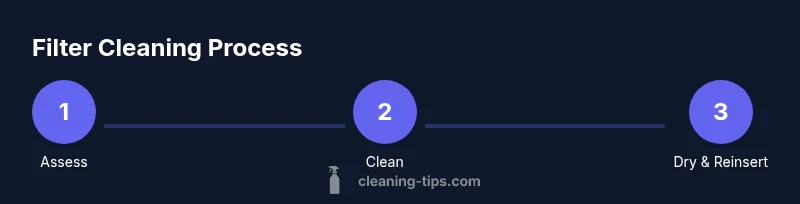
Step-by-step workflow: assess, clean, dry, and reinsert
This section provides a practical workflow you can follow when your model supports it. Be sure to read the manual before starting. 1) Assess the filter’s validity: confirm whether washable pre-filters exist and whether the main cartridge is replace-only. 2) Remove and prepare: unplug the unit and lay out a clean workspace; wear gloves to reduce skin contact with dust. 3) Clean: vacuum the exterior, then wash the pre-filter if allowed, using mild soap and lukewarm water. Rinse until clear and avoid wringing. 4) Dry thoroughly: place the filter in a well-ventilated area away from direct sunlight; allow 24 hours or longer in humid environments. 5) Reassemble and test: reinsert the filter and run the purifier on a low setting for 10-15 minutes to ensure proper airflow. 6) Log the maintenance: note the cleaning date and expected next replacement date. Tip: keep spare pre-filters handy so you can swap quickly when needed.
If you’re unsure about any step, stop and consult the manual or contact the manufacturer for guidance.
Common mistakes and safety precautions
Common mistakes include washing non-washable filters, using hot water, and applying household cleaners that can degrade filtration media. Another pitfall is insufficient drying, which can trap moisture and promote mold. Never scrub a filter with aggressive brushes that can tear the media. Avoid using bleach or strong solvents; they can leave residues that emit odors or reduce filtration efficiency. Also remember that a filter’s replacement schedule is based on usage, environment, and filter type. If in doubt, replace instead of risking compromised air quality. Finally, check for warranty terms—some manufacturers void warranties if users modify or substitute filters. By adhering to these precautions, you’ll maintain better indoor air quality and prolong purifier life.
Extending filter life through routine maintenance
Proactive maintenance is the best way to extend filter life. Establish a simple routine: perform a visual check monthly, vacuum every two to four weeks, and clean or replace pre-filters on a schedule that matches your environment. Keep the purifier in an area with stable temperature and low humidity to minimize moisture buildup. Replace main filtration media on the manufacturer’s recommended timeline; even if you manage the pre-filter well, the core media will eventually lose its effectiveness. Consider using a lifestyle approach: seal leaks around the purifier, keep windows closed during high-pollen seasons, and dust air-return areas regularly to reduce the load on filters. Routine maintenance keeps the device running efficiently, protects indoor air quality, and lowers long-term replacement costs.
Final considerations: documentation and replacements
Maintaining a clear record helps you avoid guesswork. Log cleaning dates, model numbers, filter types, and next replacement dates. Store spare filters in a cool, dry place away from sunlight and contaminants. When you reach the recommended replacement date, schedule a filter swap even if the purifier seems to be performing normally. This practice reduces the risk of unseen degradation and maintains consistent air quality. If you’ve recently moved to a new home or changed environmental conditions (pets, smokers, heavy dust), reassess your replacement schedule promptly. Finally, trust your senses: if you notice weaker airflow, unusual odors, or particle buildup after a cleaning attempt, replace that filter promptly to preserve the purifier’s effectiveness.
Tools & Materials
- Gloves(Protect hands from dust and contaminants during handling)
- Vacuum with brush attachment(Use on exterior surfaces and loose dust)
- Mild dish soap(Only for washable pre-filters—as per manual)
- Lukewarm water(Rinse thoroughly, avoid hot water)
- Soft brush or microfiber cloth(Gentle scrubbing if needed)
- Basin or sink(For washing pre-filters)
- Drying area(Well-ventilated, dry, away from direct sun)
- Replacement filters (spare)(Keep handy for replacement if needed)
Steps
Estimated time: 60-90 minutes
- 1
Assess the filter and manual
Turn off and unplug the purifier, then remove the filter. Locate the model number and read the cleaning guidance in the manual. If the manual says the main cartridge is not washable, plan for replacement rather than cleaning.
Tip: If the manual is unclear, contact customer support before proceeding. - 2
Prepare your cleaning area
Lay a clean towel or mat, wear gloves, and keep a basin nearby. Remove loose dust with a quick vacuum pass around the filter housing to minimize debris falling into the purifier.
Tip: Work in a well-ventilated space to avoid inhaling dust. - 3
Clean the washable pre-filter
If the pre-filter is designated washable, rinse under lukewarm water and use a small amount of mild soap if necessary. Rinse until the water runs clear and avoid wringing. Gently shake to remove excess moisture.
Tip: Do not use hot water or aggressive scrubbing that could damage the filter. - 4
Dry the filter completely
Place the filter in a clean, shaded area with good airflow and allow to dry fully—this can take up to 24 hours depending on humidity. Do not reinstall until completely dry to prevent mold growth.
Tip: If you must speed up drying, use a fan on a low setting away from the unit. - 5
Reassemble and test
Reinsert the filter and run the purifier on a low setting for 10-15 minutes to ensure airflow is normal and there are no unusual odors. If airflow is reduced, stop and replace rather than reuse.
Tip: Monitor the unit closely during the initial test run. - 6
Document and plan next replacement
Record the cleaning date, model, filter type, and expected replacement date. Set a reminder for the next cycle based on usage and environment to maintain optimal air quality.
Tip: Keep a simple log or calendar reminder for consistency.
Questions & Answers
Can HEPA filters be washed or reused in any circumstance?
Most HEPA filters are not designed to be washed or reused. Cleaning can damage the filter structure and reduce filtration efficiency. Always follow the manufacturer’s guidance and replace HEPA filters when needed.
Most HEPA filters shouldn’t be washed or reused; check the manual and replace when advised.
Are carbon filters ever washable or reusable?
Activated carbon filters are typically not washable and are designed for replacement when their adsorption capacity is exhausted. Cleaning can release trapped contaminants back into the air. Check the model’s instructions for any exceptions.
Carbon filters aren’t usually washable; replacement is the safer option.
What about pre-filters—can they always be cleaned?
Pre-filters are often washable and reusable, but this depends on the material and the manufacturer. Follow the manual’s guidance, use mild soap and lukewarm water if allowed, and ensure they’re completely dry before reuse.
Pre-filters can often be washed, but verify with the manual first.
How can I tell if a filter is past its life?
Look for reduced airflow, unusual odors, visible wear or tears, or moisture/mold. If any of these are present, replace the filter rather than attempting to reuse it.
Watch for airflow drop, smells, or visible damage as signs to replace.
Do cleaning attempts affect warranty?
Warranties vary by brand. Some manufacturers void coverage if you modify or reuse non-replaceable filters. Always consult the warranty terms and the manual before attempting any cleaning.
Check warranty terms before attempting any cleaning.
How often should I check or clean filters?
Set a regular schedule based on usage and environment. Quarterly checks are common, but high-dust homes may require monthly attention. Always replace on the manufacturer’s recommended timeline.
Check filters every few months, replace per the manual’s timeline.
Watch Video
The Essentials
- Assess each filter type before cleaning
- Washable pre-filters can extend life when permitted
- Never reuse damaged or non-recommended filters
- Dry filters completely before reinstalling
- Maintain a cleaning/logging routine to optimize air quality