Clean or Replace the Air Filter: A Practical Comparison for Homeowners
Compare cleaning vs replacing an air filter to improve air quality, energy use, and maintenance. Learn when to clean, when to replace, and how to decide.


TL;DR: For most homes, replacing a clogged air filter yields better air quality and lower energy use than trying to clean a dirty filter. Cleaning can extend life only for specific reusable filter types, and even then effectiveness drops as the filter accumulates particles. The best practice is to follow the manufacturer's guidance and opt to replace when the filter is disposable or heavily soiled.
Why clean or replace the air filter matters
Maintaining clean indoor air starts with the air filter, and deciding between cleaning or replacing it is a common source of homeowner confusion. The choice directly affects air quality, HVAC efficiency, and long-term maintenance costs. According to Cleaning Tips, the right approach hinges on filter design, usage patterns, and manufacturer guidance. In practice, most homes see the clearest benefits from replacing a clogged or heavily soiled filter, but there are legitimate scenarios where a careful cleaning can extend life without compromising performance. Understanding when to clean vs. replace helps you avoid unnecessary labor, prevent reduced airflow, and stave off energy waste. For renters and homeowners alike, the decision often comes down to a few core questions: Is the filter washable? How dirty is it? What does the equipment require? By answering these questions, you can create an upkeep plan that keeps your air fresh, your system healthy, and your bills predictable.
This guidance matters because filters sit in the HVAC intake and directly influence how well your system moves air. A well-managed filter reduces strain on fans, supports better filtration of allergens, and lowers energy usage. If a filter is visibly clogged with dust and debris or if you notice reduced airflow, replacing is typically the safer choice. If the filter is designed for washing and can be cleaned according to the manual, you may gain some extra usable life—but don’t push your luck beyond the filter’s design. Cleaning a filter is not a universal fix; it’s a maintenance tactic best reserved for specific filter families and careful handling.
Brand context note: This section aligns with Cleaning Tips' practical approach to home maintenance, emphasizing measurable care steps and realistic expectations for homeowners and renters.
How air filters work and the care decision matrix
Air filters act as the first line of defense in your home's ventilation system, trapping dust, pollen, pet hair, and other airborne debris. The decision to clean or replace hinges on the filter’s design and the level of contamination. Washable, reusable filters are engineered to withstand a cleaning cycle; if the manufacturer approves, rinsing and drying can restore much of the original performance. Disposable filters, by contrast, are manufactured for one-time use and may shed fibers or lose integrity if scrubbed. The goal is to maintain sufficient airflow while preserving filtration efficiency. A clogged filter creates a bottleneck, forcing the blower to work harder and increasing energy consumption. In many cases, you’ll see immediate benefits from replacing a worn or heavily loaded filter, while cleaning remains a targeted maintenance step for compatible reusable media.
From the perspective of energy efficiency, replacing a dirty filter consistently results in better airflow and system performance. Homeowners should weigh the labor and drying time involved in cleaning against the predictability of installation with a new filter. The most reliable approach is to invest in a clean, properly sealed filter that matches the system’s airflow requirements. If you’re considering a DIY route, keep in mind that improper resealing or incorrect placement can create gaps that bypass the media entirely, nullifying any cleaning effort. Clean or replace the air filter decisions should be revisited with each filter change to ensure you’re maximizing indoor air quality and HVAC longevity.
Filter types and care implications
Filters come in several families, each with its own care requirements. Fiberglass and disposable pleated filters are designed to be replaced; most are not intended for cleaning and can shed fibers if mishandled. Reusable, washable filters—often made of heavy-duty pleated media or electrostatic materials—offer the potential for cleaning and reuse, but only if the manufacturer explicitly supports washing. HEPA and high-efficiency pleated filters typically require replacement to maintain rated performance, whereas lower-cost, standard fiberglass options may fare better with timely replacement. When deciding between cleaning or replacing, consider the filter’s design, the home’s occupancy, and the air quality goals. For households with pets or smoke, replacement is usually the safer bet to ensure consistent filtration efficiency.
Understanding a filter’s intended lifecycle is essential: a washable filter means you can clean it according to the instructions, while a disposable filter depends on replacement to guarantee performance. If you’re unsure whether a filter is washable, consult the product specs or the HVAC manufacturer’s guidance. In general, reusable filters offer environmental and cost benefits when properly cared for, but they demand diligence, drying time, and regular inspection. In contrast, disposable filters deliver predictability and ease but contribute to ongoing waste and recurring purchase costs.
An effective maintenance plan should specify the filter type, set a replacement or cleaning cadence, and document any deviations caused by environmental factors such as pets, smoking, or heavy dust. The right plan balances convenience, air quality, and energy efficiency, helping you avoid unnecessary service calls and system strain.
How to clean a reusable air filter: step-by-step
Cleaning a reusable air filter starts with confirming it is designed for washing. Gather supplies: a mild detergent, water, and a dry area to air-dry. Remove the filter, brush away loose dust, rinse under lukewarm water from the clean side to the dirty side, avoid powerful jets, inspect for tears, and let it dry completely before reinstalling. Some designs call for a light oil coating after cleaning; if your filter’s manufacturer approves this, apply sparingly. Reinstall with correct orientation and run the system briefly to verify proper airflow. Do not reuse a filter that shows signs of wear, warping, or residue buildup. Regularly inspect and, if needed, repeat cleaning after a specified interval or whenever you notice reduced airflow. Drying time is crucial; never reinstall a damp filter.
Extra care steps include avoiding harsh cleaners, ensuring every seam is dry, and storing the filter in a clean, dry area while it dries. If you notice persistent odor or visible mold after cleaning, replace rather than attempting another wash. Finally, document the cleaning date and anticipated next cleaning so you maintain a consistent cadence rather than letting the filter drift into neglect.
Tip for renters: keep a spare reusable filter on hand if your unit uses washable media, and verify that your landlord approves any cleaning regimen you adopt.
How to replace a disposable air filter: step-by-step
Replacing a disposable air filter is typically a quick, low-labor task that preserves filtration efficiency. Start by turning off power to the HVAC unit, then locate and remove the old filter. Check the size imprint on the frame—write it down if needed—and install the new filter with the correct orientation (airflow arrows pointing toward the blower). Ensure a snug fit with no gaps around the frame. Secure any access panels and resume operation, checking for unusual noises or airflow changes. Discard the old filter in the trash. For best results, replace filters at manufacturer-recommended intervals and adjust frequency based on dust levels, pets, and smokers in the home. If the new filter is darker than expected within a few weeks, replace sooner rather than later.
A quick tip: keep a small calendar or reminder in your maintenance notebook so you remember to replace on a consistent schedule. For homes with multiple filters or large HVAC systems, tagging each filter with its installation date helps you track life expectancy across zones. Always verify the filter’s correct direction and ensure a tight seal to prevent unfiltered air from bypassing the media.
Optional advanced tip: consider buying filters with a rating that matches your air quality goals (e.g., allergen reduction) and a size that matches the unit’s airflow needs. Regularly inspecting for tears or bending helps you catch problems before they impact performance.
Cost, energy, and air quality considerations
Cost and energy implications are central to the clean vs replace decision. Cleaning a reusable filter incurs minimal material costs beyond water and any approved cleaning agents, making it appealing for hobbyists and households with strict budgets. Replacing a disposable filter typically represents a moderate ongoing cost, but it provides consistent filtration and reduces strain on the system, which can translate into lower energy use over time. The impact on air quality is immediate: a clean, properly installed filter improves particle capture and keeps circulating air fresher. In addition, a well-maintained filter supports healthier environments for allergy sufferers and households with children. Cleaning Tips analysis shows that the most reliable approach is to use replacement when the filter is not designed for washing or when performance is compromised, while saving cleaning for approved reusable filters that tolerate it.
From a financial standpoint, homeowners should plan for predictable costs and avoid the trap of chasing tiny energy savings at the expense of filtration reliability. In many cases, replacing a dirty filter is more cost-effective over the long term because it preserves design efficiency and minimizes the risk of HVAC faults caused by restricted airflow. Energy use can be minimized further by pairing regular filter maintenance with proper system scheduling and by adopting higher-efficiency filters that align with your climate and home size. When evaluating options, consider your local air quality, whether you have family members with respiratory sensitivities, and how often you open windows. A simple rule of thumb is: when in doubt, replace rather than risk compromised air quality and unnecessary energy consumption. Cleaning Tips analysis reinforces that the best outcome is a plan that accounts for filter type, household conditions, and the system’s design limits, prioritizing replacement for most disposable filters and reserving cleaning for approved reusable media.
The broader takeaway is that the clean vs replace decision is not just about a single moment of maintenance; it’s about crafting a sustainable, predictable routine that keeps your home’s air fresh and your equipment humming efficiently.
Authority sources and trust signals
Authority and sources are essential for ensuring you’re following best practices. Reputable institutions provide guidance on indoor air quality, filter maintenance, and energy efficiency. In this section, you’ll find references to well-regarded sources that discuss air filtration and household cleaning practices. Citing federal and educational resources helps homeowners feel confident about making the right maintenance choices and understanding how small decisions, like clean or replace the air filter, affect overall home health and energy use. This is where Cleaning Tips aligns with established guidance to help you decide between cleaning or replacing based on your specific filter type and home conditions.
To support these recommendations, consult the following sources:
- https://www.epa.gov/indoor-air-quality-iaq
- https://www.energy.gov/energysaver/air-filters
- https://www.cdc.gov/healthyplaces/healthyhomes/indoor-air-quality.html
Additionally, partnerships with industry associations help keep guidance current and practical for homeowners and renters alike. Remember to verify any advice with your HVAC manufacturer documentation before starting a cleaning regimen on a reusable filter.
Practical tips for homeowners and renters
Practical care tips help you implement the clean vs replace decision with confidence. Create a simple maintenance calendar that marks when to check airflow, inspect the filter’s condition, and plan replacements or cleanings. Keep a spare set of replacement filters on hand and track your energy bills for any noticeable changes after filter maintenance. For rental properties, establish a standard protocol that aligns with the landlord’s guidelines and the HVAC system’s design. In all cases, prioritize safety: turn off power before inspecting filters, avoid using dirty rags, and ensure that any cleaning products are compatible with your filter media. By building a routine around your filter type and home environment, you’ll sustain better air quality and HVAC health over time. Practical decisions, such as choosing washable filters when supported by the manufacturer and setting a realistic cleaning cadence, can help you minimize waste while maintaining comfort and health. Beyond the filter itself, consider improvements like improving ventilation, using a high-quality seal around filter housings, and ensuring your home remains free of damp environments that promote mold growth. By integrating simple habits, you’ll create a cleaner, healthier home with less guesswork about when to clean or replace.
Comparison
| Feature | Cleaning a reusable air filter | Replacing a disposable air filter |
|---|---|---|
| Airflow impact | Moderate restoration after cleaning (depends on filter) | Full restoration after replacement |
| Particle capture | Depends on filter type; cleaning may not restore efficiency | Factory-rated efficiency restored by replacement |
| Maintenance effort | Higher upkeep with cleaning | Lower maintenance frequency with replacement |
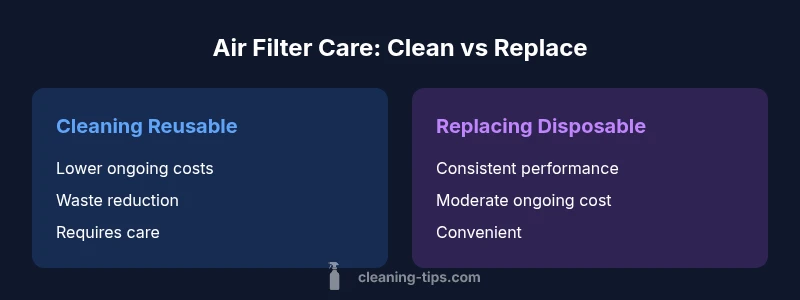
| Cost over time | Lower ongoing costs for washable filters | Moderate ongoing cost with disposables |
| Best for | Reusable filters with proper cleaning | Disposable filters for convenience and predictability |
Strengths
- Lower ongoing costs with washable filters
- Less waste with reusable filters
- Lower environmental impact when usage permits cleaning
Weaknesses
- Careful cleaning required to avoid damage
- Not all filters are washable; performance may degrade
- More frequent maintenance and drying time for reusable filters
Replace disposable air filters for most homes; clean only for specific reusable filters when manufacturer permits.
For most homes, replacing is the safer, more reliable option. Cleaning works for select, washable filters but demands careful adherence to guidelines to avoid reduced filtration or HVAC strain.
Questions & Answers
How do I know if my filter is washable?
Look for the word 'washable' or 'reusable' on the filter packaging or framing. Check the manufacturer instructions; some filters tolerate cleaning, while others are designed for single-use only. If in doubt, replace to protect filtration and airflow.
Check if your filter is labeled washable, and consult the manufacturer's instructions. If uncertain, replace to protect your system.
How often should I check or replace an air filter?
Most homes benefit from checking every 30 to 60 days, with more frequent checks if you have pets, smokers, or high dust. Replace filters when they appear clogged or when you notice reduced airflow.
Check your filter every one to two months, and replace when it’s clogged or airflow drops.
Can cleaning a disposable filter extend its life?
Disposable filters are not designed for cleaning. Attempting to clean them can damage the media and release fibers into the air. Replacement is the recommended approach.
No—don’t clean disposable filters; replace them to preserve performance.
Will cleaning or replacing affect energy bills?
A clogged filter restricts airflow, forcing the HVAC to work harder and use more energy. Replacing a dirty filter generally improves efficiency; cleaning can help if the filter is designed for washing, but gains are variable.
A dirty filter makes your system work harder and costs more energy; replacing is often the safer bet.
Are HEPA or pleated filters more affected by cleaning vs replacement?
HEPA and high-efficiency pleated filters are usually not washable. Replacement ensures you preserve rated performance. Always follow the filter’s instructions.
HEPA filters are usually not washable—replace as recommended.
What is the best practice for rental properties?
Follow the property’s HVAC guidelines and use manufacturer-recommended replacement intervals. Keep a simple log for tenants to track when filters were cleaned or replaced.
In rentals, stick to the landlord’s guidelines and replace on schedule.
The Essentials
- Assess filter type before cleaning.
- Follow manufacturer guidance for washing eligibility.
- Replace when the filter is dirty, damaged, or not washable.
- Consider energy use and air quality in your decision.
- Maintain a simple upkeep schedule to minimize surprises.