Can You Clean and Reuse HEPA Filters: A Practical Guide
Learn whether you can clean and reuse HEPA filters, when to replace, and safer maintenance tips to preserve air quality. Follow manufacturer guidance and practical steps to avoid common mistakes.


In most cases, you should not clean and reuse a HEPA filter. HEPA filters trap particles in a single-use cartridge, and cleaning can damage the media or the seal, reducing efficiency. Some models are explicitly labeled washable—always follow the manufacturer’s instructions. For most devices, replacement is safer and more effective.
What a HEPA filter does and why reuse is risky
HEPA stands for high-efficiency particulate air, and these filters capture extremely fine particles from the air you breathe. They are designed to operate at peak performance when a new, properly sealed filter is installed. Reusing a HEPA filter—whether by washing, scrubbing, or reusing a previously used unit—can compromise the delicate layered media. Cleaning can cause fiber breakage, tear the seal between the filter and housing, and create bypass channels where unfiltered air leaks around the filter. According to Cleaning Tips, such improper handling not only reduces particle capture but may release settled dust and tiny fibers back into the room. If you’re unsure whether your filter is washable, assume it is not and treat it as a replaceable component. A failed seal or degraded media undermines air quality more than a new, correctly installed filter.
In many home environments, people underestimate the risk of trying to “save” a filter. Even when visible dust looks removable, submicron particles can lodge within the pores. Once the structure of the filter is compromised, the filter’s efficiency rating can drop substantially, allowing fine particles, allergens, and potentially mold spores to pass through. A properly sealed new filter prevents this risk and ensures the device continues to meet its stated performance. The Cleaning Tips team emphasizes using manufacturer guidelines as the primary source of truth, since filter construction varies significantly by brand and model.
noteID 1
Tools & Materials
- User manual / manufacturer instructions(Identify if the filter is labeled washable or non-washable; note model-specific guidance.)
- Protective gloves(Keep hands clean and reduce exposure to dust.)
- Vacuum cleaner with brush attachment(Use to gently remove exterior dust if allowed by guidelines.)
- Soft brush or microfiber cloth(Use for careful exterior cleaning only if permitted.)
- Replacement HEPA filter(s)(Have exact replacement on hand in case cleaning is not allowed.)
- Disposal bag or container(Safely collect old filter debris for disposal.)
Steps
Estimated time: 30-60 minutes
- 1
Check the manufacturer's guidance
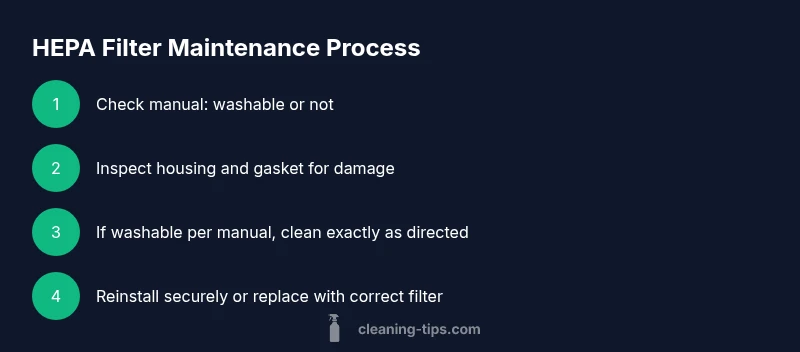
Start by locating your device’s manual or the label on the filter housing. Look for explicit statements like “washable” or “do not wash.” If the manual says the filter is not washable, proceed to replacement rather than cleaning. This step prevents guessing and protects performance.
Tip: If the manual is unavailable, contact the manufacturer or check the model online for official guidance. - 2
Inspect the filter housing and seal
Remove the filter and inspect the gasket and housing. Look for cracks, gaps, or obvious damage that would prevent a proper seal even after cleaning. A damaged seal can render even a clean filter ineffective by allowing air to bypass the filter.
Tip: A cracked housing or damaged gasket often means a replacement is necessary rather than cleaning. - 3
Assess exterior dust and visible contamination
If the filter is labeled washable or if you have a explicit instruction to clean, gently remove loose dust from the exterior using a soft brush or microfiber cloth. Do not scrub the media itself unless the manual specifies that surface cleaning is safe. Avoid forcing dust deeper into the media.
Tip: Use a light touch—heavy pressure can force debris into the filter media. - 4
Clean only when permitted by guidelines
If the model allows washing, follow the exact steps in the manual (water temperature, approved cleaners, and drying method). Use only the recommended method and ensure the filter is completely dry before reinstallation to prevent mold growth or clogs.
Tip: Never use heat sources or absorbent materials that could damage the media. - 5
Decide whether to replace or reuse
If the manual forbids washing or if you notice damage after inspection, replace the filter with an exact replacement. Reusable filters must meet the manufacturer’s specifications; otherwise, ongoing air quality and device performance can suffer.
Tip: Keeping a strict replacement schedule helps maintain consistent air quality. - 6
Reinstall and test the device
Once the filter is clean (if allowed) or replaced, reinstall it securely and run the device to verify proper operation. Listen for unusual noises and monitor airflow indicators or performance metrics over the next few days.
Tip: A sudden drop in performance after replacement signals a possible seating issue or incorrect filter type.
Questions & Answers
Are all HEPA filters washable?
No. Most HEPA filters are not washable and should be replaced when they’re dirty or damaged. Always check the product manual for instructions specific to your model.
Most HEPA filters aren’t washable—check the manual before attempting any cleaning.
What happens if I wash a non-washable HEPA filter?
Washing can damage the filter media, cause deformation, and create bypass paths. This reduces filtration efficiency and could release dust back into the air.
Washing a non-washable filter can ruin it and reduce its effectiveness.
How often should HEPA filters be replaced?
Replacement frequency depends on usage, environment, and device guidelines. Check the manufacturer’s recommendations and monitor device indicators for performance changes.
Follow the device’s replacement schedule and watch for performance changes.
Can I clean a pre-filter or secondary filter?
Many devices have pre-filters that are washable or reusable. Always verify with the manual, as pre-filters have different maintenance rules from main HEPA media.
Some pre-filters can be cleaned; read the manual for exact steps.
Are there risks to delaying replacement?
Delaying replacement can allow contaminants to accumulate and reduce airflow, potentially stressing the device and diminishing air quality.
Delaying replacement can hurt performance and air quality.
Watch Video
The Essentials
- Follow manufacturer guidance before attempting any cleaning
- Most HEPA filters are single-use and should be replaced when in doubt
- If a filter is washable, follow exact, model-specific instructions
- Regular replacement maintains indoor air quality and device performance