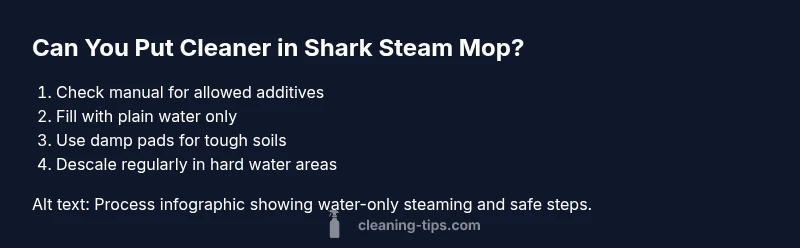
Can You Put Cleaner in Shark Steam Mop: Safe Practices
Learn whether you can add cleaners to a Shark steam mop, why water-only operation is recommended, safe alternatives, and maintenance tips to keep floors clean without damaging your device.


Can you put cleaner in Shark steam mop? In most cases, no—these devices are designed to run on plain water only. Adding detergents can foam, clog, or damage seals and leave residue. Always check the manual and use approved methods for stronger cleaning if needed.
Can you put cleaner in Shark steam mop? Understanding the basics
When people ask can you put cleaner in shark steam mop, the quick answer is you should not put cleaners in the reservoir. Shark steam mops are designed to heat plain water to generate steam that lifts dirt and kills some germs. Using chemical cleaners in the reservoir can create unwanted foam, clog internal channels, and leave sticky residues on floors. This is why most model guidelines insist on water-only operation. According to Cleaning Tips, following the manufacturer’s guidance protects your floors and the appliance from damage. If you need to tackle a sticky spot, plan to spot-clean with a damp pad on a separate cleaner-approved wipe or spray, then resume steam cleaning with water only.
How Shark steam mops work and why they typically require water only
Shark steam mops heat water in a reservoir to produce steam that loosens dirt and sanitizes floors. The steam carries heat and moisture that can break down grime without leaving chemical residues on most sealed hard floors. The internal seals, gaskets, and hoses are designed to handle plain water, and using cleaners can alter the pH balance or foam up inside the system. For this reason, the official guidance most often advises water-only use. If you’re new to steam mopping, start with a small area and a clean microfiber pad to gauge performance before expanding to larger rooms.
Official guidance and model variations
Different Shark models exist, and product manuals may vary in detail. The majority of Shark steam mops emphasize water-only operation, and some models provide optional accessories specifically for dry mopping or scrubbing rather than adding cleaners to the reservoir. Always locate your model’s manual or Shark’s official support site to confirm whether any additives are permitted. If there is any ambiguity, treat it as not permitted and rely on water-powered steam for safety and warranty protection. For broader guidance, see Cleaning Tips’s recommendations on using steam devices responsibly.
Safe cleaning alternatives and workflow
If a floor is particularly dirty, plan a two-step approach that avoids adding cleaners to the reservoir. First, pre-clean heavy soils with a damp microfiber pad and a mild, non-alkaline cleaner applied to the pad (not in the reservoir). Wipe the area with a dry cloth after removing excess solution. Then, use the Shark steam mop with plain water to lift loosened grime and disinfect. This approach keeps the device safe while still delivering deep cleaning results. Regular pad maintenance ensures you don’t transfer built-up residue back onto floors.
Maintenance and care to prevent buildup
Daily use can leave mineral deposits in the steam system if you live in hard-water areas. To protect the unit, empty the reservoir after each use, and dry the exterior. Periodically descale the system according to the model’s instructions (many users rely on clean water only and occasional mineral descalers if specified by the manufacturer). Keep replacement pads handy and wash reusable pads according to the care label. By keeping the system clean, you’ll sustain peak steam performance and avoid clogs.
Getting the best results: test areas and pad selection
Before tackling a full room, test the mop on a small, inconspicuous patch of flooring to assess heat, moisture, and pad performance. Choose microfiber pads that are compatible with your Shark model, and wash pads when soiled to prevent cross-contamination. Replace pads regularly to prevent dirt buildup from transferring to floors. A clean pad is essential to maximize steam transfer and achieve consistent results.
Common mistakes to avoid
Avoid adding any cleaner to the reservoir, and never mix cleaners with steam. Don’t overfill the tank, which can cause spitting or inconsistent steam. Don’t use steam on unsealed floors or surfaces that can be damaged by heat and moisture. Finally, always allow the device to cool before refilling or storing, and follow the manufacturer’s maintenance schedule to preserve warranty coverage.
Tools & Materials
- Water (distilled or filtered preferred)(Fill reservoir with plain water only)
- Shark steam mop cleaning pads (microfiber)(Use genuine or compatible replacement pads)
- Extra replacement pads(Keep spare pads on hand)
- Mild non-alkaline spot cleaner (optional)(For external surfaces or pad cleaning, not in reservoir)
- Soft cloth or sponge(For exterior wipe-down)
- Gloves(Protect hands during maintenance)
Steps
Estimated time: 15-25 minutes
- 1
Prepare area and inspect model
Clear the area and read your model’s manual to confirm whether any additives are permitted. Check cords, outlets, and floor types to plan a safe cleaning session.
Tip: Verify compatibility before introducing any cleaners. - 2
Empty reservoir and inspect seal
Unplug the unit, remove the reservoir cap, and ensure there are no leaks. A clean start prevents unintended spray.
Tip: Check for cracks or worn gaskets that could cause leaks. - 3
Fill with plain water
Fill the reservoir with plain water only, preferably distilled or filtered if tap water is hard. Do not add cleaners.
Tip: Avoid overfilling to prevent dribble or spills. - 4
Attach pad and assemble
Attach a clean microfiber pad securely to the mop head per the model’s instructions. Confirm the handle is locked in place.
Tip: A secure pad prevents cleaning interruptions. - 5
Turn on and preheat
Plug in the mop and allow it to reach operating steam temperature as recommended by the manual.
Tip: Warm up time varies; wait for an audible/visual cue before starting. - 6
Steam and mop in controlled strokes
Move the mop slowly in overlapping strokes, letting steam lift grime without over-wetting the floor. Watch for pooling.
Tip: Use a light touch to avoid saturating floors. - 7
Spot-clean stray soils
For stubborn spots, switch to a damp pad with a small amount of cleaner applied to the pad (outside reservoir use) or use a separate wipe, then resume steam with water.
Tip: Never mix cleaners into the reservoir. - 8
Power down and clean after use
Turn off, unplug, and allow the unit to cool before removing pads. Rinse and wash pads as instructed, then store dry.
Tip: Dry pads fully to prevent mold growth.
Questions & Answers
Can I use cleaners in the Shark steam mop reservoir?
No. Shark steam mops are designed to use plain water in the reservoir. Adding cleaners can cause foam, residue, and potential damage. If you need stronger cleaning, use spot-cleaning with a damp pad and an external cleaner, then resume with water-only steam.
Shark steam mops should use plain water; avoid cleaners in the reservoir. For tough spots, spot-clean with a damp pad then continue with water steam.
Will using cleaners void the warranty?
Yes, introducing cleaners into the reservoir can void warranty coverage if it’s not approved by the manufacturer. Always follow the manual and use only water in the reservoir unless explicitly allowed.
Using unapproved cleaners can void the warranty, so stick to water unless the manual says otherwise.
What should I do about tough, sticky dirt?
Pre-treat with a damp pad or a small amount of cleaner applied to the pad (not the reservoir). Then use the steam mop with water to lift and sanitize. Avoid pouring cleaners into the tank.
Pre-treat with a damp pad, then steam with water. Do not add cleaners to the tank.
Are there Shark models that allow cleaners?
Some models might have accessories or guidance about additives, but most Shark steam mops require water only. Always verify with the model’s official manual.
Most models require water only; check your manual for any exceptions.
Can I use vinegar or lemon juice in steam mopping?
Vinegar or acidic cleaners are not recommended in the reservoir, as they can corrode parts and leave residues. Use water only in the tank and consider external spot cleaning.
Avoid vinegar or acidic cleaners in the tank; stick to water in the reservoir.
What maintenance helps prevent clogs?
Empty the reservoir after use, dry exterior, and descale per manufacturer instructions if you notice mineral buildup. Regular pad washing prevents transfer of soil back to floors.
Clean the reservoir, dry the unit, and descale as needed to prevent clogs.
Watch Video
The Essentials
- Use water-only in the reservoir for Shark steam mops.
- Spot-clean with a damp pad for tough soils, then resume steam cleaning.
- Regular pad maintenance improves results and reduces residue.
- Always consult the model’s manual before any additives.
- Store and maintain the device to protect its warranty.