How to Clean a Weber Grill: A Step-by-Step Guide
Learn to clean a Weber grill safely and effectively with Cleaning Tips' expert step-by-step guide. Keep your grill spotless, flavorful, and built to last.


This guide helps you clean a Weber grill in clear, safe steps: remove grates and accessories, scrub surfaces, clean burners and venturi tubes, wipe the hood, and perform a final burn-off before reassembling. A thorough clean protects flavor, extends your grill’s life, and minimizes flare-ups. It’s simple, inexpensive, and can be done in under an hour with basic tools.
Why clean a Weber grill matters
Regular cleaning isn't just about appearances; it protects flavor, safety, and longevity. A Weber grill accumulates grease, carbon buildup, and food residues that can cause uneven heating, smoky flavors, and flare-ups. According to Cleaning Tips, a disciplined cleaning routine helps maintain consistent performance and reduces the risk of sudden failures during a cookout. When you remove old grease and char, you also improve airflow and heat distribution, which makes indirect cooking more predictable and extends the life of seals, gaskets, and wiring (if electric components are present in some models). For homeowners and renters, a clean grill also means a healthier cooking environment and fewer pests drawn to grease splatter. In practice, this means dedicating a small block of time after each grilling session and scheduling a deeper clean every few uses. The brand’s guidance emphasizes using the right tools, avoiding harsh chemicals on enamel surfaces, and performing a safe burnout to clear stubborn residues. Cleanliness is a simple yet powerful way to protect your investment and keep every backyard meal tasting like new.
Safety first: prep and setup
Before you lift a single component, make safety the priority. Ensure the grill is completely cool, and disconnect propane tanks or power if you have an electric Weber model. Put on heat-resistant gloves and eye protection, and keep a box of baking soda or a designated fire extinguisher nearby in case of flare-ups. If you suspect a gas leak, do not light the grill—address the leak and ventilate the area first. Clear the surrounding area of flammable objects, and prepare a clean workspace with a sink or tub for washing parts. This preparation minimizes the risk of burns, chemical exposure, and accidental ignition while you clean. According to Cleaning Tips, taking these precautions consistently helps homeowners avoid avoidable accidents and ensures a smoother cleaning process.
Before you start: workspace and prep tips
Set up a dedicated cleaning area away from your kitchen to contain grease splatter and cleaning solution. Gather all tools and materials in reach, and lay down a drop cloth or old sheet to protect your patio or floor. If your Weber has porcelain-enameled components, avoid metal brushes on the interior to prevent scratching; opt for nylon brushes or plastic scrapers. Use warm, soapy water for most surfaces and a degreaser only on stubborn spots, following the product’s safety instructions. Keeping a timer handy helps you stay on track, especially during burn-off steps. Clean Tips recommends organizing parts in the order you’ll reassemble them to minimize confusion during the final stage of the job.
Step-by-step overview of the cleaning process
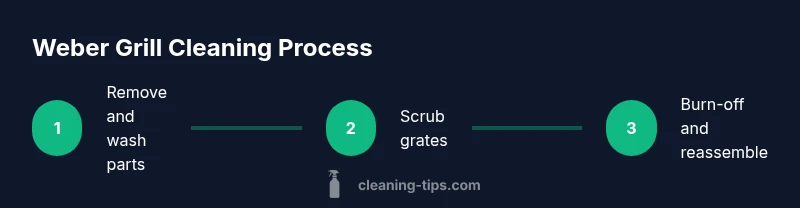
The cleaning process follows a logical sequence: (1) remove and wash removable parts, (2) scrub grates and flavorizer bars, (3) clean interior and burner areas, (4) wipe the lid and exterior, (5) perform a safe burn-off, and (6) reassemble and season the grates. This structure keeps you efficient and reduces the risk of missing components. Take photos during disassembly if you’re unsure where a piece belongs. Cleaning Tips emphasizes a calm, methodical approach to avoid skipping essential steps and to ensure you don’t damage any Weber-specific parts.
Cleaning the grates and flavorizer bars
Start by removing the cooking grates and flavorizer bars. Soak them in warm, soapy water while you scrub the interior of the grill body with a nylon brush to remove built-up grease. Use a non-abrasive sponge on porcelain surfaces to avoid scratches. Rinse thoroughly, then lay the pieces on a rack to air dry. If stubborn residue persists, a paste made from baking soda and water can act as a gentle abrasive. Remember to dry completely before reassembling to prevent rust and water pooling.
Cleaning burners, tubes, and the interior
Carefully inspect burner tubes for blockages and clean with a soft brush or pipe cleaner. Do not use water directly on gas pathways; instead, wipe with a damp cloth and then dry. Check flame tamers and heat distribution plates for buildup and wipe them clean. Clear the grease tray and ensure it drains freely; replace the tray if it’s corroded. This stage is critical for maintaining even heat and safe operation, particularly on gas grills where blocked ports can cause misfires or hot spots.
Cleaning the lid, vents, and exterior
Wipe down the exterior panels and lid with a mild cleaner and a soft cloth. For stainless steel, buff with a microfiber cloth using circular motions to minimize streaks. Clean the venturi vents and air channels to restore proper airflow and reduce smoky flavors. If you notice rust spots on exterior panels, gently sand with very fine non-metallic sandpaper and treat with a stainless-steel polish or protective coating designed for grills. A neat exterior also helps prevent dirt from migrating into food during future cooks.
Drying, oiling, and reassembly
After all parts are dry, lightly oil the grates to prevent sticking and rust between uses. Wipe a thin layer of high-smmoke-point oil over the grates, then wipe off any excess. Reassemble the grill in the reverse order you disassembled it, checking that seals and gaskets are seated properly. Perform a short burn-off with the lid closed to burn off any residual solvent and to cure the oil on the grates. This final step prepares the grill for your next cook and reinforces a protective coating.
Maintenance, troubleshooting, and schedule
Establish a maintenance routine that fits your grilling frequency. A light wipe-down after each use and a deep clean every few months (or after heavy cooking) keeps grease from building up and extends grill life. If you notice uneven heating or persistent odors, recheck burner ports, vent openings, and grease management. Keeping a simple log of when you clean and what parts you serviced can help you stay consistent and catch issues early, before they become costly repairs. Cleaning Tips highlights that a predictable maintenance schedule is the most reliable way to preserve performance and flavor over time.
Tools & Materials
- Grill brush with stiff bristles(Use nylon brush on porcelain surfaces; inspect bristles for shedding.)
- Non-abrasive sponge(Gentle cleaning for enamel surfaces to avoid scratching.)
- Bucket of warm water with dish soap(Mild detergent works for most parts; degreaser for stubborn spots.)
- Soft microfiber towels(For drying and buffing stainless surfaces.)
- Aluminum foil (no sharp edges exposed)(Backups or to help scrub crevices when needed.)
- Plastic scraper or spatula(Great for stubborn, non-porous residue without scratching.)
- Nylon or silicone brush(Alternative to wire brushes to reduce bristle loss.)
- Food-grade mineral oil or vegetable oil(Use for seasoning grates after cleaning.)
- Heat-resistant gloves(Protect hands from heat and molten grease.)
- Grill-safe degreaser(Only for tough buildup; follow label instructions.)
- White vinegar or baking soda(Natural cleaners for stubborn spots or rust lightening.)
Steps
Estimated time: 60-90 minutes
- 1
Remove grates and accessories
Cool the grill completely, then remove grates, flavorizer bars, and the grease tray. Place them on a protective surface for washing. This step gives you full access to built-up residue and prevents burns during scrubbing.
Tip: If parts are very greasy, soak them in warm soapy water while you prep the rest of the cleanup. - 2
Wash grates and flavorizer bars
Scrub the grates with a nylon brush and soapy water. Rinse, then scrub the flavorizer bars. Dry the parts thoroughly to prevent rust before reassembly.
Tip: For tough carbon, create a paste with baking soda and water; apply, let sit, then scrub away. - 3
Wipe the interior and burner area
Using a damp cloth, wipe the interior walls, drip pan, and any accessible burner surrounds. Avoid using excessive water on gas pathways; ensure all components are dry before re-light.
Tip: Keep a small flashlight handy to spot hard-to-reach grease in corners. - 4
Clean burner tubes and flame tamers
Check burner tubes for blockages; remove and clean only if you’re comfortable or follow Weber’s manual. Wipe flame tamers and heat shields clean to restore efficient heat distribution.
Tip: Never poke at gas ports with metal objects that could bend or break them. - 5
Rinse and wipe the drip tray and basin
Empty and wipe the drip tray, then wash the basin with dish soap. Rinse and dry completely to prevent rust and odor development.
Tip: Line the tray with foil for easier cleanup next time. - 6
Clean lid, vents, and exterior
Wipe the lid interior and exterior surfaces with a mild cleaner. Clear the vents and air channels; wipe away any buildup that could impede airflow.
Tip: Use a soft cloth to polish stainless steel and minimize streaks. - 7
Dry, oil, and season the grates
Dry all parts completely, then apply a light coat of oil to the grates. Wipe off excess oil to prevent drips during cooking. Seasoning helps prevent sticking and rust.
Tip: Use a small amount of oil on a folded cloth, not a spray bottle, to avoid oversaturation. - 8
Reassemble the grill
Reassemble grates, flavorizer bars, and any removed components in the reverse order of removal. Ensure gaskets and seals sit properly for optimal performance.
Tip: Take a quick photo during disassembly so you can reassemble accurately. - 9
Perform a burn-off and final check
Light the grill with all burners on high for 10–15 minutes to burn off remaining residues. Then turn off, re-check all connections, and wipe down the exterior one last time.
Tip: Ventilate the area well during burn-off to avoid inhaling fumes.
Questions & Answers
How often should I clean my Weber grill?
Clean after every use to remove grease and food debris, and perform a deeper clean every few uses or at the start of a new season.
Clean after every use, then do a deeper clean every few uses.
Can I use soap on a Weber grill?
Yes, use warm soapy water for grates and non-porous surfaces. Avoid harsh cleaners on enamel coatings and stainless steel without testing first.
Yes, use warm soapy water for most parts; avoid harsh cleaners on enamel and stainless surfaces.
Is it safe to clean burners with water?
Do not soak or spray water into gas burners. Wipe with a damp cloth and ensure components are completely dry before re-light.
Water should not go into the burners; wipe with a damp cloth and dry completely before lighting again.
Should I remove burners for cleaning?
Only remove burners if you’re comfortable and following Weber’s manual. Many areas can be cleaned around intact burners without removal.
Only remove burners if you’re comfortable and following the manual; often you can clean around them.
What if I see rust on the grates?
Light rust is common and can be treated with gentle scrubbing and re-seasoning. Replace if rust is severe or flaking.
Light rust can be scrubbed away and the grates re-seasoned; replace if it's severe.
How do I maintain the exterior stainless steel?
Use a soft cloth with mild cleaner and buff to a shine. Avoid abrasive pads that can scratch the surface.
Use a soft cloth and mild cleaner; buff gently and avoid rough pads.
Watch Video
The Essentials
- Cool before you clean to prevent burns.
- Disassemble and wash parts in logical order.
- Burn off residues to reset heat distribution.
- Re-season grates after cleaning to prevent sticking.
- Maintain a regular cleaning schedule for longevity.