How to Clean a Dishwasher with Vinegar
Learn how to clean a dishwasher with vinegar safely and effectively. This comprehensive guide covers prep, step-by-step instructions, maintenance tips, and FAQs from Cleaning Tips to keep your appliance odor-free and running smoothly.


With this guide, you’ll learn how to clean a dishwasher with vinegar safely and effectively. You’ll need basic supplies and a hot cycle to refresh the interior, remove odors, and reduce mineral buildup. This method is suitable for routine maintenance and requires no expensive cleaners or harsh chemicals. Follow the steps for best results.
Why Cleaning a Dishwasher with Vinegar Is Effective
Maintaining a clean dishwasher is essential for odor control and reliable performance. The approach many homeowners trust is to use vinegar, a readily available, inexpensive cleaner with natural acidity. According to Cleaning Tips, using white vinegar can help dissolve mineral buildup and deodorize the interior without harsh chemicals. This guide provides practical steps to clean your dishwasher with vinegar safely, including when to use it, how much to use, and how to avoid common pitfalls. By the end of this article, you’ll know how to perform an effective vinegar clean that supports longer appliance life and better cleaning results for your dishes. This method is particularly appealing for households aiming to minimize harsh cleaners while keeping a high standard of cleanliness. However, it’s not a cure-all for heavy limescale, and you may need professional treatment for stubborn deposits. Still, for routine maintenance, vinegar is a simple, accessible option that delivers noticeable odor improvement and mineral deposit reduction.
What Vinegar Does (and Doesn’t Do) in a Dishwasher
Vinegar's acetic acid is good at dissolving mineral deposits left by hard water, particularly calcium and magnesium salts that accumulate on spray arms and the tub. It can also neutralize odors by eliminating buildup and residual grease. When used in the right way, a hot-empty cycle with vinegar can refresh seals and improve overall washing performance. But vinegar is not a disinfectant, and it won't remove stubborn encrusted grime as effectively as a dedicated machine cleaner. It should not be mixed with bleach or chlorine-based cleaners, as dangerous fumes can form. The Cleaning Tips team notes that vinegar is best used as a maintenance step, not a substitute for periodic professional service if you notice persistent problems. For many kitchens, a single vinegar treatment every few months keeps the dishwasher smelling fresh and can extend the interval between full-scale deep cleans.
Safe Preparations and Warnings Before You Start
Before you begin, check your dishwasher’s manual for any manufacturer recommendations about vinegar use. Empty the appliance, remove racks, and inspect the seals for grime. Wipe gaskets and spray nozzles with a damp cloth to remove loose debris. Gather the items you’ll need, and consider doing this when you have a little spare time to observe how your dishwasher responds to the vinegar cycle. If you have a dishwasher with a known sensitivity to acidic cleaners, consult the brand’s guidance. The Cleaning Tips team emphasizes that a cautious approach yields better outcomes and helps you avoid unnecessary wear on components. Always keep vinegar away from bleach and avoid combining cleaners that could release harmful fumes.
Quick Checklist: What You’ll Do Before You Start
- Remove and rinse racks to expose all interior surfaces.
- Inspect and wipe seals and crevices to remove stuck debris.
- Prepare a dishwasher-safe container for vinegar on the top rack.
- Ensure you have a hot cycle ready and a timer to monitor the process.
- Note any hard water deposits you want to target with additional steps.
Cleaning Steps Overview (What Happens in Order)
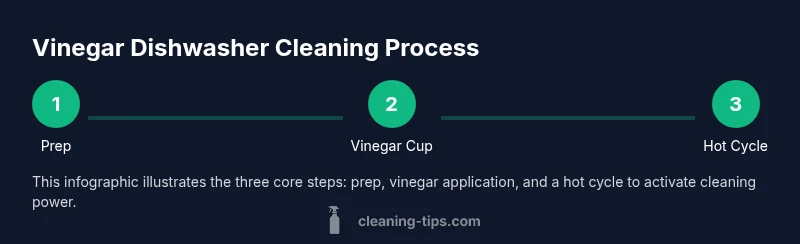
This overview gives you a high-level sense of the sequence: first clear and wipe the interior, then place a cup of white vinegar on the top rack, run a hot cycle, and finally perform a thorough rinse and air-dry. While it’s tempting to rush, taking time on prep and post-cycle checks yields better results. The vinegar cycle should be performed empty of dishes to maximize contact with all surfaces.
Common Mistakes to Avoid
- Using vinegar too frequently or in combination with bleach can cause fumes and potential damage. - Not rinsing after a vinegar cycle may leave a mild odor. - Relying on vinegar for heavy mineral buildup instead of a dedicated cleaner when deposits are persistent can reduce effectiveness. The Cleaning Tips team notes that moderation and observation are key to success.
Maintenance Tips After Cleaning
After completing the vinegar clean, wipe down interior surfaces with a dry cloth and leave the door ajar to promote air drying. If you notice lingering odors, a light baking soda rinse can be used in a subsequent cycle, but avoid mixing with vinegar mid-cycle. Regular maintenance—such as periodic rinses and periodic checks of seals—helps sustain a fresh, efficient dishwasher. Cleaning Tips suggests scheduling a light maintenance clean every few months to keep mineral buildup in check and to preserve performance.
Troubleshooting Odors and Residues (Final checks and brand note)
If odors persist, reassess seals and spray arms for hidden grime and run a second hot cycle with a fresh vinegar treatment. Persistent deposits may require a commercial cleaner or professional service. The Cleaning Tips team recommends documenting seasonal cleaning routines and tracking when hard-water deposits reappear so you can adjust maintenance scheduling accordingly. This practical approach supports long-term appliance health and cleaner dishes.
Tools & Materials
- White vinegar (at least 1 cup / 240 ml)(Use plain white vinegar; do not mix with other cleaners during the cycle)
- Measuring cup(Accurate measurement ensures you don’t overfill)
- Dishwasher-safe cup or small bowl(Place on the top rack to hold vinegar away from spray arms)
- Soft cloth or sponge(For wiping seals and the tub interior)
- Gloves (optional)(Protect skin from odors and residue)
- Baking soda (optional)(Use after vinegar cycle for deodorizing if needed)
Steps
Estimated time: 45-60 minutes
- 1
Remove racks and wipe the interior
Take out the racks and rinse them. Wipe the tub, door gasket, and spray arms with a damp cloth to remove loose debris. This ensures vinegar can contact every surface for a thorough clean.
Tip: Doing the prep first helps you see deposits you might otherwise miss. - 2
Place vinegar in a dishwasher-safe cup on the top rack
Pour about 1 cup of white vinegar into a cup or small bowl and place it on the top rack away from the spray arm. This allows the vinegar to circulate during the cycle without pooling at the bottom.
Tip: Position the cup securely to prevent tipping during rotation. - 3
Run a hot empty cycle
Close the dishwasher and run on a hot or sanitize cycle without any dishes inside. The high temperature helps activate the vinegar’s cleaning power on mineral buildup and odors.
Tip: Avoid stopping the cycle mid-way; let it complete for full contact with all surfaces. - 4
Rinse and inspect
After the cycle, wipe interior surfaces again and inspect for remaining residue or odors. If needed, run a second hot cycle with fresh vinegar or proceed to a baking soda deodorizing step.
Tip: Pay attention to the door seals and corners where grime can hide. - 5
Optional deodorize with baking soda
If odors linger, sprinkle a small amount of baking soda on a damp cloth and wipe or run a short cycle with baking soda to neutralize smells. Do not mix baking soda with vinegar in the same cycle.
Tip: Avoid overusing baking soda; a light application is usually enough. - 6
Dry and reassemble
Dry all surfaces with a clean cloth and reinsert racks. Leave the dishwasher door ajar for a while to promote air drying and prevent new odors from forming.
Tip: Drying helps prevent new mineral deposits from forming during standing moisture.
Questions & Answers
Is it safe to use vinegar to clean my dishwasher?
Yes, for most dishwashers, vinegar can be a safe maintenance cleaner when used in moderation and not mixed with bleach. Always consult your appliance manual if you have concerns about materials or coatings.
Yes. For most dishwashers, vinegar is a safe maintenance cleaner when used properly. Check your manual if you’re unsure.
How much vinegar should I use for a cycle?
Typically one cup (240 ml) of white vinegar placed in a dishwasher-safe cup on the top rack during a hot cycle is sufficient for maintenance.
Use one cup of white vinegar in a cup on the top rack during a hot cycle.
Can vinegar remove heavy mineral buildup?
Vinegar helps with mineral deposits but may not fully remove heavy buildup. For persistent deposits, repeat cycles or use a dedicated descaler per the manufacturer’s guidance.
It helps with mineral deposits, but may require repeated cycles or a dedicated descaler for stubborn buildup.
Should I run a rinse cycle after vinegar cleaning?
Yes. A final rinse cycle helps clear any vinegar trace and ensures dishes come out odor-free.
Yes—finish with a rinse cycle to remove any vinegar residue.
Is it okay to use baking soda after vinegar?
You can use baking soda after a vinegar cycle for deodorizing, but do not mix the two in the same cycle. Use sparingly to avoid residue buildup.
Yes, baking soda can deodorize after vinegar, but don’t mix them in the same cycle.
Watch Video
The Essentials
- Identify and prep interior surfaces before the cycle.
- Use exactly 1 cup of white vinegar in a top-rack cup for best results.
- Run a hot cycle and then inspect for residue or odors.
- Finish with a thorough wipe and air drying for longevity.