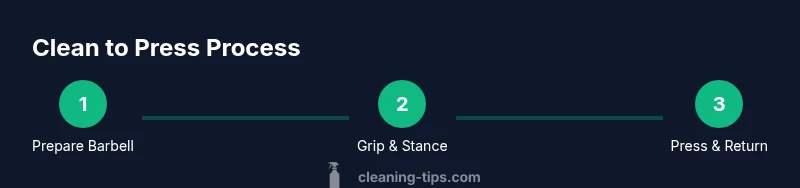
How to Clean to Press a Barbell: Step-by-Step Guide
Learn to safely clean to press a barbell with a precise progression—grip, stance, hip drive, and bar path. This guide covers setup, technique, safety, and programming for sustainable gains.


Learn to clean to press a barbell safely and effectively through a structured progression. This quick guide covers setup, grip width, hip drive, and bar path, plus cues to transition from the clean catch to a stable press. Follow the steps and cues to protect your back while building power. You will need a barbell, plates, a lifting surface, and proper footwear.
Why the Clean to Press Barbell Move Matters
The clean to press barbell movement combines a powerful hip hinge with an overhead press, delivering an efficient way to transfer energy from ground to bar. For beginners and experienced lifters alike, mastering this sequence reduces wasted effort and improves overall lifting economy. According to Cleaning Tips, focusing on a consistent setup before the lift protects the spine and enhances control through the transition from the explosive pull to the strict press. This emphasis on form lowers injury risk and builds durable lifting habits over time.
A well-executed clean to press requires coordinating several moving parts: a vertical torso, tight midsection, a strong hip drive, and a stable rack position. Start with your feet hip-width apart, shoulders over the bar, and hands slightly wider than shoulder width. The bar should rise along your thighs with minimal shrug and no excessive knee flare. Once the bar reaches the mid-thigh, accelerate upward using the hips and legs, then drop under the bar into a shallow front rack. From there, press the bar overhead with a stable, controlled path. Consistency in these cues creates reliable power transfer and safer progression.
Key Concepts: Grip, Stance, and Bar Path
Understanding the core mechanics helps you execute the lift with confidence. The grip width should allow the bar to sit comfortably on the front delts without forcing the wrists into extreme angles. A shoulder-width stance provides stability while allowing the hips to drive the bar upward. Bar path should be a vertical, slightly forward trajectory during the pull, then a quick drop under the bar to catch it in a secure front rack. Visualize your pelvis as a hinge and maintain a tall chest to keep the bar close to the body. When you press, aim for a straight line from your shoulders to the ceiling, with elbows tracking slightly in front of the bar to protect the wrists.
Key cues include keeping the core braced, the ribcage down, and the hips driving before the bar rises. These elements reduce the chance of a missed catch and help you transfer power efficiently from the lower body to the barbell. As you gain proficiency, you’ll notice smoother transitions and greater control in the rack position, which translates to heavier, safer attempts over time.
Setup, Space, and Equipment
A dedicated lifting area reduces distractions and helps you maintain form throughout the lift. Ensure there is enough room for the barbell to travel overhead and for a controlled return to the rack. Essential equipment includes a standard Olympic barbell with sturdy collars, a set of plates, chalk for grip, and flat-soled lifting shoes that minimize ankle roll. A lifting platform or a thick rubber mat protects the floor and enhances stability. Check the bar for any dings or burrs that could injure the hands, and wipe it down to remove sweat and chalk residue. If you’re new to the move, practice with light loads on a padded surface and consider having a spotter or coach observe your technique.
Before you begin, dry-run the setup: stand with the bar over midfoot, grip just outside shoulder width, and flatten the back. Your objective is a clean, efficient transfer from ground to rack to press, with safety cues guiding each phase.
Step-by-Step Technique Overview
The clean to press involves two linked movements: a clean to bring the bar to the shoulders, followed by a press overhead from the front rack. Mastery requires crisp timing, precise positions, and consistent cues. Start briskly with a controlled pull, then drop under the bar to catch it at the front rack. From there, execute a press with a stable torso and a vertical path. The transition from catch to press is a key moment—keep the elbows high, the wrists neutral, and the bar in front of the face. Quality cueing—hips drive, chest up, bar close—reduces coaching time and accelerates progress.
Refer back to the setup cues each time you reset the bar. With consistent practice, your bar speed and stability will improve, enabling heavier attempts over the course of a structured program.
Common Mistakes and How to Fix Them
Common faults include bar drift away from the body, early arm bend, and poor rack position leading to a failed lift. The fix often comes down to trunk bracing and bar path awareness. If you’re missing the catch, check your foot stance and hip drive—are you finishing the hip extension before pulling under? For a bent or collapsed back, retrace your positions with lighter loads and focus on creating a solid front rack. Strength imbalances can also disrupt the move; add accessory work for the shoulders, core, and posterior chain.
Another frequent issue is rushing the transition under the bar. Slow down the catch, then accelerate into the press. Visual cues, such as keeping the bar close to the body and maintaining a tight midsection, help reinforce correct mechanics and reduce injury risk.
Programming, Progression, and Safety
A well-rounded progression approach supports long-term gains. Start with lighter loads to drill technique, then gradually increase weight as your form remains sound. Use a systematic cadence: practice the clean to catch, then the front rack position, and finally the press. Integrate accessory work for the shoulders, spine, and hips to improve stability and mobility. Rest days are essential—allow adequate recovery to adapt to heavier loads. Keep notes on your lifts to track improvements and adjust your progression as needed. Safety is a priority: never lift beyond your current capability and always have someone nearby when attempting heavier singles.
A Practical Progression Template
- Week 1-2: 3 sets of 3 reps at light weight focusing on technique.
- Week 3-4: 4 sets of 3 reps with a small weight increase and emphasis on quick, controlled catches.
- Week 5-6: 3 sets of 2 reps at moderate load, integrating the press without sacrificing form.
- Weeks 7+: Build to heavier singles with coaching feedback. Track grip width, hip drive, and bar path to ensure consistent progress.
Tools & Materials
- barbell(Olympic standard bar, 20 kg (45 lb) or 15 kg (33 lb) for beginners)
- weight plates(Enough to reach your planned working weights; collars required)
- collars/clips(Secure plates during lifts)
- lifting surface/mat(Non-slip mat or platform to reduce movement)
- chalk(Grip aid if hands get sweaty)
- lifting shoes(Flat-soled, non-compression footwear)
- belt (optional)(Used by some lifters during heavier attempts)
- towel/water(Hydration and sweat management)
Steps
Estimated time: 45-60 minutes
- 1
Set stance and grip
Stand with feet hip-width apart. Grip the bar just outside shoulder width. Create a braced core and neutral spine while keeping the bar over the midfoot.
Tip: Brace your core as if about to be punched in the stomach; this supports the spine through the lift. - 2
Prepare to clean
Hips hinge back slightly, bar over the shoelaces. Keep shoulders over the bar and chest up as you prepare to initiate the clean pull.
Tip: Drive the hips upward first; think about lifting the bar with the legs, not pulling with the arms. - 3
Execute the clean pull
Extend through the hips and knees, accelerating the bar upward. Maintain a vertical bar path with minimal shrug.
Tip: Do not jerk the bar; use a smooth, explosive extension. - 4
Catch in front rack
Drop under the bar into a shallow front rack with elbows high and bar resting on the fingertips or palms.
Tip: Drop your hips under the bar to align with the rack position. - 5
Press overhead
From the front rack, press the bar overhead with a stable torso and controlled descent of the head under the bar.
Tip: Keep ribs braced and bar path vertical to reduce forward lean. - 6
Return to start
Lower the bar with control to the shoulders, then set the bar down safely on the floor after completing the set.
Tip: Maintain posture until the bar is fully stabilized before releasing tension.
Questions & Answers
What is a clean to press barbell?
A clean to press is a two-part lift: first, you clean the barbell to the front rack at the shoulders, then press it overhead in a controlled movement. The drill emphasizes hip drive, bar path, and a solid rack position to transfer power efficiently.
The clean to press is a two-part lift: clean to the front rack, then press overhead with control. It emphasizes hip drive and a solid rack position.
Is this movement suitable for beginners?
Yes, with proper instruction and lighter loads. Start with technique-focused sets, use appropriate warmups, and progress gradually as form stabilizes. A coach or experienced lifter can help ensure safe progression.
It can be, but beginners should start light and with coaching to ensure safe progression.
What grip width should I use?
Grip width should allow the bar to sit on the front delts with forearms vertical when you rack. A shoulder-width to slightly wider grip is common, adjusted to comfort and wrist mobility.
Use a grip that places the bar on your front delts with a mostly vertical forearm; typically shoulder-width or slightly wider.
What are common faults and fixes?
Common faults include bar drifting away from the body, early arm bend, and a weak rack. Fixes involve tightening the core, keeping the chest up, and reinforcing a proper front rack through accessory work.
Bar drift, early arm bend, and weak rack are common. Fix by bracing the core, keeping the chest up, and strengthening the rack with accessories.
How should I progress the load safely?
Increase load only after maintaining flawless technique at current weights. Use a conservative progression plan, with deload weeks when form declines, and always prioritize form over numbers.
Increase weight only if your form stays solid; use conservative progressions and deload when needed.
What equipment do I need to start?
At minimum, a barbell, plates, collars, a flat lifting surface, and proper footwear. Chalk is optional but helpful for grip. Consider a coach or video feedback for initial sessions.
You’ll need a barbell, plates, collars, a flat surface, and proper shoes; chalk helps if you grip sweatily.
Can I do this movement in a home gym?
Yes, with adequate space and a sturdy platform. Ensure safety margins, use proper footwear, and start with light weights. If space is tight, consider a safer progression on a lifting mat.
It’s doable at home if you have space, a sturdy platform, and you start light with coaching guidance.
How long before I see progress?
Progress varies by individual, but consistent practice over 6-8 weeks with deliberate programming typically yields noticeable improvements in form and strength.
If you train consistently for 6-8 weeks with good technique, you’ll likely see progress.
Watch Video
The Essentials
- Master setup before pulling under the bar
- Keep bar close to the body to protect the spine
- Brace core and drive hips for powerful lifts
- Progress gradually to prevent injury