How to Clean a C Drain Line: Step-by-Step
Learn practical, safe methods to clean a C drain line with common tools, my step-by-step approach, and preventative tips to keep drains flowing and avoid costly clogs.


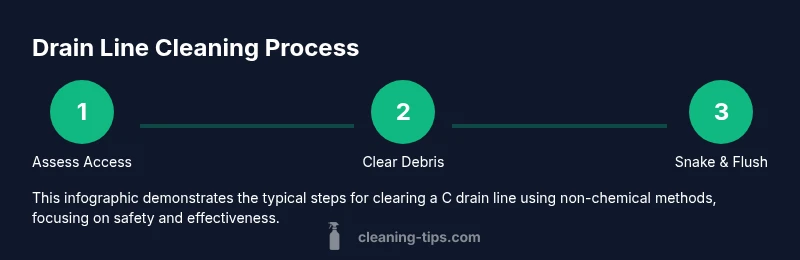
To clean a C drain line, shut off the water supply and place towels to catch spills. Remove the access cap, inspect the line for debris, and clear it with a plumber’s snake or hand auger. Gently dislodge the clog, then flush with hot water and a mild cleaning solution. Reassemble, test the drain, and sanitize the area.
Understanding the C Drain Line and Why It Clogs
A C drain line, in many home setups, refers to the curved segment of pipe that connects a sink, dishwasher, or appliance drain to the main waste line. Over time, this curved path can accumulate grease, soap scum, hair, food particles, and mineral deposits. When the flow is restricted, water backs up, leading to slow drains or backups in adjacent fixtures. The Cleaning Tips team emphasizes that most clogs originate from routine use and improper disposal habits, not from a single dramatic event. By understanding where debris tends to lodge—in the bend, near the trap, or at the connection point—you can target the cleaning action more effectively and reduce the chance of a reoccurring blockage.
](null)
Safety First: Prep and Protective Measures
Before you touch the plumbing, ensure your safety and protect your home. Shut off the water supply to the sink and, if you’re working near a disposal, switch off the garbage disposal at the power switch or circuit breaker. Clear the area of fragile items and lay down towels or a shallow bucket to catch spills. Wear gloves and eye protection to guard against splashes. If you’re dealing with damp electricity near a sink, avoid wet surfaces and keep electrical devices away. According to Cleaning Tips, taking a moment to prep reduces the risk of accidents and helps the job go more smoothly.
](null)
Tools and Materials You’ll Need
Have these on hand before you begin:
- Plumber’s snake or hand auger (for tight bends)
- Adjustable wrench or slip-joint pliers
- Bucket, towels, and protective gloves
- Flashlight to inspect inside the pipe
- Mild cleaning agent (baking soda) and hot water
- Optional: channel-lock pliers for cap removal
- A small brush or old toothbrush for cleaning the cap and threads
Note: use non-corrosive cleaners and avoid harsh chemical drains unless you’re sure the line can handle them. The right tools save time and minimize pipe damage.
](null)
Diagnosing the C Drain: Locate, Assess, Plan
Diagnosing where the clog sits helps you choose the best approach. Start by running warm water and listening for gurgling or slow drainage. If the sink drains slowly but the overflow is clear, the clog is likely mid-line rather than at the trap. Check the access cap or cleanout near the sink; if accessible, loosen the cap slightly with a wrench and look for visible debris. A flashlight can reveal buildup inside the bend. Plan your approach: manual clearance first, followed by mechanical augering if needed. Remember, patience is key; forcing a blockage can push debris deeper or damage fittings. The goal is to restore steady flow without introducing new leaks.
](null)
Step-by-Step Clearing: Manual Methods First
- Remove the access cap and inspect for obvious blockages. Use gloves and a bucket to collect any loose debris. 2) Use a plunger with a small amount of water to create suction and loosen the clog. 3) If the plunger doesn’t clear it, employ a hand auger to reach into the curved section and break up the obstruction. 4) Twist the auger slowly and withdraw to pull debris out. 5) Wipe the cap and threads clean before re-seating. 6) Re-test the drain by running hot water through the line. Pros tip: work slowly to avoid splashing and protect nearby surfaces.
](null)
Mechanical Cleaning: Augers, Snakes, and Specialty Brushes
When a hand auger can’t reach or doesn’t clear the clog, a plumber’s snake with a flexible coil becomes essential. Feed the snake into the line a few inches at a time, then rotate the handle to break up the buildup as it advances. If you encounter a tight bend, pause and adjust the angle—forcing straight insertion can crack fittings. For stubborn residues, attach a small brush to the snake to scrub the interior surface. Rinse with hot water as you withdraw the snake to keep loosened material from re-clogging the line. Always clean the snake before storing to prevent cross-contamination.
](null)
Non-Chemical Flushes: Baking Soda, Vinegar, and Hot Water
After mechanical clearing, a non-chemical flush helps remove fine residues and deodorize the line. Start with a half cup of baking soda down the drain, followed by a cup of white vinegar. Let it fizz for 15 minutes, then flush with very hot water. Do not mix vinegar with commercial drain cleaners, which can produce hazardous fumes. If possible, heat water separately to avoid a sudden temperature shock that could stress pipes. This approach is gentle on pipes and effective for routine maintenance when used periodically.
](null)
Reassemble, Test, and Sanitize the Area
Reinstall any caps or access points securely, ensuring threads are clean and dry. Run several liters of hot water through the line to ensure full clearance and to flush residual debris. Check under the sink for leaks around joints or the cap. If you notice minor leaks, tighten fittings gently with the appropriate wrench. Finally, wipe surfaces, sanitize the area, and dispose of any waste materials properly. Regular inspection after cleaning helps catch leaks early and reduces the chance of a future clog.
](null)
Preventive Maintenance: Stop Clogs Before They Start
Prevention is the best hygiene for your drainage. Avoid pouring grease, coffee grounds, or fibrous scraps down the C drain line. Run hot water for a minute after each use and periodically perform a light baking soda and hot water flush. Use a drain screen to catch hair and debris at the source, especially in sinks used for cooking or DIY projects. If your household uses a garbage disposal, maintain a monthly cleaning routine using cold water and a small amount of dish detergent to prevent grease buildup. Regular checks—every few months—keep the line clear and reduce emergency calls.
](null)
When to Call a Professional: Knowing Your Limits
If the clog persists after mechanical clearance and non-chemical flushing, or if you notice recurring backups, it’s time to call a licensed plumber. Persistent clogs may indicate more serious issues such as a collapsed pipe, a major blockage in the main line, or venting problems. A pro can perform a camera inspection to locate the exact blockage and evaluate the pipe condition. While DIY methods can handle minor clogs, professional intervention protects your plumbing system and reduces the risk of water damage.
](null)
Common Pitfalls: What to Avoid
- Do not force tools into the pipe with excessive torque; you can damage joints or cause leaks.
- Avoid pouring harsh chemical cleaners down the line, especially after attempting mechanical clearing, as these can react with residues and release fumes.
- Don’t ignore slow drainage; addressing it early prevents larger problems later.
- Never use metal tools that could nick PVC or metal fittings; opt for plastic or nylon brushes when feasible.
](null)
Safe Cleanup and Final Check
After any cleaning session, clean and dry the workspace thoroughly. Sanitize the sink area, wash your hands, and clean tools before storing. If you used baking soda or vinegar, flush the line once more with hot water to ensure no residue remains. Finally, re-seat the trap and return all electrical devices to their proper positions. Regular, small maintenance tasks save time and money over dramatic fixes.
](null)
Tools & Materials
- Plumber’s snake or hand auger(Choose a snake with a rigid core and long enough to reach the C-bend.)
- Adjustable wrench(For loosening caps and fittings without slipping.)
- Bucket and towels(Catch spills; protect surfaces under the sink.)
- Protective gloves and safety glasses(Keep hands clean and eyes safe from debris.)
- Flashlight(Inspect inside the line for debris and blockage.)
- Mild cleaning agents (baking soda)(Non-chemical aid for flushing; avoid harsh chemicals.)
- Hot water(Flushes debris and clears residues; not boiling on PVC in some homes.)
- Channel-lock pliers (optional)(Extra grip for stubborn caps or joints.)
Steps
Estimated time: 45-90 minutes
- 1
Prep and safety checks
Shut off the water supply to the sink and protect the area with towels. If a disposal is present, switch off the disposal at the wall or circuit. Gather tools and inspect the area for obvious hazards before touching the piping.
Tip: Having a clear workspace prevents slips and reduces spill risk. - 2
Access the C drain line
Loosen and remove the access cap carefully using the wrench. Look inside with a flashlight to determine if debris is visible near the opening. Do not force the cap if it resists; back off and reassess.
Tip: Keep a bucket handy to catch any debris or water from the opening. - 3
Clear the immediate blockage
If you can reach debris by hand, remove it with gloved fingers or pliers. Avoid sharp metal tools that could scratch fittings. Use a plunger lightly if the clog sits near the cap.
Tip: Twist rather than pry to prevent cap damage. - 4
Engage the plumber’s snake
Feed the snake slowly into the line, rotating the handle to break up the clog. When you feel resistance, work the snake back and forth, then pull out debris gradually as you withdraw.
Tip: Work in short passes and pull out debris in manageable chunks. - 5
Flush and reassemble
Run hot water through the line to flush loosened material. Re-seat the access cap or plug securely, then run water to test flow. Check for leaks around joints.
Tip: A leak may indicate a loose connection; tighten gently and re-test. - 6
Deodorize and prevent
If odors linger, perform a baking soda flush and follow with hot water. Install a drain screen to trap debris and repeat basic maintenance every few months to prevent future clogs.
Tip: A simple routine is often enough to keep lines clear.
Questions & Answers
What is a C drain line and where is it located in a typical home?
A C drain line is a curved section of drain pipe that connects a sink, dishwasher, or appliance to the main waste system. It’s prone to collecting grease and debris, especially at the bend, where flow can slow or stop.
A C drain line is a curved pipe that connects the sink or appliance to the main waste system and can get clogged where that bend is.
Can I use chemical drain cleaners to clear a C drain line?
Chemical drain cleaners may damage pipes or fittings, especially in older homes, and can be hazardous if mixed with other cleaners. It’s best to use mechanical methods first and reserve chemicals for stubborn clogs after evaluating pipe material.
Chemical cleaners can damage pipes; try mechanical methods first and use chemicals only if you’re sure it’s safe.
How long does it take to clean a C drain line?
A typical DIY cleaning session takes about 45 minutes to 2 hours, depending on accessibility of the line and the severity of the clog. If you need to call a professional, set aside a longer window for assessment and repair.
Most cleanings take under a couple of hours, but severe clogs or difficult access may take longer.
What should I do if the clog returns after cleaning?
If clogs recur within weeks, the problem may be deeper in the main line or venting, or the disposal is contributing debris. Re-evaluate disposal habits, use frequent flushing, and consider professional inspection to identify underlying issues.
If clogs keep coming back, there’s likely a bigger issue—time for a pro to check the main line and venting.
Is it safe to use a plunger on a C drain line?
Yes, a plunger can be effective for a blockage near the cap or in the bend. Use a sink plunger and maintain a good seal; avoid forcing aggressively to prevent damage.
A plunger works for near-cap clogs if used gently and with a good seal.
Should I disassemble the trap as part of cleaning?
Disassembling the trap (P-trap or trap at the connection point) can help remove deep debris. Do so only if you’re comfortable reassembling with proper seals to prevent leaks.
If you’re comfortable, removing the trap can help, but reassemble tightly to avoid leaks.
Watch Video
The Essentials
- Identify where the clog sits before acting
- Use proper tools for the bend, not force
- Test flow after each major step
- Avoid harsh chemicals for routine maintenance
- Establish a simple preventive routine to prevent future clogs