How to Clean AC Coil: A Practical Guide for Homeowners
Step-by-step instructions to safely clean your AC coil (indoor evaporator and outdoor condenser), improve efficiency, airflow, and indoor air quality. Includes safety tips, tools, step-by-step actions, maintenance guidance, and expert insights from Cleaning Tips.


This guide shows how to safely clean an AC coil (indoor evaporator or outdoor condenser) to restore airflow and efficiency. You’ll need gloves, a vacuum, a coil cleaner, a soft brush, and a fin comb. Expect about 60 minutes for a thorough job, plus optional annual maintenance.
What is an AC coil and why cleaning matters
An air conditioning system relies on two critical coils: the evaporator coil inside your living space and the condenser coil outside. Over time, these coils accumulate dust, dirt, pollen, and even mold spores. When dirt blankets the fins, heat transfer suffers, airflow decreases, and your compressor must work harder to reach the desired temperature. Regular coil cleaning, as emphasized by Cleaning Tips Analysis, 2026, helps restore efficient heat exchange, lowers energy consumption, and extends the life of your unit. In practice, a clean coil improves cooling performance, reduces noise, and can improve indoor air quality by limiting the amount of dust and allergens recirculated through the system. Homeowners and renters should view coil cleaning as preventive maintenance rather than a rare chore, because the benefits compound over seasons and can avert more expensive repairs down the line.
Safety first: Before you begin
Safety is the foundation of any DIY HVAC task. Before touching electrical components or opening panels, switch off the power at the thermostat and the service disconnect near the outdoor unit. If you’re working on the indoor coil, ensure the main breaker is off for the furnace or air handler. Wear protective gloves and safety glasses to shield skin and eyes from dust and cleaning agents. Keep a clean, dry work area and avoid using water or cleaners in a way that could contact electrical wiring. Always consult your equipment manual for model-specific warnings. If you smell refrigerant or notice a coolant leak, stop immediately and call a licensed technician. According to Cleaning Tips, a careful start minimizes risk and protects the system’s integrity.
Indoor vs outdoor coils: Distinctions and preparation
Indoor evaporator coils live inside the air handler or furnace plenum. They are usually coated with a foil insulation and are more sensitive to moisture and cleaners. Outdoor condenser coils are exposed to weather, dirt, and plant debris, and they can tolerate a light rinse with hose water. The cleaning approach differs: indoor coils benefit from vacuuming and specifically formulated cleaners that won’t degrade the metal or insulation; outdoor coils can safely endure a low-pressure rinse after applying cleaner. Prepare by removing access panels on both coil types, turning off power, and labeling wires if you need to detach panels for access. Cleaning Tips notes that exterior cleaning can be effective but should avoid high-pressure jets that can bend fins or push water into electrical components.
Understanding dirt: types of buildup and how it affects efficiency
Coils attract a range of contaminants: dust, dirt, hair, pollen, mold spores, and occasionally mineral deposits from humid air. The evaporator coil tends to accumulate more fine dust inside the living space, while the outdoor condenser collects larger debris like grass clippings and leaves. These contaminants insulate the coil, creating a barrier that hinders heat transfer. As a result, the coil must run longer to reach the same cooling output, which raises energy bills and can trigger thermostat cycling. By understanding the buildup, you can tailor your cleaning method: light dust can be removed with a vacuum and brush, while sticky residues may require a mild cleaner approved by your unit’s manufacturer. Frequent inspections can catch mold growth early, protecting indoor air quality and system performance. Cleaning Tips analysis indicates that proactive care reduces wear, improves efficiency, and preserves refrigerant pressure integrity over time.
Cleaning methods: chemical cleaners vs. natural alternatives
There are several legitimate ways to clean AC coils, ranging from dry vacuuming to chemical cleaners. For indoor coils, mineral-free water and low-suds, manufacturer-approved coil cleaners are typically recommended. Apply the cleaner as directed, allow the dwell time to loosen grime, and then rinse with a light, controlled flow if the coil location permits. Natural options like diluted white vinegar can help break down mineral deposits but should be used with caution and never substitute for the cleaner recommended by the manufacturer. Outdoor coils can tolerate a gentle rinse with a garden hose on a low setting after applying a cleaner to loosen dirt. Use a fin comb to straighten bent fins, which helps airflow. Throughout, avoid harsh solvents, bleach, or metal tools that could nick the coil fins. Cleaning Tips stresses following product labels and taking a conservative approach if you’re uncertain about your model.
Maintenance plan: scheduling and best practices
Create a simple seasonal routine to minimize dirt buildup. If you live in a dusty area or have pets, plan a coil check before the cooling season and a mid-season inspection for the outdoor unit. Document each cleaning: date, what was done, and any observations about corrosion or bent fins. Replace or clean air filters as part of the same cycle, since clean filters reduce the amount of dirt that reaches the coil. Use a Fin Comb regularly to keep the coil fins straight, and store or replace cleaners per label instructions. For most homes, a professional coil clean every 1–2 years is sufficient, but if you notice reduced cooling, unusual noises, or a sudden spike in energy use, call a licensed HVAC technician. Cleanliness correlates with efficiency, as echoed by Cleaning Tips analysis in 2026.
Troubleshooting and when to call a pro
If cleaning doesn’t improve performance, recheck the power connections and thermostat settings. Look for signs of refrigerant leaks, oily residues at connections, or corrosion around the coil housing. Bent fins should be corrected with a fin comb, not by prying with metal objects. If you observe mold growth that you cannot clean safely, or if you’re uncomfortable handling electrical panels, contact a licensed HVAC technician. After cleaning, run the fan on high for 10–15 minutes to dry out any remaining moisture and verify that the system cycles normally. For complex repairs or system refrigerant issues, professional service is required. Cleaning Tips notes that early maintenance can prevent costly failures, and a pro should be involved for any refrigerant-related concerns.
Tools & Materials
- Safety glasses(Protect eyes from dust and cleaners)
- Nitrile gloves(Chemical-resistant hand protection)
- Vacuum with hose and brush attachment(Loosens and removes loose debris from fins)
- Soft-bristle brush(Gentle scrubbing to avoid fin damage)
- Coil cleaner (manufacturer-approved)(Follow label directions for indoor/outdoor coils)
- Fin comb(Straightens bent fins for proper airflow)
- Low-pressure garden hose (outdoor coils only)(Rinse coil without forceful jets)
Steps
Estimated time: 60-90 minutes
- 1
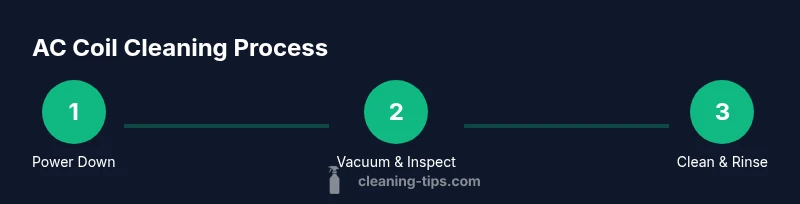
Power down and prep
Turn off the thermostat and disconnect power to the outdoor unit if accessible. Remove jewelry, tie back long hair, and lay down a washable drop cloth. This prevents shocks and keeps the work area clean.
Tip: Double-check breakers before touching any wiring; take a quick photo of wiring for reassembly. - 2
Open access and assess
Remove the access panel on the air handler or furnace and locate the evaporator coil. Inspect for obvious damage, heavy corrosion, or mold growth before cleaning.
Tip: Note panel screws and wire positions to simplify reassembly; label connections if needed. - 3
Vacuum loose debris
Using the hose attachment, carefully vacuum dust and debris from the coil fins and surrounding area. Use the brush to loosen stubborn soil without bending fins.
Tip: Work from the top down to prevent dirt from falling onto cleaned areas. - 4
Apply coil cleaner
Spray the cleaner according to the label, starting at the top of the coil and moving downward. Allow the cleaner to dwell for the recommended time to break down grime.
Tip: Never mix cleaners or use bleach unless the manufacturer explicitly approves it for your model. - 5
Gently brush fins
Use a soft-bristle brush to agitate any remaining soil between the fins. Avoid aggressive scrubbing that can bend or snap the fins.
Tip: If you encounter bent fins, correct them with a fin comb in short, straight lines. - 6
Rinse with care (outdoors)
For outdoor coils, use a low-pressure garden hose to rinse away loosened grime. Do not use high-pressure jets that can damage fins or force water into electrical components.
Tip: Keep the nozzle at a distance and spray at a gentle angle to avoid water intrusion. - 7
Dry and inspect
Let the coil air-dry completely or use a clean absorbent towel. Inspect for any lingering grime, mineral residues, or bent fins.
Tip: A dry coil is less prone to mold growth; ensure all surfaces are thoroughly dry before reassembly. - 8
Reassemble and test
Replace the access panel, reconnect power, and run the system on a cool cycle. Listen for unusual noises and observe that the airflow is strong and steady.
Tip: Take note of any recurring issues you observe during the test for future maintenance.
Questions & Answers
When is the best time to clean AC coils?
Schedule coil cleaning during the pre-season check and after peak dust periods. Regular cleaning helps maintain efficiency and air quality. If you notice poor cooling, clean sooner.
Clean coils as part of pre-season maintenance; regular cleaning helps efficiency. If cooling drops, clean sooner.
Can I clean an AC coil without turning off power?
No. Always disconnect power to the outdoor unit and switch off the thermostat before starting. This reduces the risk of electrical shock and equipment damage.
Always turn off power before starting. Safety first.
Is professional coil cleaning necessary?
Hire a pro if the coil is heavily corroded, moldy, or difficult to access. A trained technician can assess refrigerant integrity and ensure a safe, thorough cleaning.
Call a pro if the coil is hard to reach or shows damage.
Should I use bleach or harsh chemicals on coils?
Bleach is generally not recommended for coils as it can corrode metals and insulation. Use manufacturer-approved cleaners instead.
Bleach isn’t typically recommended—stick to approved cleaners.
How can I tell if my coil needs cleaning?
Look for reduced cooling, higher energy bills, or visible dirt on the coil. If airflow weakens or you hear unusual sounds, inspect and clean as needed.
If you notice weak cooling or higher bills, inspect the coils.
Watch Video
The Essentials
- Power off before starting any coil cleaning.
- Use the right cleaner and avoid high-pressure water on indoor coils.
- Gently straighten bent fins with a fin comb for best airflow.
- Regular maintenance saves energy and prolongs coil life.