How to Clean the Pool Filter: A Complete DIY Guide
Learn a practical, safe method to clean your pool filter, whether cartridge, sand, or DE. This comprehensive guide from Cleaning Tips covers setup, backwashing, rinsing, and maintenance to restore flow and keep water crystal clear.


Learn how to clean the pool filter to restore proper flow and crystal-clear water. This step-by-step guide covers cartridge, sand, and DE filters, plus safety checks, backwashing tips, and routine maintenance. With the right tools and a careful process, you’ll extend filter life and reduce pool chemical adjustments. Whether you’re a new homeowner or renting, this guide emphasizes safety and practical, repeatable steps.
Understanding Pool Filter Basics
A pool filter is essential for keeping water clean and balanced. The filter traps debris and dissolved contaminants as water circulates through the system. Over time, debris builds up and flow slows, reducing sanitization efficiency and making your pool look cloudy. Cleaning the filter restores flow, improves filtration, and helps maintain chemical balance. According to Cleaning Tips, regular filter maintenance is a cornerstone of a healthy home pool routine. Before you start, confirm your filter type (cartridge, sand, or DE) and consult your pool equipment manual with your model in mind. Use the right safety gear and follow local electrical safety guidelines when working around pool equipment. This guide walks you through safe, effective cleaning steps that apply to most residential setups, with notes for each filter type. The goal is to remove embedded debris, restore surface area, and prevent premature wear.
Regular maintenance isn’t just about clean water; it also helps extend equipment life and reduces energy use by keeping flow steady. If you share a pool with others, establish a simple maintenance schedule this season so everyone knows the routine. Cleaning Tips emphasizes creating a repeatable process you can perform in under an hour, especially during warm months when filters work hardest.
Types of Pool Filters and Cleaning Implications
Pool filters come in three common types: cartridge, sand, and DE (diatomaceous earth). Cartridge filters use pleated elements that trap debris; they rinse clean but can wear with cleaning solutions. Sand filters use silica sand that traps debris while backwashing sends dirty water to waste. DE filters use a powder that coats a grid to provide highly efficient filtration but requires careful handling and backwashing. Each type has unique cleaning implications: cartridge elements often need soaking and thorough rinsing; sand requires periodic backwash to restore flow; DE systems involve backwashing and replenishing DE powder after cleaning. When Cleaning Tips reviews residential setups, the most important step is identifying your filter type and following the corresponding manufacturer guidelines for backwashing duration, soaking cleaners, and reassembly.
For cartridge filters, be prepared to remove and thoroughly rinse or soak the cartridge. For sand and DE systems, backwashing is typically the fastest route to reset flow, but you’ll also perform cleaning and media replenishment as needed. Always refer to your pool’s manual for exact procedures and safety warnings, especially around electrical components and chemical handling.
Signs Your Pool Filter Needs Cleaning
A dirty or clogged filter sends a clear signal that maintenance is overdue. Look for a higher-than-normal pressure reading on the filter gauge, reduced water flow from returns, longer filtration cycles, cloudy water, and visible debris accumulation on the filter surface or around the housing. If you notice any of these indicators, it’s time to inspect and clean the filter. Regular checks help prevent long-term damage and ensure your sanitizers work efficiently.
In addition to gauge readings, pay attention to odors or a rise in chemical use; these can indicate reduced filtration efficiency. If you have an automated system, review recent pore pressure trends and compare them to your baseline values. Cleaning Tips notes that proactive cleaning can prevent more expensive repairs and keep water quality stable across the season.
Preparation: Safety and Setup
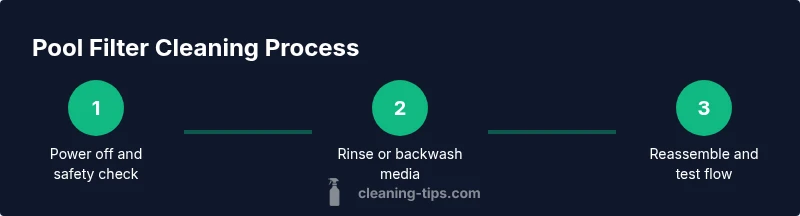
Before you touch the filter, shut off the pump and power at the main breaker. Set valves to the correct position and relieve any built-up pressure by opening the air relief valve (for certain filters). Put on PPE: gloves, safety glasses, and closed-toe shoes. Keep a bucket and garden hose nearby for rinsing and containment of dirty water. If you’re working around the pool, tie back hair and avoid loose clothing that could snag on parts. Finally, read your filter’s manual for any model-specific safety warnings and recommended cleaners. This preparation minimizes risk and keeps the job efficient.
The Step-by-Step Approach: Cartridge, Sand, and DE Variants
Cartridge filters require removing the cartridge(s), rinsing with a hose to dislodge debris, and soaking in a manufacturer-approved cleaner if recommended. Sand and DE filters mainly rely on backwashing to flush out accumulated debris, followed by a rinse to clear the media. Then, for cartridge systems, a thorough rinse or soak returns the element to like-new condition; for sand/DE, you replenish media as directed after backwashing. Collect the dirty wastewater and dispose of it according to local guidelines. This section outlines a practical approach that covers all major filter types while flagging where the steps diverge.
Post-Cleaning Steps: Reassembly and Test
Reassemble the filter housing and media according to the manufacturer’s instructions. Ensure seals and gaskets are seated properly, then restore power and slowly pressurize the system. Check for leaks around the housing and connections. Run the pump and observe flow from returns, reading the gauge to confirm the baseline pressure. If pressure remains high or flow is inconsistent, repeat the appropriate cleaning approach or inspect for torn gaskets, clogged manifolds, or mis-seated parts. While testing, keep children and pets away from the pool equipment area for safety.
Maintenance Tips to Extend Filter Life
To keep your filter performing well between cleanings, perform a quick inspection weekly and a deeper clean as recommended by your equipment manual. Regular backwashing (for sand/DE) and gentle rinsing (for cartridge media) prevent debris buildup. Maintain proper chemical balance—pH, alkalinity, and sanitizer levels—so filters aren’t overworked cleaning chemically imbalanced water. Keep a maintenance log, noting days and readings, so you can spot trends early. Finally, store spare o-rings and a small bottle of pool-safe cleaner to simplify future maintenance.
Common Pitfalls and How to Avoid Them
Common mistakes include over-cleaning, using harsh cleaners, and failing to backwash long enough. Avoid using household cleaners that could leave residues or corrode seals. Don’t force parts or overtighten clamps, which can damage housings. When in doubt, consult the manual or contact a professional. Regular, moderate maintenance will protect your equipment and ensure clearer water with less chemical drift.
Tools & Materials
- Pool filter cartridge(Ensure correct size and model for your system.)
- Garden hose with adjustable nozzle(For rinsing and backwashing debris.)
- Rubber gloves(Protect hands from debris and cleaners.)
- Safety goggles(Protect eyes from splashes and pressurized water.)
- Soft-bristled brush(Gently remove set-in debris from cartridge surfaces.)
- Bucket(Contain dirty rinse water and cleaners.)
- Cleaner/degzner manufacturer-recommended(Used for cartridge soak when advised by manufacturer.)
Steps
Estimated time: 30-60 minutes
- 1
Power off the pump and relieve pressure
Power off the pool pump at the breaker and set the valve to the neutral position. Open the air relief valve on the filter housing to relieve any built-up pressure. This minimizes the risk of sprays or injury when opening the housing.
Tip: Always verify power is disconnected before touching electrical connections. - 2
Open the filter housing and remove media
Carefully unseat the housing lid and lift out the filter element (cartridge) or media. Place it on a clean surface or in a bucket for rinsing. If you’re unsure of the media type, consult the manual before disassembly.
Tip: Handle components gently to avoid tearing gaskets or seals. - 3
Rinse the media to remove loose debris
Use a steady spray from a garden hose to loosen embedded debris without forcing particles deeper into the media. Work from the inside out to lift debris off pleats or media surfaces.
Tip: Rinse from clean edges toward the center to push debris outward. - 4
Backwash or soak as appropriate
For sand/DE: backwash until water runs clear. For cartridge: soak the media in a manufacturer-approved cleaner if recommended, following the instructed contact time.
Tip: Do not mix cleaners; use only products compatible with your filter type. - 5
Rinse thoroughly after cleaning
Rinse the media again to remove cleaner and any remaining debris. Ensure no cleaner scent remains and the surface looks lightly rinsed, not soapy or slick.
Tip: Rinsing removes cleaner residues that could affect water chemistry. - 6
Reassemble the filter and seals
Place the media back into the housing and reseal the lid. Re-tighten any clamps or screws to factory specification, avoiding overtightening that could crack housings.
Tip: Check that gaskets are seated evenly to prevent leaks. - 7
Restore power and run the system
Turn the pump back on and gradually pressurize the system. Monitor returns and check the pressure gauge for a normal baseline. If pressure remains high, repeat steps or inspect for clogs and leaks.
Tip: Allow the system to run for several minutes to confirm steady flow. - 8
Document results and plan next maintenance
Record gauge readings, filter type, and any steps taken. Schedule the next cleaning based on pool use, debris level, and manufacturer recommendations.
Tip: A quick log helps diagnose performance trends over time.
Questions & Answers
How often should I clean my pool filter?
Clean your pool filter when the pressure gauge shows a rise above the baseline or per your manufacturer’s guidance. Regions with heavy debris may require more frequent cleanings. Regular checks help maintain water quality and equipment health.
Clean the filter when the pressure rises from baseline, or as your manual recommends.
Can I clean a DE or sand filter without backwashing?
Backwashing is a standard step for sand and DE filters to flush out trapped debris. Cartridge filters usually do not backwash; instead, you rinse and soak. Follow your system’s instructions to avoid compromising filtration efficiency.
Backwash is usually needed for sand and DE filters according to the manual.
Is it okay to use household cleaners on pool filters?
Avoid household cleaners unless specifically recommended by the filter manufacturer. Harsh chemicals can damage seals or leave residues that disrupt water balance. Use only approved pool-safe cleaners.
Don’t use household cleaners unless the manufacturer allows them.
What does a clean vs dirty filter look like?
A clean filter shows consistent flow and neutral pressure readings; a dirty filter shows reduced flow and higher pressure. Visual signs include clogging, debris on media, and cloudy water. Regular inspection helps catch problems early.
A dirty filter usually reduces flow and increases pressure.
Should I replace filters periodically?
Cartridge elements and media have a finite lifespan and should be replaced per manufacturer recommendations or when tears, deformation, or excessive wear are evident. Routine cleaning can extend life, but replacement is sometimes necessary.
Replacement timing depends on wear and the manufacturer’s guidance.
What safety steps are crucial when cleaning a pool filter?
Never open a pressurized filter without relieving pressure, disconnect power before servicing, and wear PPE. Keep children away from the work area and read the manual for model-specific warnings.
Relieve pressure, disconnect power, and wear PPE before starting.
Watch Video
The Essentials
- Clean filters restore flow and clarity
- Identify filter type before cleaning to apply correct method
- Backwash for sand/DE, soak for cartridge as needed
- Inspect seals and housing to prevent leaks
- Maintain a simple routine to extend filter life