How to Clean Virus on Android: A Practical Malware Removal Guide
Learn how to clean virus on Android with a step-by-step approach to remove malware, protect your data, and prevent future infections—including Safe Mode, trusted antivirus, updates, and best hygiene practices.


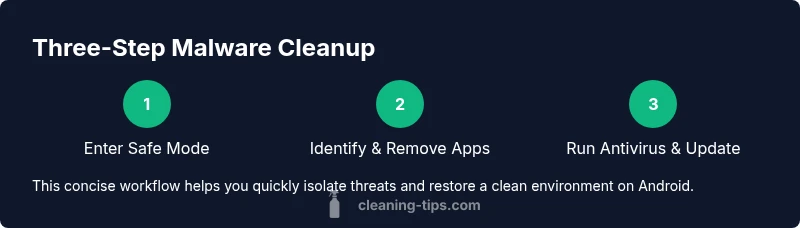
To clean a virus on Android, start by rebooting into Safe Mode, remove suspicious apps, and run a reputable antivirus scan. Clear app caches, disable unknown device admin apps, check for device administrator permissions, update the OS, and back up data. If problems persist, perform a factory reset after ensuring you have a clean backup.
What is Android malware and how it happens
According to Cleaning Tips, Android malware is software designed to harm or access data on your device without permission. It can enter through disguised apps, phishing links, or sideloading APKs from outside the Google Play ecosystem. Once installed, it may monitor your activity, display ads, exfiltrate data, or take control of certain features. The best defense starts with awareness: know where malware tends to hide and what behaviors signal trouble. In practice, most infections begin when a user taps a misleading prompt, downloads an unofficial app, or connects to unsafe Wi‑Fi networks. Even legitimate apps can become compromised if they are updated with malicious payloads, so staying vigilant about updates is essential. Cleaning Tips analysis shows that regular maintenance and secure browsing drastically reduce risk, especially on devices with older Android versions that no longer receive security patches.
This guide centers on practical actions you can take today to reduce risk and recover control of your device, with a focus on steps that homeowners and renters can perform without specialized tools. We’ll cover Safe Mode, app audits, antivirus scans, and hygiene practices that align with best practices from Cleaning Tips and other trusted sources. The goal is to empower you to act quickly and confidently when you suspect malware.
How to tell if your Android device has a virus or malware
Malware on Android often shows up through behavior changes rather than a single symptom. Look for unexpected pop-ups, sudden battery drain, slower performance, overheating, or unfamiliar apps appearing on the launcher. You may notice data usage spikes, strange notifications, or apps that you cannot uninstall. If your device intermittently restarts, Wi‑Fi becomes unstable, or you see red warnings on your screen, these are common signals to investigate. Remember that many symptoms overlap with non-malware issues like aging hardware, background services, or app conflicts, so a careful diagnostic approach is necessary. To differentiate, verify installed apps against your own activity log and check for device administrator permissions that you don’t recognize.
Quick safety prep before you start cleaning
Before you begin cleaning a virus from Android, back up your data to a trusted source (cloud storage or an offline copy). Ensure your internet connection is stable to fetch updates and run scans. Enable Play Protect and consider installing a reputable antivirus app from the Google Play Store rather than third-party sources. Ensure you know how to access Safe Mode on your device in case you need to isolate effects. Finally, sync your passwords and secure credentials so that post-clean recovery remains protected. This prep reduces the risk of data loss and helps you recover quickly if a reset becomes necessary.
Step 1: Reboot into Safe Mode to isolate the threat
Safe Mode prevents third-party apps from launching, making it easier to identify whether a problem is caused by a downloaded app. To enter Safe Mode on most Android devices, press and hold the power button, then tap and hold the Power Off option until the Safe Mode prompt appears. Confirm and wait for the device to restart in Safe Mode. Once there, you can inspect installed apps with fewer distractions. This step is foundational because it prevents malware from actively interfering with your cleanup and helps you safely uninstall suspect software.
Pro tip: If you cannot access Safe Mode, consult your device’s official support page for model-specific instructions. A failed Safe Mode entry can indicate deeper system issues that may require different steps.
Step 2: Review and uninstall suspicious apps
In Safe Mode, go to Settings > Apps and review recently installed or poorly named apps. Look for apps with generic icons, strange developer names, or those requesting permissions that don’t match their function. If you’re unsure, search the app name online to see if others report it as potentially harmful. Uninstall any apps that you did not install intentionally or that behave suspiciously. After uninstalling, reboot the device normally to verify whether the issue persists.
Tip: Keep a list of apps you’ve installed and monitor for unexpected changes after each removal to confirm you’ve correctly addressed the problem.
Step 3: Run a trusted antivirus scan and remove threats
With Safe Mode off, run a reputable antivirus scan from a well-known provider. Allow the scan to complete and follow the prompts to remove detected threats. If your antivirus flags multiple apps as malicious, consider removing them in batches to avoid system instability. After removal, run a second scan to ensure no remnants remain. Some malware resists simple removal by hiding in boot paths or system services, but a reputable scanner will typically address common variants.
Note: Do not rely on one tool alone; cross-verify with at least one additional trusted scanner if possible.
Step 4: Clear caches, reset permissions, and manage device administrators
Clearing app caches and data can remove residual malicious payloads that linger in storage. Go to Settings > Storage > Cached data and clear if appropriate. Review app permissions for any that seem excessive (e.g., accessibility, drawing over other apps). Revoke permissions for apps you don’t recognize or no longer use. Also check Device Administrators (Settings > Security > Device admins) and disable any that you don’t recognize. Some malware uses device admin privileges to resist removal; removing those privileges is often essential for successful cleanup.
Pro tip: After revoking admin rights, try to uninstall the malicious apps again to ensure complete removal.
Step 5: Update OS and apps; back up data securely
System updates often include security patches that remove vulnerabilities exploited by malware. Check Settings > System > Advanced > System update and install any available updates. Similarly, update each installed app via the Google Play Store to ensure you have the latest security fixes. Back up critical data if you haven’t already, then perform a maintenance backup to prevent data loss if further actions are needed. After updates, monitor the device for improved performance and absence of suspicious behavior.
This step reduces future risk by closing known gaps that malware can exploit.
Step 6: Factory reset as a last resort (and after you’ve backed up)
If the infection persists despite the above steps, a factory reset can remove entrenched malware. This returns the device to its original state, erasing all user data and apps. Before you reset, confirm that your backup is complete and test restoration on a separate device or account if possible. After the reset, set up the device as new, install only essential apps from trusted sources, and enable security features like Play Protect and automatic updates. Monitor for any signs of residual infection and avoid restoring apps from the previous backup that could reintroduce malware.
Note: A factory reset is a powerful last-resort option that should be used carefully to protect personal information.
Step 7: Post-clean security hygiene to prevent re-infection
After cleaning, adopt ongoing security habits to minimize future infections. Enable Google Play Protect, keep the OS and apps current, and avoid sideloading APKs from unknown sources. Enable strong, unique passwords for accounts and consider a password manager. Review network behavior and avoid public Wi‑Fi for sensitive transactions without a VPN. Regularly audit installed apps, run periodic scans, and back up data routinely. These practices create a hostile environment for malware and keep your device safer in the long term.
Tools & Materials
- Android device(Your own device or one you have permission to modify)
- Trusted antivirus app(From a reputable developer in Google Play Store)
- Backup storage(Cloud backup or local external storage)
- Stable internet connection(For updates and software verification)
- Browser and account credentials(If you need to re-sign in after cleanup)
Steps
Estimated time: 45-90 minutes
- 1
Enter Safe Mode
Boot the device into Safe Mode to prevent third-party apps from running. This isolates malware and makes it easier to inspect and remove harmful software. If your device doesn’t respond to standard methods, consult the manufacturer’s support page for model-specific steps.
Tip: If Safe Mode won’t start, try powering off and restarting with a long press on the Power button. - 2
Identify and remove suspicious apps
Review recently installed or unknown apps and uninstall those that look suspicious or lack clear developer information. After removal, reboot normally to test for lingering signs of infection.
Tip: Take screenshots of suspicious app names to help you remember before uninstalling. - 3
Run antivirus scan
Run a full device scan with a trusted antivirus app. Follow the prompts to remove detected threats and quarantine any suspicious files.
Tip: Run a secondary scan with a different reputable tool if you suspect partial removal. - 4
Clear caches and revoke permissions
Clear caches for apps that you use often, and revoke unnecessary permissions granted to unfamiliar apps. Disable any unknown device administrators.
Tip: After revoking rights, attempt uninstall again to ensure complete cleanup. - 5
Update OS and apps
Install the latest Android OS updates and app updates to close security gaps exploited by malware. A fresh, up-to-date environment reduces reinfection risk.
Tip: Enable automatic updates to prevent delays in future patches. - 6
Back up data and consider a reset if needed
Back up important data securely. If infections persist, perform a factory reset as a last resort, ensuring the backup doesn’t reintroduce malware.
Tip: Test backup restoration in a controlled way before returning to normal use. - 7
Post-clean security hygiene
Return to normal usage with reinforced security: Play Protect on, store apps only from trusted sources, use strong passwords, and monitor activity for unusual behavior.
Tip: Schedule monthly security check-ins to maintain hygiene.
Questions & Answers
What are the first signs of malware on Android?
Common signs include pop-ups, sudden battery drain, slower performance, unfamiliar apps, and overheating. If you notice multiple symptoms, proceed with a clean-up plan.
Look for pop-ups, faster battery drain, slow devices, and unknown apps as early warning signs.
Is Safe Mode enough to clean malware on Android?
Safe Mode helps isolate the issue but may not remove all threats. Combine Safe Mode with uninstalling suspicious apps and a trusted antivirus scan.
Safe Mode helps isolate the issue, but you’ll likely need antivirus scans and app removals to fully clean it.
When should I factory reset my Android device?
If infections persist after removing apps and scanning, a factory reset can remove deeply embedded malware. Back up data first and test restoration afterward.
If cleaning steps don’t work, consider a factory reset after backing up your data.
Can antivirus apps remove Android malware?
Yes, reputable antivirus apps can detect and remove malware. Use one trusted brand and verify results with a second scanner if needed.
Yes, use a trusted antivirus to detect and remove threats, and verify with another scanner if possible.
How can I prevent future Android infections?
Install apps from trusted sources, enable Play Protect, keep OS and apps updated, and avoid clicking suspicious links or downloading unknown APKs.
Keep updates current, avoid dubious links, and rely on trusted app sources and Play Protect.
What should I do if my device is managed by an IT admin?
If a corporate or school device is managed, contact your IT administrator before making changes. They may require specific procedures.
If your device is managed by an admin, reach out to them before cleaning.
Watch Video
The Essentials
- Boot into Safe Mode to isolate threats
- Uninstall suspicious apps and run antivirus scans
- Update OS/apps and back up data
- Factory reset only as a last resort
- Practice ongoing mobile security habits