How to clean when battery leaks: a practical guide
Learn safe, step-by-step methods to clean battery leaks from appliances and surfaces, neutralize spills, dispose of batteries properly, and prevent future incidents.


To clean up a battery leak safely, start by wearing gloves, ventilating the area, and removing the device if it’s safe. Do not touch the liquid. Use a baking soda solution to neutralize alkaline leaks on hard surfaces, then wipe with disposable towels. Dispose of the battery properly and wash your hands afterward.
What happens when a battery leaks: common chemistries and hazards
Battery leaks can involve alkaline electrolytes (potassium hydroxide) or Li-ion electrolytes. Alkaline leaks are caustic and can burn skin and damage surfaces; Li-ion leaks can be flammable and toxic. The Cleaning Tips team emphasizes caution and proper cleanup to prevent chemical burns, corrosion, and inhalation exposure. In many homes, leaks occur from AA/AAA alkaline batteries or from devices that have compromised cells. Understanding the chemistry helps you choose the right cleanup approach and disposal method, reducing damage to countertops, fabrics, and devices. Li-ion leaks may release solvents or flame hazards if ignited, so avoiding sparks and heat sources is essential. When in doubt, prioritize safety over cleaning speed and consult the device manufacturer’s guidance.
According to Cleaning Tips, recognizing the type of leak informs whether to neutralize, wipe, or avoid liquids on electronics. If the spill is on fabric or wood, act quickly to prevent absorption and staining. Always isolate the area from children and pets until cleanup is complete.
Safety prerequisites before you touch anything
Before you start any cleanup, ensure you have adequate ventilation and that the area is well-lit. Put on chemical-resistant gloves and eye protection to shield skin and eyes from caustic residues. If you suspect a Li-ion battery has ruptured in an electronic device, unplug the device only if safe to do so; otherwise, power down the device and move it away from heat sources. Keep a dedicated trash bag accessible for contaminated wipes and disposed batteries. If fumes are strong or the spill is large, evacuate the room and call for professional assistance. The goal is to minimize exposure to caustic liquids and prevent any contact with the leaked material.
Surfaces and materials you’ll encounter during cleanup
Different surfaces react differently to battery leaks. Alkaline spills from AA/AAA batteries can burn skin and corrode metals, while Li-ion leaks may damage plastics and electronics. On hard, non-porous surfaces (ceramic, quartz, sealed countertops), a baking soda neutralization step can reduce caustic residues, followed by a gentle wipe with a mild soap solution. Porous materials like wood and fabrics require rapid blotting and may need professional treatment to prevent staining or odor. Be mindful of electronics; if the leak reached a device’s interior or connectors, avoid using liquids inside the device and consult the manufacturer’s safe-cleanup guidance. Always work from the spill’s edge toward the center to minimize spread.
Neutralizing agents and why baking soda works
Baking soda (sodium bicarbonate) is a gentle, readily available neutralizer for alkaline battery leaks. It reacts with caustic potassium hydroxide to form a safer, non-corrosive residue that can be wiped away. Do not rely on water alone, which can spread the caustic liquid. If you don’t have baking soda, a mild dish soap solution can help remove residues on non-porous surfaces after neutralization. It’s important to test a small, inconspicuous area first to ensure the cleaner won’t damage the surface finish. For stubborn residue, a soft cloth dampened with a baking soda paste can lift residue without scratching.
Step-by-step cleanup process
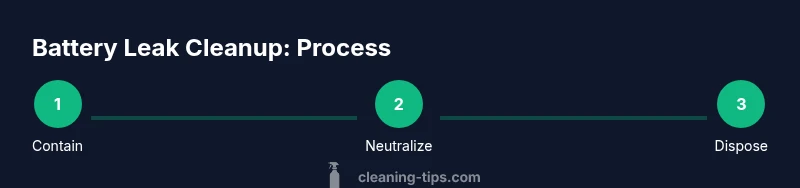
The cleanup process involves several careful, sequential actions designed to limit exposure and damage. Start by containing the spill to prevent spreading; move any contaminated items away and open windows or turn on a vent fan. Don gloves and eye protection, then blot the leak with disposable towels to remove pool water or liquid. Prepare a baking soda solution and apply it to the affected area, allowing a brief contact time to neutralize the caustic material. Wipe the area with a damp cloth and a mild soap solution, then rinse with clean water if appropriate for the surface. Finally, place contaminated materials in a sealable bag and dispose of them according to local regulations. Always wash your hands thoroughly after cleanup and store cleaning supplies out of reach of children and pets.
Safe disposal and post-cleanup checks
Disposal is a critical step. Place all contaminated wipes, paper towels, and the battery in a heavy-duty trash bag, seal securely, and follow local guidelines for battery recycling or hazardous waste. Do not mix different battery chemistries in the same container. After cleanup, inspect the area for any signs of staining, corrosion, or odor. If odors persist or if you notice continued corrosion on surfaces, consider repeating the cleaning cycle or seeking professional guidance. Finally, document any leaks if the battery was part of a device you own, as this can help with future maintenance and safety checks.
Preventing future leaks: storage, handling, and signs of a failing battery
Prevention starts with proper storage and handling. Store batteries upright in a cool, dry place away from direct sunlight and heat sources. Regularly inspect battery shells for swelling, corrosion, or cracks. Never mix old and new batteries or different chemistries in the same container, and avoid carrying loose batteries in pockets or bags where terminals can short. Use protective cases for batteries during transport and be mindful of devices that generate heat or show abnormal behavior. By staying vigilant and following recommended storage practices, you reduce the risk of leaks and improve overall home safety.
Tools & Materials
- Nitrile gloves(Chemical-resistant; avoid latex if allergies exist)
- Safety goggles(Eye protection to shield from splashes)
- Face mask(Optional to reduce fumes exposure)
- Baking soda (sodium bicarbonate)(Dissolve in water to neutralize alkaline leaks)
- Water (distilled or clean tap)(For diluting baking soda solution and rinsing)
- Paper towels or disposable wipes(For blotting and cleanup)
- Disposable cloths(Non-linting towels for final wipe-down)
- Trash bags(Seal and dispose of contaminated waste separately)
- Isopropyl alcohol (70%)(Optional for stubborn residues)
- Mild dish soap(For surface cleaning after neutralization)
Steps
Estimated time: 30-45 minutes
- 1
Assess safety and contain the spill
Evaluate the spill and ensure there’s no fire risk. If the leak is from a device, move it away from heat sources and unplug only if safe. Contain the area to prevent spread by surrounding with towels.
Tip: Keep a dry, non-conductive barrier around the spill to prevent extensions. - 2
Power down and unplug devices
If the leaking battery powers a device, power down the device and unplug it from any power source before attempting cleanup. Do not press the battery further; minimizing movement reduces spread.
Tip: Never attempt to charge a leaking device; this can worsen the leak. - 3
Don protective gear
Put on nitrile gloves and safety goggles. A mask is optional but helpful if fumes are noticeable. PPE protects skin and eyes from caustic materials and fumes.
Tip: Avoid touching your face while wearing gloves. - 4
Blot and isolate the liquid
Gently blot the liquid with disposable towels, working from the outside edge toward the center. Do not rub, which can spread caustic material into nooks and porous materials.
Tip: Dispose of each blotting material in the sealable bag after use. - 5
Neutralize with baking soda solution
Prepare a baking soda solution and apply it to the affected area to neutralize alkaline leaks. Let it sit briefly to react, then wipe away with a damp cloth.
Tip: Test a small area first to ensure surface compatibility. - 6
Clean and rinse surfaces
Wipe the area with mild dish soap and clean water to remove any residue. For non-porous surfaces, a final rinse with clean water helps remove leftover residues.
Tip: Dry thoroughly to prevent moisture damage to nearby materials. - 7
Dispose of waste and device properly
Seal used wipes, gloves, and the battery in a separate bag and follow local guidelines for battery recycling or hazardous waste disposal. If the device is damaged beyond safe use, consider professional disposal.
Tip: Label the bag as hazardous waste if required by local regulations.
Questions & Answers
What should I do first when discovering a battery leak?
Put on gloves and ventilate the area, then contain the spill and identify the surface involved. If safe, unplug the device and move it away from heat sources.
First, wear gloves and ventilate, then contain the spill and identify the surface. If safe, unplug the device.
Is it safe to use water to clean battery leaks?
Direct water application is not recommended for leaks from Li-ion cells. For alkaline leaks, blot and neutralize with baking soda before wiping; surface rinsing may be appropriate on non-porous surfaces.
Avoid pouring water on Li-ion leaks. Blot, neutralize with baking soda, then wipe; rinse only on non-porous surfaces if needed.
Can I use isopropyl alcohol to clean residue after neutralizing?
Isopropyl alcohol can help remove sticky residues after neutralization, but avoid using it on electronics unless you’re sure there is no liquid inside the device.
Isopropyl alcohol can help with sticky residues, but don’t use it inside electronics.
How should I dispose of damaged batteries?
Place damaged batteries in a non-conductive, sealed container and take them to a battery recycling or hazardous waste facility per local regulations.
Put the damaged battery in a sealed container and bring it to a recycling or hazardous waste facility.
What if the spill affects electronics or appliances?
If the device shows damage or corrosion, discontinue use and consult the manufacturer’s cleanup guidance or contact a professional.
If the device is damaged, don’t use it. Check the manufacturer’s guidance or contact a pro.
Watch Video
The Essentials
- Wear protective gear before cleanup
- Neutralize alkaline leaks safely
- Contain, then clean and dry surfaces
- Dispose of batteries and waste responsibly
- Inspect for residue and prevent future leaks