What Clean Battery Acid Means: Safe Cleanup Guide
Learn how to safely clean battery acid spills with step-by-step instructions, PPE, neutralization tips, and proper disposal to protect your home.


To clean battery acid safely, you’ll neutralize the spill, protect yourself with PPE, and thoroughly rinse the area. Start by isolating the spill, then wear safety gear, apply baking soda to neutralize the acid, and wipe up residues before a final rinse. According to Cleaning Tips, follow a calm, methodical routine to prevent injury and damage.
What clean battery acid means and hazard overview
Battery acid refers to the sulfuric acid used in lead-acid cells found in many rechargeable batteries. In household terms, a spill can occur if a battery case cracks during charging, transport, or storage. The acid is highly corrosive to skin, eyes, and many surfaces, and it releases fumes that can irritate airways. Because acids react with metals and organic materials, a spill can damage floors, tools, and nearby electronics. The Cleaning Tips team emphasizes that recognizing the hazard and acting calmly reduces risk and prevents secondary damage. In this section, you’ll learn to identify a spill, understand why it’s dangerous, and outline a careful cleanup approach that minimizes exposure and mess. Remember: never attempt to mix cleaners with acids, and always plan how you’ll contain and dispose of materials before you start.
Safety gear and workspace setup
Before any cleaning, establish a safe workspace. Put on certified chemical-resistant gloves (nitrile or neoprene), splash goggles, and a rubber or PVC apron to protect skin and clothing. Wear closed-toe shoes to guard feet, and ensure the area is well-ventilated—open windows if possible and use a portable fan pointed away from you. Remove or cover electronics and metals nearby to prevent corrosion. Keep a bucket of clean water and a separate container for rinse water, plus a ready supply of baking soda and absorbent pads. Having a clearly marked spill kit makes the process faster and safer. According to Cleaning Tips, preparation is the backbone of safe cleanup, reducing the chance of splashes and exposure.
Common sources of battery acid spills and containment
Spills most often happen during charging, transport, or when a battery case is damaged. Lead-acid batteries can leak through cracks or bulges in the casing, especially if they’re old or overfilled. Containment measures include surrounding the area with absorbent pads, plastic sheeting, or towels to prevent seepage into cracks or porous surfaces. Do not touch the liquid directly; if you suspect a larger spill, isolate the area and call for professional help. Keeping spare absorbent materials readily available helps you act quickly. The goal is to create a physical barrier that stops the liquid from spreading, while you prepare neutralization and cleanup steps.
Neutralization chemistry: baking soda and why it works
Baking soda (sodium bicarbonate) is a mild base that reacts with sulfuric acid to form harmless byproducts—sodium sulfate, water, and carbon dioxide. Sprinkling baking soda over the spill raises the pH locally, which slows corrosion and makes cleanup easier. Apply a generous layer, wait 1-2 minutes for the fizzing to subside, then sweep up the neutralized material with towels or absorbent pads. Avoid using vinegar directly on the spill, as acid-base reactions can produce heat and splatter; instead, rely on baking soda as your primary neutralizer. This approach aligns with safe cleaning practices and is recommended by Cleaning Tips.
Step-by-step spill response overview
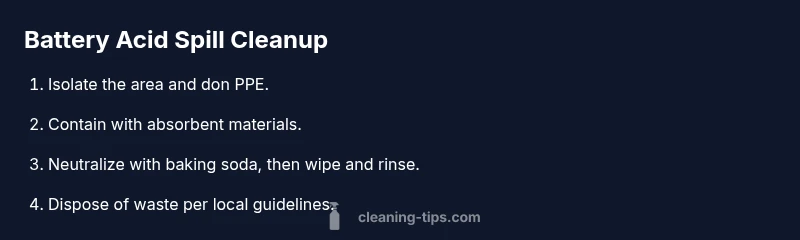
In a spill, your goal is containment, neutralization, and clean-up in that order. Start by isolating the spill area and preventing access. Then put on PPE and prepare absorbent materials. Next, cover the liquid with baking soda to neutralize it, using enough powder to cover the entire pool. Finally, wipe the area with a damp cloth, rinse with clean water, dry, and seal contaminated materials in a bag for disposal. If the spill involves a battery that’s actively leaking, evacuate the area and call emergency services. The step-by-step approach helps you stay organized and safe.
Cleaning procedure: from containment to final rinse
Begin by containing the spill: place pads around the pool to prevent spreading. Apply baking soda liberally and let it fizz away the acid for 1-2 minutes. Then use a disposable cloth or sponge to wipe up the powder-saturated liquid, repeating as needed. Rinse the area with clean water, using a separate bucket for rinse water to avoid recontaminating surfaces. Dry the surface thoroughly with towels. Finally, place all contaminated materials in a sealed bag and dispose of them according to local guidelines.
Disposal of contaminated materials and waste handling
Dispose of used towels, gloves, rags, and absorbent pads in a sealable bag; label it as hazardous waste according to local regulations. Do not toss into regular trash if your jurisdiction requires special handling. Check whether your household hazardous waste program accepts acid-contaminated waste. If you’re unsure, contact local waste management. Cleaning Tips recommends following municipal guidelines and preserving any used materials as proof of proper disposal.
Common mistakes and how to avoid them
Common mistakes include delaying cleanup, wearing inadequate PPE, using bleach or ammonia-based cleaners, and failing to ventilate the area. Another error is using metal tools that can react with the acid or scratching sealed surfaces, which may lead to further leaks. Avoid strong, corrosive cleaners; stick to baking soda for neutralization and clean water for rinsing. By anticipating these pitfalls, you’ll reduce risk and improve outcomes.
Authority sources and safety resources
Here are trusted sources for chemical safety and waste disposal guidance, which you can consult for local rules and best practices:
- OSHA: https://www.osha.gov/
- CDC/NIOSH: https://www.cdc.gov/niosh/
- EPA: https://www.epa.gov/hhw
The Cleaning Tips team relies on these sources to verify safety guidelines and disposal practices.
Tools & Materials
- PPE kit (safety goggles, chemical-resistant gloves, and apron)(ANSI-rated goggles; nitrile gloves, size L; long sleeves)
- Absorbent materials (spill pads, towels or paper towels)(Enough to cover the spill and surrounding area)
- Baking soda (sodium bicarbonate)(Sufficient quantity to fully cover the liquid)
- Water supply for rinsing(Access to clean, running water or plenty of bottled water)
- Plastic scoop or spatula(For moving solids and applying absorbent material)
- Disposable towels or paper towels(Single-use to minimize cross-contamination)
- Sealant bags or sealable containers(For disposing of contaminated waste)
- Bucket for rinse water(Helpful to keep rinse water separate)
- pH test strips (optional)(Check neutralization level if available)
Steps
Estimated time: 25-60 minutes
- 1
Isolate spill and assess hazard
Identify the extent of the spill and prevent access to the area. Do not touch the liquid with bare skin or metal objects. If the spill is large or battery is actively leaking, evacuate and call for professional help.
Tip: Keep others away and avoid rushing—hasty moves can spread the liquid. - 2
Put on PPE and prep the area
Don goggles, gloves, and apron before approaching. Clear nearby surfaces, switch on ventilation, and lay down absorbent pads to catch any splashes.
Tip: Check PPE for tears before you start. - 3
Contain the spill with absorbents
Place pads around the spill and gently cover the pool of liquid to prevent it from seeping into seams or cracks. Work from the outer edge toward the center to minimize spread.
Tip: Use a dry approach first; add more absorbent as needed. - 4
Neutralize with baking soda
Sprinkle baking soda over the liquid to neutralize the acid. Wait 1–2 minutes for fizzing to subside, then collect the solidified material with towels.
Tip: Use enough baking soda to cover the entire spill for effective neutralization. - 5
Wipe and rinse the area
Wipe the area with a damp cloth or disposable wipe, then rinse with clean water. Repeat as necessary until residues are gone. Dry the surface thoroughly afterward.
Tip: Rinse away from the edges to avoid recontaminating nearby spots. - 6
Dispose of waste and seal the area
Place all contaminated materials in a sealable bag or container and seal tightly. Label if required by local guidelines and dispose according to municipal rules. Recheck the area for any remaining residue.
Tip: Double-bag if possible and keep the waste separate from regular trash. - 7
Inspect and document the cleanup
Inspect the cleaned surface for any staining or lingering odor. If in doubt, repeat the neutralization and rinsing steps. Document the cleanup for future reference or safety audits.
Tip: Use optional pH strips to confirm neutralization levels.
Questions & Answers
What is battery acid and why is it hazardous?
Battery acid is sulfuric acid used in lead-acid batteries. It is highly corrosive and can cause severe burns to skin and eyes, and it releases fumes that irritate the respiratory system. Treat any spill as a hazardous situation and follow safety steps for containment and cleanup.
Battery acid is highly corrosive and dangerous. Treat spills with caution, wear PPE, and follow safety steps for containment and cleanup.
Can baking soda neutralize battery acid effectively?
Yes. Baking soda is a mild base that reacts with sulfuric acid to form safe byproducts. Apply it to cover the spill, allow the fizz to subside, then wipe and rinse the area.
Baking soda neutralizes the acid and helps make cleanup safer and easier.
What PPE should I wear for battery acid cleanup?
Wear chemical-resistant gloves, safety goggles, and an apron; ensure good ventilation and closed-toe shoes. Check PPE for damage before use.
Goggles, chemical-resistant gloves, and an apron are essential, with good ventilation.
How should I dispose of contaminated materials after cleanup?
Seal all contaminated materials in bags or a rigid container and follow local hazardous waste rules. Do not place in regular trash if regulations require specialized disposal.
Seal waste and follow local hazardous waste rules.
Is it safe to use household cleaners after neutralization?
Avoid mixing cleaners with neutralized areas, and don’t use ammonia or bleach. Rinse with clean water and use mild cleaners if needed.
Don’t mix cleaners; rinse well and use mild cleaners if necessary.
What should I do if battery acid contacts skin or eyes?
Immediately rinse with running water for at least 15 minutes. Remove contaminated clothing and seek medical attention if irritation persists.
Rinse skin or eyes thoroughly with water for at least 15 minutes and seek medical help if needed.
How long does cleanup typically take?
Most spills take about 20-60 minutes depending on size and surface. Plan for a thorough wipe, rinse, and disposal process.
Expect around half an hour to an hour for a thorough cleanup.
Watch Video
The Essentials
- Wear PPE before handling spills
- Neutralize with baking soda, not bleach
- Contain, then clean and rinse thoroughly
- Dispose of waste per local guidelines
- Check area for complete safety before resuming activities