How to Tell If Clean Title: A Practical Guide
Learn how to verify a title's cleanliness by checking for liens, brands, and encumbrances. Step-by-step methods, reports, and best practices to ensure you don’t buy a vehicle with hidden title issues.


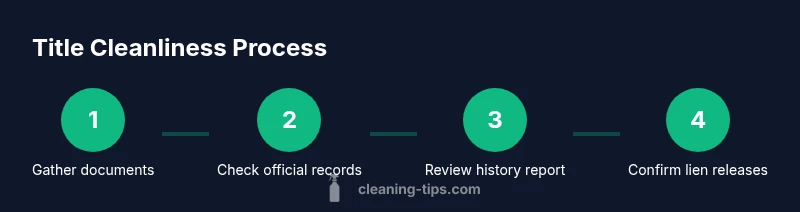
To tell if a title is clean, start by pulling the official title records and checking for liens, brands, or encumbrances. Then verify ownership history, ensure all prior liens are released, and confirm there are no salvage, rebuilt, or junk brands. Finally, cross-check with a reputable vehicle history report and the DMV to confirm a clear title status.
Why a clean title matters
A clean title is more than a badge of trust; it affects resale value, loan eligibility, and insurance. For homeowners and buyers alike, understanding what makes a title clean helps prevent costly surprises after purchase. The Cleaning Tips team highlights that title integrity reduces the risk of hidden liens or brand markings that can derail ownership. By learning how to tell if clean title status is present, you can negotiate with confidence and avoid late-found complications. This guide walks you through the key concepts, common pitfalls, and practical steps to verify title cleanliness with confidence.
In many jurisdictions, a vehicle title can carry brands such as salvage, rebuilt, flood, or junk when the vehicle has undergone significant damage or loss. Each brand has specific legal implications and can affect insurance coverage and market value. A truly clean title shows no such brands and reflects a straightforward ownership history. Understanding what to look for, and what to verify, empowers you to make informed decisions and protect your investment.
When you approach title verification, treat it as a small due-diligence project. Collect documents, consult official records, and corroborate information across multiple sources. This redundancy helps catch discrepancies that a single source might miss. Remember: a clean title is not merely absence of problems; it’s the presence of verified, unencumbered ownership.
According to Cleaning Tips, thorough verification is essential for anyone purchasing a used vehicle or transferring property. A disciplined process reduces risk and sets a baseline for negotiations. The more sources you consult, the higher your confidence that the title status is accurate and current.
noteisEmpty?:null},
Tools & Materials
- VIN (Vehicle Identification Number)(Exact 17-character VIN from the vehicle’s dashboard or door jamb)
- Driver’s license or state ID(Proof of identity to access DMV records)
- Proof of purchase or escrow documents(Optional but helpful for ownership chain verification)
- Access to DMV portal or public records(Be prepared to pay any applicable search fees)
- Vehicle history report (online provider)(Look for a report that includes liens, brands, and previous owners)
- Pen and notebook or note-taking app(Record dates, tamper-proof notes, and source details)
Steps
Estimated time: 60-90 minutes
- 1
Gather all essential documents
Collect the VIN, the current title if available, and any seller-provided documents. Having the VIN and ID ready speeds up record checks and protects you from misidentification. This step sets a solid foundation for accurate verification.
Tip: Double-check the VIN on the vehicle and title to avoid mismatches. - 2
Check official title records
Access the DMV or equivalent authority to review the title history. Look for any brands (salvage, rebuilt, flood, junk) and confirm whether liens exist or have been released. Official records are the backbone of a clean-title determination.
Tip: Some records require a small search fee or an in-person visit. - 3
Obtain a vehicle history report
Order a comprehensive history report from a reputable provider. Review the report for liens, brands, accidents, and the ownership chain. Cross-reference the report with the DMV records for consistency.
Tip: If the report shows a lien, ensure it’s released before transfer. - 4
Review lien status and releases
If a lien appears, verify a lien release from the lender and ensure the release is recorded. An uncleared lien means the title is not clean and the vehicle may be repossessed or financed incorrectly.
Tip: Ask the seller for the lien release documentation in writing. - 5
Check ownership chain integrity
Trace ownership from the current owner back to the original. Breaks or gaps in the chain can indicate issues or unreported transfers. A solid chain supports a clean title claim.
Tip: Document each transfer date and party for future reference. - 6
Inspect the physical title for accuracy
Examine the title document for misspellings, incorrect VINs, or inconsistent owner names. Small clerical errors can cause serious problems at transfer time.
Tip: If you spot errors, request corrections before proceeding. - 7
Cross-check with multiple sources
Cross-verify the information across DMV records, the vehicle history report, and, if possible, the seller’s documentation. Consistency is a strong signal of title cleanliness.
Tip: Document discrepancies and seek clarification from authoritative sources. - 8
Decide on next steps if issues arise
If there are unresolved liens, brands, or chain gaps, consider walking away or negotiating terms to address the issues. A clean title is a prerequisite for safe ownership and loan eligibility.
Tip: Never skip due-diligence to close a deal faster.
Questions & Answers
What is a clean title?
A clean title indicates there are no liens or adverse brands attached to the title, and the ownership history is complete and undisputed. It facilitates transfer, financing, and insurance without encumbrances.
A clean title means there are no liens or brands attached, making transfer straightforward.
What signals a damaged or branded title?
Signals include salvage, rebuilt, flood, or junk brands; open liens; inconsistent ownership history; or missing releases. These issues can affect insurability and resale value.
Look for brands like salvage or rebuilt and any open liens in the history report.
How do I get a vehicle history report?
Use a reputable history provider and enter the VIN. Review the report for liens, brands, and ownership history, then cross-check with DMV records.
Get a history report using the VIN and compare it with official DMV records.
Can a title become clean after a lien is released?
Yes. Once a lien is released and recorded, and there are no brands or ownership gaps, the title can be clean. Always verify the release is properly documented.
If the lien is released and properly recorded, the title can become clean.
What should I do if the seller can’t provide title history?
Ask for documentation from the lender or DMV, or consider walking away. Absence of verifiable history raises the risk of hidden liens or branding.
If the seller can’t provide history, proceed with caution or walk away.
Watch Video
The Essentials
- Verify title history through multiple official sources
- Confirm lien releases before transfer
- Look for salvage or other adverse brands
- Use a reputable vehicle history report for cross-checks