How to Check for a Clean Title on a Car
A comprehensive, step-by-step guide to verify a car's title status, identify liens, and ensure a legitimate transfer of ownership. Learn how to pull title history from official portals, verify VINs, and avoid buying a vehicle with a branded or compromised title.


According to Cleaning Tips, to check for a clean title on a car, start by pulling the vehicle’s title history from the official DMV or state portal, verify the VIN on all documents matches, and look for any liens or brand notations. Then confirm ownership with the seller’s paperwork and run a lien check.
Why Knowing the Title Status Protects You
Owning or buying a vehicle is a major financial decision. A clean car title confirms you’re dealing with the rightful owner and that there are no hidden claims against the vehicle. According to Cleaning Tips, starting with a VIN check and official title history can prevent costly surprises after you sign the paperwork. A proper title check reduces the risk of acquiring a car with undisclosed liens, branded titles (like salvage or rebuilt), or cross-state ownership issues. In this discussion, you’ll learn why the title matters, what it guarantees, and how it fits into a smart car-purchase workflow. You’ll gain context on ownership history, potential brand markings, and how title status affects insurance, financing, and resale value. Think of this as a necessary first step, not an optional extra, because a clean title simplifies every future transaction.
What Counts as a Clean Title
A clean title indicates there are no liens and no branding that would affect ownership or transfer. It means the DMV has no record of a lender or other party holding a lien, and the title is not marked as salvage, rebuilt, flood-damaged, junk, or stolen. While each state labels brands differently, the core idea is the same: the vehicle can be legally transferred free of encumbrances. When you pull the title history, you’ll see a sequence of owner names, dates, and any brand codes. If you see any brand notation or a lien, treat the title as not clean until resolved. This distinction matters for insurance, resale value, and loan eligibility. A clean title enables smoother transfers and fewer post-purchase complications.
Common Red Flags to Watch For
Red flags aren’t just about brands; they also include missing or inconsistent information. Look for mismatched VINs across documents, a title that doesn’t match the vehicle’s year, make, model, or mileage, and gaps in the ownership history. A title showing a prior salvage or flood brand without clear documentation of repair can signal hidden problems. Beware of sellers who rush the process, refuse a title report, or provide dubious paperwork. Also beware of recently transferred titles from another state without a proper cancellation of the old title. These cues warrant deeper verification or caution before purchase. When in doubt, pause the deal and request a fresh title report from the DMV portal.
Tools and Prerequisites for Title Checks
Before you begin, assemble the essentials. A reliable internet-enabled device lets you access official DMV portals and state databases. You’ll need the car’s VIN, the current title and registration, and the seller’s information. Print or save digital copies of any documents you retrieve. Having a secure, quiet workspace reduces the risk of data errors, and a dedicated notebook helps track the sequence of checks and results. If you have access to a lien payoff letter or a certificate of release, keep them handy for later verification. A checklist ensures you don’t miss a key step during the title-check process. Cleaning Tips emphasizes staying organized and verifying against the source data rather than relying on secondary reports.
How the Title Check Fits Into the Purchase Process
A thorough title check is best done early in the buying process. It protects you from overpaying for a vehicle with hidden encumbrances and ensures you don’t become responsible for a prior owner’s debts. Begin with the VIN, then cross-reference the DMV title history with the seller’s documents. If everything aligns, you have stronger grounds to proceed with a purchase agreement and financing. If inconsistencies arise, document them and request clarification or walk away if necessary. By integrating title checks into your due diligence, you reduce the risk of post-purchase disputes and title transfer delays.
Step-by-step Overview for Quick Reference
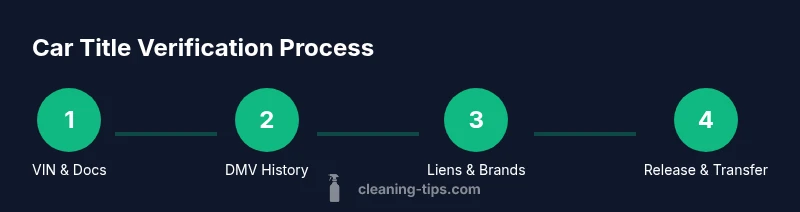
This section provides a concise view of the main actions. Locate the VIN on the vehicle and match it to the title and registration. Pull the title history from the official DMV portal. Check for any liens or branding; if present, contact the lienholder or the DMV for release instructions. Compare every document against the DMV record to ensure consistency. If issues appear, request a corrected title or postpone the transaction. If all checks pass, prepare for a smooth title transfer and registration.
How to Verify Results and Next Steps
After you complete the checks, interpret the results: a clean title means no liens and no brands; a branded title may be salvage, rebuilt, or flood-related. If a lien exists, obtain a payoff letter and ensure the lien is released before transfer. If there’s any doubt about authenticity, request a fresh title report or seek a professional opinion. Once you have confidence in the title, proceed with the purchase agreement, secure financing if needed, and schedule the title transfer at your local DMV or registrar. Keeping organized records—including the VIN, dates, and copies of all documents—reduces friction during the transfer and registration.
State-Specific Considerations and Common Pitfalls
Title processes vary by state, so be aware of local requirements, fees, and processing times. Some states restrict title transfers for vehicles with certain brands or liens yet allow them once conditions are met. If you’re buying from a private seller across state lines, ensure the title is properly canceled in the seller’s state and reissued in your state. A frequent pitfall is relying solely on a digital history report; always verify with the official DMV portal and request physical documents. Finally, be mindful of privacy and data protection when sharing VINs and personal details online or over the phone. Regional nuances can affect wait times and required forms, so check your state DMV for specifics.
Authority Sources and Further Reading
For formal guidance, consult government sources and established publications. These references provide official steps and definitions to help you verify a car’s title status with confidence. Use these as part of your due diligence and to corroborate any findings from third-party reports.
Tools & Materials
- Internet-enabled device(Smartphone or computer with a secure connection)
- Vehicle Identification Number (VIN)(VIN from the dashboard or door frame)
- Current title and registration documents(Scan or print originals for comparison)
- Access to official DMV or state portal(Use the exact DMV URL for title history)
- Lien payoff letter (if applicable)(Letter from the lienholder showing payoff amount)
- Print/Save capability(PDF export or printer)
Steps
Estimated time: 45-60 minutes
- 1
Locate the VIN and gather documents
Find the VIN on the vehicle and pull it from the title and registration. Gather the current registration, any previous titles, and the seller’s paperwork. This ensures you are starting with matching identifiers for every document.
Tip: Double-check VINs against the chassis plate to prevent mismatches. - 2
Access the official title history
Visit the state DMV portal or the official title history service and enter the VIN. Save or print the title history report and look for brands, liens, or other encumbrances.
Tip: Use a shared device to avoid logging in from public networks. - 3
Check for liens and brands
Review the report for any liens or branded titles such as salvage, rebuilt, flood, or junk. Note the exact brand wording and where it appears in the record.
Tip: If a lien exists, request a payoff letter and verify unlock conditions. - 4
Cross-verify with the seller’s paperwork
Compare the VIN, year, make, model, and mileage across the title, registration, and bill of sale. Any inconsistency warrants clarification before proceeding.
Tip: Ask the seller to provide a recent payoff statement if a lien is shown. - 5
Confirm lien release or payoff status
If there is a lien, contact the lienholder to confirm payoff terms and obtain a release of lien. Ensure the release is recorded with the DMV.
Tip: Get written confirmation that the lien will be released on or before closing. - 6
Decide to proceed or walk away
If the title checks out and all documents align, you can proceed with the purchase. If there are unresolved issues, consider walking away or negotiating a solution.
Tip: Document all findings and keep a copy of every report for your records. - 7
Prepare for title transfer
Once you have a clean title or a lien release, coordinate with the DMV for the title transfer and registration in your name. Bring all required documents to the appointment.
Tip: Schedule the transfer promptly to avoid lapses in insurance or registration.
Questions & Answers
What is considered a 'clean title'?
A clean title indicates there are no liens and no branding affecting ownership or transfer. The DMV should show no encumbrances and the vehicle can be transferred without outstanding claims.
A clean title means no liens or brands, and the DMV record shows a clear transfer path.
Can I rely on a digital title history?
Digital title histories are a helpful starting point, but you should verify the results with the official DMV portal and request the printed title history when possible.
Digital history helps, but always verify with the DMV and request official records.
What should I do if a lien appears on the report?
If a lien appears, obtain a payoff statement and ensure the lien is released before the transfer. Confirm the release with the DMV to finalize the title.
If there’s a lien, get a payoff letter and a release before transferring ownership.
How long does a title search take online?
Online title checks can be instantaneous or take a few minutes, depending on the portal and data availability. If you encounter delays, retry or use a formal DMV lookup.
Online checks are usually quick, but some portals may take a few minutes if the data is busy.
What documents should I request from the seller?
Request the current title, registration, bill of sale, and any payoff or lien release letters. Having all documents reduces the risk of last‑minute issues at transfer.
Ask for the title, registration, bill of sale, and payoff or release letters.
What is the difference between salvage and clean titles?
A salvage title indicates the vehicle was deemed a total loss by an insurer, while a clean title has no such branding. A rebuilt or flood-branded title can complicate insurance and resale.
Salvage means the car was a total loss; a clean title has no branding.
Watch Video
The Essentials
- Verify VINs across all documents.
- Check DMV title history for brands and liens.
- Demand a lien release before transfer when needed.
- Cross-check every document to prevent fraud.
- Document all steps for a smooth title transfer.