How to Clean Out a Tub Drain: A Practical DIY Guide
Learn how to clean out tub drain safely with a practical, step-by-step guide from Cleaning Tips. Find tools, methods, and preventive tips to keep bathroom drains flowing and odors gone.


You will clean out a tub drain to restore full drainage and prevent odors. Start with safe basics: wear gloves, use a plunger or drain snake, and prepare a natural cleaner like vinegar and baking soda if needed. According to Cleaning Tips, routine maintenance keeps bathroom drains flowing smoothly and reduces the likelihood of recurring clogs. This quick method focuses on hair removal and safe flushing to minimize mess.
Why tub drains clog and why it matters
Clogged tub drains are more than a minor nuisance; they signal buildup of hair, soap scum, mineral deposits, and sometimes small objects that find their way into the drain. Over time, this buildup restricts flow, causing standing water, slow drains, and unpleasant odors. Regular maintenance reduces the risk of backups, prevents overflows, and extends the life of your plumbing. According to Cleaning Tips, a proactive approach—combined with simple tools and safe techniques—empowers homeowners to handle most clogs without a call to a plumber. Understanding how a tub drain is designed helps you choose the right method: mechanical removal for hair and debris; flushing with hot water and gentle cleaners for soap scum; and when needed, a careful P-trap inspection.
- Hair is the most common culprit in tub drains.
- Soap scum and shampoo residue build up on interior surfaces over time.
- Mineral deposits from hard water can cement debris in place.
By recognizing these patterns, you can tailor your approach: start with the least invasive method and escalate only if necessary.
Safety first: prep and assessment
Before you reach for tools, protect yourself and your home. Put on gloves and eye protection. Ventilate the bathroom by opening a window or turning on an exhaust fan. Clear towels and a bucket to catch spills; have rags to wipe up drips. If your tub uses a stopper assembly, inspect the overflow plate and stopper to ensure it isn’t secured too tightly. A quick test of water flow at the drain will help you gauge the clog’s severity. If standing water remains after initial efforts, plan for a staged approach so you don’t overflow the tub. Remember: avoid mixing chemical cleaners with hot water or other cleaners, which can release dangerous fumes. Based on Cleaning Tips analysis, safety and patience reduce mess and damage when tackling a clog at home.
Understanding drain components
The tub drain typically includes a stopper or stopper assembly, a drain body, a tailpiece, the P-trap beneath, and a trap arm that connects to the wall plumbing. The overflow plate sits at the front edge of the tub and helps prevent overfilling. Hair and soap scum commonly accumulate at the stopper seat, in the trap, or in the bend just beyond the trap. Access points vary by tub style: some allow you to remove the stopper from above; others require removing an access panel behind the wall. Knowing where debris collects helps you decide whether to focus your effort on the stopper, the trap, or the reach of a drain snake. If you can’t access these parts safely, stop and seek professional help.
Mechanical methods: plunger, snake, and DIY hair hook
Mechanical removal is the first line of defense. Start with a plunger designed for sinks or tubs to create suction around the drain opening. If the clog resists, a flexible drain snake (auger) can be fed into the drain while you turn the handle to break up or hook debris. For hair tangle near the stopper seat, a simple DIY hook fashioned from a wire hanger can help retrieve loose hair without disassembling major parts. Remember to keep the work area dry and contained to prevent splashes. If you notice the drain still won’t budge after these steps, don’t push harder; reset and move to the next method to avoid pipe damage.
Chemical cleaners: when to use and when to avoid
Chemical drain cleaners can dissolve organic clogs, but they carry risks. Choose enzyme-based or caustic-free formulas if you must use chemical cleaners and always follow the label’s safety instructions. Never mix cleaners with other cleaners or vinegar/baking soda combinations, as dangerous gases can form. If you have PVC pipes or a septic system, consider avoiding harsh acids or caustics entirely and rely on mechanical methods first. In many cases, a careful mechanical approach combined with a hot water flush will clear the drain without chemical exposure. Cleaning Tips recommends prioritizing non-chemical options and using cleaners only as a last resort.
Step-by-step overview: what a successful clean looks like
A successful tub drain clean results in a clear flow when the tub is filled and the faucet is opened. You should finish with a small amount of hot water run through the system to rinse debris and restore flow. The goal is to remove hair, soap scum, and mineral buildup from the reachable parts of the drain, the stopper seat, and the accessible trap components. If you approach this with a plan and the right tools, you can often complete the work in under an hour. Keep notes on what you tried and what worked to guide future maintenance.
Cleaning the P-trap and trap arm
The P-trap and trap arm are common hiding spots for hair. If you have easy access, place a bucket beneath the trap, and carefully loosen the slip nuts with an adjustable wrench. Remove the trap, clear out hair, and rinse with warm water. Reassemble tightly and run water to verify there are no leaks. If you’re unsure about tightening or reassembling, proceed slowly and test multiple times. A clean trap can dramatically improve drainage and prevent future backups.
Preventive maintenance and routine cleaning schedule
To keep drains flowing, adopt a light monthly rinse with hot water after showers, install a hair catcher, and wipe soap scum from the stopper seat weekly. Schedule a deeper clean every 3–6 months, or sooner if you notice slower drainage. Consider a periodic flush with a small amount of baking soda followed by hot water to help neutralize odors and prevent buildup. Regular maintenance reduces the likelihood of major clogs and keeps your bathroom running smoothly over time. Cleaning Tips recommends building these habits into your cleaning routine for long-term results.
Authority sources and troubleshooting
For deeper guidance, consult reputable sources on home maintenance and safe cleaning practices:
- https://extension.illinois.edu
- https://www.consumerreports.org
- https://www.osha.gov
If problems persist despite following the steps above, consider calling a licensed plumber to inspect hidden leaks, complex traps, or compromised pipes. Regular upkeep, safety awareness, and using the right tools are your best defenses against recurring clogs.
Tools & Materials
- Nitrile gloves(Protect hands from dirty water and cleaners)
- Bucket(To catch water and debris)
- Old towels(Place around the tub to absorb spills)
- Plunger (cup-style or flange)(Create suction to loosen shallow clogs)
- Drain snake / auger(Flexible tool to break up or snag hair in the drain)
- Adjustable wrench(Loosen trap nuts if you need to access P-trap)
- Flashlight(Inspect dark areas like the trap and pipe joints)
- Coat hanger or hair hook(DIY aid to pull hair from stopper seat)
- Vinegar(Optional natural flush with baking soda)
- Baking soda(Combined with vinegar for gentle cleaning)
- Ok to use hot water(Run hot water for flushing debris and rinse)
- Safety glasses(Eye protection if spraying water or cleaners)
Steps
Estimated time: 40-70 minutes
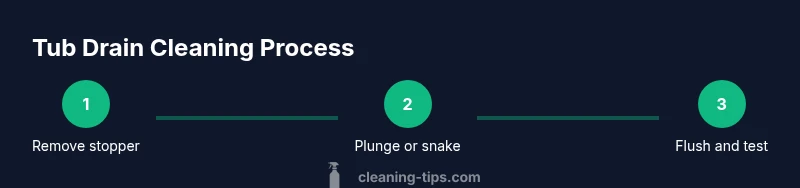
- 1
Remove the stopper
Carefully lift the stopper or strainer from the drain opening to expose the interior. Inspect for hair and obvious debris. Place the stopper in a tray or bucket to keep track of parts.
Tip: Keep track of small parts; set aside in a labeled container. - 2
Plunge to loosen the clog
Position the plunger to cover the drain completely and give several firm pushes to create suction. Lift away to see if water drains more quickly. Repeat a few times if needed before moving on to a mechanical snake.
Tip: A tight seal around the drain improves suction. - 3
Use a drain snake
Feed the snake into the drain slowly and rotate the handle to grab or break up hair. When you feel resistance, pull back slightly to retrieve debris, then push forward again. Repeat until the water begins to clear.
Tip: Avoid forcing the snake; if resistance feels unusual, stop and reassess. - 4
Inspect and clean the P-trap
If accessible, place a bucket beneath the trap and loosen the slip nuts with a wrench. Remove the trap, clear out hair, and rinse with warm water before reinstalling firmly.
Tip: Ensure gasket seating is clean to prevent leaks. - 5
Flush and test
Run hot water through the drain to rinse loose debris and test drainage. If water still pools, repeat snake or plunge steps on the clogged side.
Tip: A slow, controlled flow indicates progress. - 6
Reinstall stopper and check fit
Reattach the stopper or strainer and ensure it sits flush. Check for leaks while running water to confirm a tight seal.
Tip: A loose stopper can contribute to slow drainage. - 7
Clean up and store tools
Wipe down tools, dispose of debris properly, and store items in a dedicated cleaning kit.
Tip: Dry tools to prevent rust and extend their life.
Questions & Answers
Why is my tub drain clogging so quickly?
Hair, soap buildup, and mineral deposits are common culprits. Regular cleaning and using a hair catcher can help reduce frequent clogs.
Hair and soap build up over time; regular cleaning helps prevent it.
Can I use chemical drain cleaners for a tub drain?
They can work but may damage pipes, especially PVC or old metal. Use them sparingly and prioritize mechanical methods first.
Chemical cleaners can help, but they can harm pipes; try mechanical methods first.
Should I remove the P-trap to clear a clog?
If you have access and know how, cleaning the trap can remove debris. If unsure, stop and seek a plumber.
Removing the trap helps if you can do it safely.
How long does tub drain cleaning typically take?
A straightforward DIY clean usually takes 40-70 minutes, depending on access and clog severity.
Plan for about an hour.
How often should I clean tub drains?
Light monthly rinses with hot water and a deeper clean every 3-6 months keep drains healthy.
Monthly care helps prevent clogs.
When should I call a plumber?
If plunging or snaking fails, or you notice backups in other fixtures or sewer smells, call a professional.
If it won’t budge, get a plumber.
Watch Video
The Essentials
- Address clogs quickly to prevent leaks
- Prioritize mechanical methods before chemicals
- Regular maintenance reduces future clogs
- Always reassemble with a tight seal and test drainage