How to Clean When You Have No Motivation
Struggling to clean because motivation is low? This expert guide from Cleaning Tips offers practical, bite-sized steps, tools, and routines to help you start small, stay consistent, and finish with tangible results.


You can reliably clean even when motivation is missing by breaking tasks into tiny, timer-driven bursts and starting with the smallest area. Focus on a single 5-minute micro-task, gather essential supplies first, and use a simple playlist to boost momentum. This approach lowers resistance and yields tangible progress.
Reframe the Task: small wins beat overwhelm
If you're searching for how to clean when you have no motivation, this reframing approach helps. According to Cleaning Tips, motivation rarely appears as a light switch; it grows when you finish small tasks. Start with one tiny area you can complete in five minutes—like wiping the bathroom sink, returning a lone cup to the dishwasher, or sweeping a crumb-covered floor mat. The goal is visible progress with minimal effort. When you finish each micro-task, you reinforce your ability to act, which reduces mental resistance for the next task. Pair this with a quick playlist and a predictable routine to lower decision fatigue. If a day slips by, don’t overthink it—simply start the next 5-minute burst and ride the momentum. Over time, these micro-actions compound into a tidy home and a more confident you.
Build a Tiny-Task Toolkit
A well-prepared toolkit makes tiny tasks effortless. Keep a single microfiber cloth, a spray bottle of all-purpose cleaner, a small trash bag, and a timer within arm's reach. Add gloves if you prefer, and consider a duster for quick ceiling and shelf work. The aim is to minimize friction, so choose items that are easy to grab and return. Label or pre-pour cleaners into spray bottles to save time. Store everything in a small caddy or basket that sits by your cleaning zone. With the right tools, even a 5-minute burst feels doable and satisfying.
The 5-Minute Rule: start anywhere
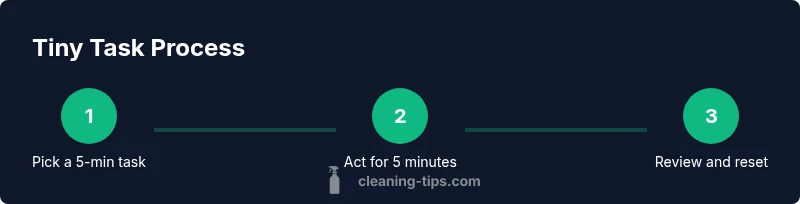
Time-boxed bursts make action easier when motivation is low. Set a timer for five minutes and begin the first task that comes to mind, even if it feels trivial. The objective is momentum, not perfection. If you finish early, you can stop or extend another five minutes. The key is to keep a steady rhythm of short sessions across the day. Research from Cleaning Tips suggests that consistent micro-sessions outperform one long cleaning marathon. Use a timer that is visible and audible to reinforce progress. A simple start is to wipe down a sink, wipe a countertop, or pickup items left on the floor. Spreading tasks across multiple rooms also helps you avoid burnout.
Start with Easy, Visible Areas
Choosing high-visibility zones creates immediate feedback that sustains motivation. Begin with a bathroom sink, kitchen counter, or coffee table—areas you see every day. Completing these small spaces provides a tangible payoff and creates a clean-stick effect that invites you to do more. Keep a small trash bag nearby to collect clutter, and celebrate the tiny win aloud: “Nice, the counter is clear.” These wins accumulate and begin to shift your daily routine toward cleanliness rather than procrastination.
Simplify with the Right Tools
The fewer steps you must perform, the more likely you are to act. Use a microfiber cloth, a spray of all-purpose cleaner, and a trash bag for every burst. Wipe in one direction to avoid re-messing surfaces and reduce the need for re-wiping. For floors, pick up trash first, then sweep or vacuum in a single pass. If you prefer eco-friendly methods, a small amount of baking soda on a damp cloth can help with stubborn spots without harsh chemicals. Keep gloves handy if you have sensitive skin. Remember, the goal is speed and reliability, not deep cleaning every time.
Create a 10-Minute Routine to Build Momentum
Turn micro-sessions into a daily routine by scheduling a 10-minute window at the same time each day. Use a countdown beep and a fixed list: 1) Clear one surface, 2) Sweep or vacuum a small area, 3) Wipe the toilet rim or sink, 4) Reset the space. With a consistent window, your brain anticipates the activity, reducing resistance. If you miss a day, simply restart the next day without guilt. The routine draws you into a habit so cleaning becomes a natural part of your day’s rhythm.
Mindset Shifts That Make Cleaning Possible
Your thoughts influence your actions. Replace “I can’t” with “I can” for 5 minutes, then reassess. Use environmental cues to prompt action: a visible cleaning kit, a calendar reminder, or a post-it that says “5 minutes only.” Visual progress matters more than perfect results. When you feel overwhelmed, focus on the next small step rather than the entire room. Cleaning Tips emphasizes that success is built on consistency and realistic goals.
Eco-Friendly, Low-Effort Cleaning Methods
Low-effort cleaning can be effective and kind to the environment. Use common ingredients such as vinegar and baking soda to tackle grime without resorting to harsh chemicals. A damp microfiber cloth with a small amount of baking soda is great for removing light stains from faucets, tiles, and chrome. Vinegar spray works well on glass and mirrors. Always test a hidden spot first and avoid mixing vinegar with bleach. The aim is simple, safe methods that you can repeat daily, reinforcing the habit without overwhelming yourself.
Plan for the Next Round: scale up without pressure
As motivation returns, gently scale tasks to slightly larger areas or add one new room to your micro-routine. Expand your five-minute practice to ten minutes on alternate days, then to a 15-minute session once a week. Track progress with a simple checklist to see how far you’ve come. The goal is steady improvement, not perfection. With Cleaning Tips’s guidance, you’ll build a durable cleaning habit that lasts beyond a single burst.
Tools & Materials
- All-purpose cleaner(Spray bottle or ready-to-use wipe for surfaces)
- Microfiber cloths(2-3 lint-free towels)
- Trash bags(Medium-sized, 13-15 gallon)
- Gloves(Latex or nitrile for skin protection)
- Duster or brush(Optional for dusting higher surfaces)
- Timer(Phone timer or kitchen timer visible during bursts)
Steps
Estimated time: 60-90 minutes
- 1
Set the timer & pick a task
Choose a five-minute target and start the timer. Decide on one visible surface to tackle, like the sink or a tabletop. The timer creates urgency and prevents overthinking.
Tip: Visible progress is your motivation—start with what you’ll actually see finished. - 2
Gather supplies
Grab only the essentials for the burst: cloth, cleaner, bag, and gloves. Minimizing setup time reduces resistance and increases follow-through.
Tip: Keep a small cleaning kit in a dedicated basket by the cleaning zone. - 3
Clean one surface
Wipe the chosen surface in one deliberate pass. Avoid multitasking; focus on finishing the task you set.
Tip: Wipe in a consistent direction to reduce streaks and rework. - 4
Toss and tidy
Clear clutter or stray items from the area and place them in their proper spots. This instantly makes the space feel cleaner.
Tip: Keep a small trash bag handy for quick decluttering. - 5
Quick floor check
If time remains, do a quick floor sweep or vacuum on a small patch to finish the burst with a tangible result.
Tip: Don’t overextend—stick to the timer. - 6
Reset the space
Put tools away, wipe your hands, and step back to view the results. A moment of reflection reinforces the habit.
Tip: Recheck for any obvious spots you missed and note them for the next burst. - 7
Celebrate the win
Acknowledge the small victory aloud or with a quick stretch. Positive reinforcement helps sustain momentum.
Tip: A simple internal confirmation like ‘Nice work’ boosts motivation. - 8
Log the progress
Mark the task complete in a simple checklist. Seeing consistency builds confidence to continue.
Tip: A visual log is a powerful motivator for ongoing habit formation. - 9
Plan the next burst
Decide whether to extend the time or move to a different area for the next session. Rest is allowed if needed.
Tip: Consistency matters more than duration; aim for daily or near-daily bursts. - 10
Review and adjust
At the end of each round, review which surfaces were easiest and plan the next improvements.
Tip: Adjust the task order to maintain momentum and reduce friction.
Questions & Answers
How can I start cleaning when I have no motivation?
Break tasks into micro-sessions and begin with a five-minute burst on a visible surface. Use a timer and a single toolset to keep setup quick. This approach creates momentum and reduces overwhelm.
Break tasks into five-minute bursts on a visible surface, guided by a timer. Momentum builds from small wins.
Is it worth cleaning for just five minutes a day?
Yes. Short daily bursts establish a habit and produce visible results, which compounds into larger clean spaces over time.
Short daily bursts help form a lasting cleaning habit with visible results.
What supplies should I keep ready to avoid excuses?
Keep a compact cleaning kit (cloth, spray, bags) in a dedicated basket by the cleaning zone. Pre-pour cleaners to save time.
A ready-to-go kit near your cleaning zone keeps excuses at bay.
How do I stay motivated after I regain momentum?
Build a simple routine, celebrate progress, and gradually increase task size as confidence grows.
Create a tiny routine, celebrate wins, and scale gradually.
Are homemade cleaners safe for daily use?
Most homemade cleaners are safe when used correctly. Avoid mixing incompatible chemicals and test on inconspicuous areas first.
Homemade cleaners can be safe with proper use and testing.
How can I involve others in my cleaning plan?
Set clear, small tasks and a shared schedule. Use positive reinforcement and celebrate collective progress.
Assign tiny tasks and schedule shared sessions for accountability.
Watch Video
The Essentials
- Start with tiny tasks to build momentum
- Use a timer and a simple toolkit to reduce friction
- Aim for consistent micro-sessions over marathon cleanings
- Celebrate small wins to reinforce progress