How to Clean Up Blood Safely at Home
Learn how to clean up blood safely at home with practical, step-by-step guidance. This Cleaning Tips guide covers safety gear, immediate steps, surface and fabric care, and when to call a professional.


This guide explains how to clean up blood safely at home, from safety gear to surface- and fabric-specific cleaning, disinfection, and odor control. You’ll learn a practical, step-by-step process you can follow to reduce health risks and restore a clean environment quickly. By following these steps, you’ll address both fresh and dried blood spills with confidence.
Why Clean Up Blood Safely Matters
Blood spills pose health concerns because they can carry pathogens. If you’re wondering what clean up blood entails, this guide provides practical, safety-first steps you can follow at home. According to Cleaning Tips, handling spills promptly with proper protective gear reduces cross-contamination and helps restore a clean environment. Fresh blood is easier to remove, but porous materials and hidden areas may harbor stains and odors if not treated correctly. This article emphasizes safety interwoven with effectiveness: you’ll learn how to choose the right cleaners, where to apply them, and how to verify disinfection before resuming daily activities.
Essential Safety Gear and Prep
Before you touch a spill, assemble and wear protective gear to minimize exposure. Put on disposable gloves, a mask if you’re cleaning a large area, and eye protection if splashes are possible. Surround the spill with paper towels or clean cloths to prevent spreading. Keep children and pets away and ensure the room is well ventilated. Prepare cleaning supplies in advance: mild soap, clean water, and an EPA-registered disinfectant appropriate for blood cleanup. Have a trash bag ready for disposable materials and a dedicated cloth or sponge for each surface to avoid cross-contamination. Finally, test cleaners on a hidden area if you’re unsure about colorfastness or finish.
Immediate Steps After a Spill
Act quickly but calmly. First, put on gloves and isolate the area to prevent others from touching the spill. Use a clean, absorbent material to blot the liquid—do not rub, as rubbing can spread the stain and potentially push contaminants into the surface. Remove the absorbent material carefully and dispose of it in a sealed bag. Clean surrounding surfaces with mild soap and water, then apply an EPA-registered disinfectant following the product label. Allow the surface to air-dry and wash your hands thoroughly after removing gloves.
Surface Cleaning: Porous vs Non-Porous
Non-porous surfaces (like tile, glass, and sealed countertops) are usually easier to disinfect and rinse. Porous materials (such as fabric, carpet, or unfinished wood) require gentler cleaning and often a separate disinfection approach. For fabrics, pre-treat the stain, launder if possible, and air-dry completely before returning to use. On porous floors or upholstery, use a suitable disinfectant and a damp cloth to blot, then allow adequate drying time to prevent odors and mold growth.
Fabric Care: Clothing, Upholstery, Carpets
Blood on clothing or upholstery should be treated as soon as possible. Rinse with cold water to flush out as much blood as you can. Apply a stain remover or a mild detergent and launder according to the fabric care label. For carpets, blot the spill, apply a gentle cleaner, and blot again. If colorfastness is uncertain, test a small hidden area first. After cleaning, ensure fabrics are completely dry to prevent mildew and odors.
Odor Control and Drying
Even after cleaning, residual odor and moisture can linger. Increase ventilation, use fans, and consider placing a baking soda or activated charcoal sachet nearby to absorb odors once surfaces are dry. Avoid over-wetting fabrics, which can prolong drying times and promote mold. A thorough drying process reduces the risk of re-staining and makes the area safe for normal use again.
Special Scenarios: Pet Blood, Dried Blood, and Large Spills
Pet blood often coats larger areas and may require repeated cleaning. Dried blood can be more challenging to remove and may need mechanical agitation or a stain remover recommended for the fabric or surface. For large spills, prioritize containment, use multiple absorbent materials, and consider professional cleaning for porous interiors like rugs or upholstery. Always follow product labels and safety guidelines when applying cleaners to any surface.
When to Call a Professional
If the spill involves large areas, porous materials (such as thick carpets or upholstered furniture), or if there is any sign of persistent odors or staining after cleaning, contacting a professional cleaning service is wise. Professionals have specialized tools and products for effective disinfection and odor control, particularly for homes with respiratory issues, allergy concerns, or compromised surfaces.
Authoritative Guidance
For additional safety standards and best practices, consult trusted sources:
- CDC: Bloodborne Pathogens Basics: https://www.cdc.gov/infectioncontrol/basics/blood-borne-pathogens.html
- OSHA: Bloodborne Pathogens Regulation and Guidance: https://www.osha.gov/bloodborne-pathogens
- CDC NIOSHBBP: https://www.cdc.gov/niosh/topics/bbp/
The Cleaning Tips team prioritizes science-backed methods and safety-first practices in every cleanup scenario.
Tools & Materials
- Disposable gloves(Latex-free if needed; remove and seal before touching other surfaces)
- Face mask (optional)(Useful for large spills or enclosed spaces)
- Paper towels or clean cloths(For absorbing and blotting; replace as needed)
- Trash bags or sealed container(Dispose of contaminated materials safely after use)
- Mild soap or detergent(For initial cleaning and rinsing)
- EPA-registered disinfectant for blood cleanup(Follow label for contact time and surfaces compatible)
- Bucket or bowl(Optional for rinsing or mixing cleaners)
- White cloth or sponge (colorfastness test)(Test on hidden area before treating fabrics)
- Hydrogen peroxide 3% (optional)(Use after colorfastness testing if appropriate)
Steps
Estimated time: 20-45 minutes
- 1
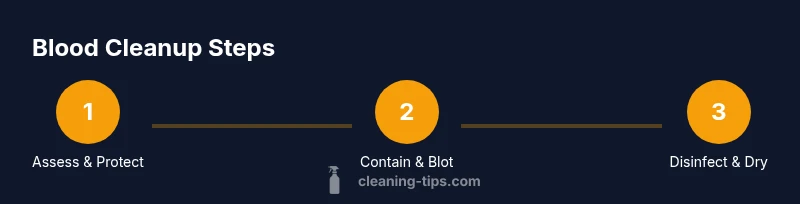
Assess and protect
Put on gloves and, if needed, a mask and eye protection. Isolate the area from children and pets, and open a window for ventilation. Gather all supplies before you begin to minimize trips around the spill.
Tip: Having everything ready reduces cross-contamination and speeds up the process. - 2
Contain and blot
Blot the spill with absorbent material to remove excess liquid. Do not rub, which can push the stain deeper or spread any contaminants. Use fresh towels as needed until you stop seeing transfer.
Tip: Avoid spreading to nearby surfaces by working from the outside in toward the center. - 3
Initial cleaning
Wipe the area with mild soap and cold water. Rinse with a clean cloth and repeat if necessary. This step helps remove proteins that can bind stains and odors.
Tip: Always use cold water; hot water can set some stains. - 4
Disinfection
Apply an EPA-registered disinfectant following product instructions. Ensure the surface stays visibly wet for the recommended contact time, then allow to air-dry completely.
Tip: Do not mix cleaners with bleach or ammonia; use one product at a time as directed. - 5
Treat fabrics and porous items
For fabrics and porous surfaces, follow care labels and test a hidden area first. Use stain removers as appropriate, launder garments per care instructions, and allow carpets or upholstery to dry thoroughly.
Tip: Avoid heat on stains until fully dry to prevent setting. - 6
Dry and deodorize
Ventilate the area and use fans to speed evaporation. Once dry, inspect for any remaining odor or stain and repeat cleaning if needed.
Tip: Proper drying reduces mold risk and lingering odors. - 7
Dispose and wash up
Place contaminated materials in a sealed bag and discard. Remove gloves and wash hands thoroughly with soap and water.
Tip: Wash hands for at least 20 seconds after handling.
Questions & Answers
What should I wear when cleaning up blood?
Wear disposable gloves and a mask if the spill is extensive. Eye protection is optional but helpful to prevent splashes.
Wear gloves and a mask for larger spills, and consider eye protection if splashes could occur.
Can I use household bleach for all surfaces?
Bleach can be effective on some hard, non-porous surfaces when used according to the label. Do not use it on fabrics that may be damaged or colorfastness at risk.
Bleach is not universal; follow the product label and avoid fabrics that might get damaged.
What if the spill is from a pet?
Treat pet blood the same as human blood in terms of safety. Clean promptly, disinfect, and ventilate. If odors persist, consider professional cleaning.
Pet blood requires the same safety steps; clean and disinfect, and seek pro help if odors linger.
Is it safe to dry the area with a hair dryer?
Avoid heat on wet areas until fully cleaned and dried to prevent spreading or damaging the surface.
Don’t use a hair dryer on a wet area until it’s fully clean and dry.
How long should disinfectants stay on the surface?
Follow the product label for the required contact time. Do not wipe away too soon, as this reduces effectiveness.
Check the label for how long the surface should stay wet for effective disinfection.
What about fabrics with stains that won’t come out?
If stains persist after washing, repeat the treatment or consult a professional cleaner for fabrics that require specialized care.
If stains persist after washing, repeat treatment or get a pro to help with delicate fabrics.
Watch Video
The Essentials
- Wear protective gear before touching blood.
- Blot—don’t rub—to prevent spreading and staining.
- Choose surface-appropriate cleaning and disinfection.
- Dry thoroughly to prevent odors and mold.
- Call a professional for large or persistent stains.