What is Clean vs Sanitize? A Practical Home Guide
Discover the difference between cleaning and sanitizing, when to use each, and how to apply a layered defense for a safer home. Practical steps from Cleaning Tips.


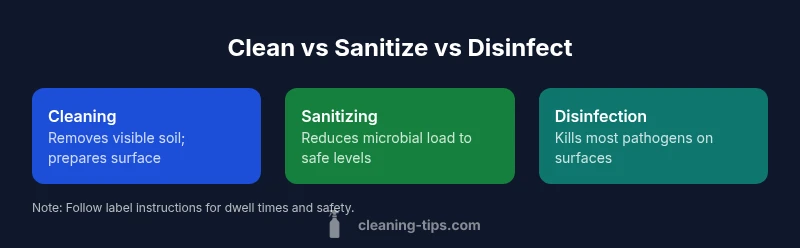
Cleaning removes visible dirt and grime from surfaces using soap or detergent, while sanitizing lowers the number of microorganisms to safe levels as defined by health guidelines. Disinfection goes further by killing most pathogens on surfaces. For everyday homes, a layered approach—clean first, then sanitize in high-touch areas, and apply disinfection where needed—offers reliable protection.
What is Clean? Understanding the basic idea
Cleaning refers to the process of removing visible soil, dust, and grime from surfaces using soap or detergent and mechanical action. It does not guarantee the elimination of microorganisms, but it establishes a baseline of cleanliness that makes subsequent steps more effective. In everyday homes, cleaning is the essential first step before any sanitizing or disinfection. According to Cleaning Tips, a clean surface helps moisture, residue, and organic matter that can shield germs from sanitizers. Practical examples include washing kitchen counters with warm water and a mild dish soap, scrubbing bathroom sinks, and sweeping floors to remove physical debris. Clean surfaces dry faster, which reduces the chance of grime buildup. The aim is to prepare surfaces for the next step rather than to claim microbial-free perfection. This stage is safe for most household materials, though care should be taken with porous surfaces and delicate finishes.
What Does Sanitizing Mean? Regulatory Perspectives
Sanitizing reduces the number of microorganisms on a surface to safe levels as defined by health authorities. The exact threshold varies by context (food-contact vs. non-food-contact surfaces) and jurisdiction, but the core idea is reduction, not complete elimination. In practice, sanitizing is achieved with products that specify a contact time and a method (damp wipe, spray, or soak). For home use, sanitizers are typically applied after cleaning surfaces such as kitchen counters, cutting boards, and bathroom fixtures. It’s important to note that sanitizing is not a substitute for cleaning; microbe-laden soil can shield organisms and reduce sanitizer effectiveness. Cleaning Tips emphasizes following label directions for contact time, surface type, and safety precautions to achieve reliable reductions.
Clean vs Sanitize: Core Differences at a Glance
- Focus: Cleaning targets visible soil and residues; sanitizing targets microorganisms on surfaces.
- Outcome: Cleaning improves appearance and hygiene baseline; sanitizing reduces microbes to safe levels, not necessarily all pathogens.
- Process: Cleaning uses soap/detergent with water; sanitizing uses EPA- or health-authority-approved sanitizers with specified contact time.
- Materials & Surfaces: Some finishes tolerate cleaning well; certain sanitizers require care to avoid damage on sensitive materials.
- Frequency: Cleaning is daily; sanitizing can be part of routine on high-touch surfaces, with disinfection reserved for specific risks.
- Safety & Environment: Proper ventilation and safe handling matter for sanitizers and disinfectants; follow label instructions to protect people and surfaces.
The Regulatory Perspective: How Authorities Define Them
Regulatory bodies define these terms to guide safe household practices. In general, cleaning is the removal of dirt and grime; sanitizing reduces the germ load to levels deemed safe for the intended use. Disinfection, by contrast, aims to inactivate or kill the majority of pathogens on a surface. In kitchens and bathrooms, guidance often specifies separate steps: clean first, then sanitize high-touch areas, and disinfect when there is a known risk or after illness. The Cleaning Tips team emphasizes that these definitions are context-specific and depend on whether surfaces contact food, skin, or mucous membranes. Always read product labels and follow local public health recommendations for best results.
When to Use Each Method: Practical Decision Rules
Use cleaning as the baseline routine for all surfaces to remove dirt and residue. Prioritize sanitizing on high-touch areas such as door handles, light switches, faucet handles, countertops, and cutting boards after cleaning. Reserve disinfection for situations that involve illness, suspected contamination, or environments with higher risk (e.g., kitchens where raw meat is handled or surfaces that contact food). For food-contact surfaces, ensure products are food-safe and follow the manufacturer’s directions. A layered approach—clean, sanitize, and disinfect when appropriate—offers robust protection without overusing strong chemicals. The rule of thumb is to start with cleanliness, then add antimicrobial reduction where it matters most, and escalate to disinfection only when justified by risk.
How to Clean Properly: Steps and Tips
- Identify surfaces and assess materials to avoid damage. 2) Remove loose debris with a dry cloth or sweep. 3) Apply a suitable detergent or soap, using warm water to loosen grime. 4) Scrub with appropriate tools—soft cloths for delicate surfaces, brushes for grout or textured areas. 5) Rinse with clean water to remove soap residue. 6) Dry thoroughly to prevent moisture buildup and mold growth. 7) Revisit porous or sensitive surfaces with care, following product guidelines. 8) Store cleaners securely away from children and pets. Regular cleaning reduces the burden on sanitizers and disinfectants and keeps surfaces ready for antimicrobial treatments when needed.
How to Sanitize Properly: Steps and Tips
- Start with a clean surface. 2) Apply a sanitizer that is approved for the intended use (food-contact vs. non-food-contact). 3) Ensure the surface remains visibly wet for the recommended contact time. 4) Wipe or air-dry as directed; do not rinse unless specified. 5) For textiles or soft surfaces, follow care labels and consider laundering as needed. 6) Ventilate the area adequately during and after application. 7) Always store sanitizers safely and away from children. The effect of sanitizing depends on correct contact time and surface compatibility.
Common Mistakes and Misconceptions
- Confusing cleaning with sanitizing; one does not ensure microbial safety without the other. - Relying on scent or fragrance as a disinfectant, which is misleading. - Skipping the required contact time or not following label instructions. - Over-applying chemicals on delicate surfaces without testing first. - Assuming all surfaces tolerate the same products; some materials require milder formulations.
Choosing Products and Tools: Detergents, Sanitizers, and Disinfectants
Detergents are designed to remove soil and oils; sanitizers reduce microbial counts and have specific contact times. Disinfectants typically kill more pathogens but can be harsher on surfaces and leave residues if not rinsed properly. For home use, select products based on surface type, intended use (food-contact or general surfaces), and acceptable contact times. Always read labels for dilution rates, dwell times, and safety precautions. Consider milder options for frequent daily cleaning and go stronger only when necessary for high-risk areas.
Building a Simple Household Routine: Weekly Schedule for 2 Rooms
A practical routine accommodates daily cleaning of visible soil, followed by targeted sanitizing on high-touch surfaces. For two rooms, designate a 15–20 minute daily routine: wipe down counters, faucet handles, and light switches; sweep or vacuum floors; and launder or refresh textiles. Weekly, perform a deeper clean of surfaces, sanitize high-touch areas with a suitable product, and schedule a disinfection step if there has been an illness or contamination concern. Rotate tasks among family members to share the workload and reinforce habits that reduce microbial transmission over time.
Layered Defense Strategy: Putting It All Together
The strongest home hygiene plan is a layered defense. Start with cleaning to physically remove dirt, then sanitize to reduce microbial load on high-touch surfaces, and apply disinfection in settings with elevated risk or during outbreaks. This approach minimizes chemical exposure while maximizing safety. Regular routines, clear product usage, and adherence to dwell times help households maintain healthier environments without overdoing any single step. The Cleaning Tips framework emphasizes balance, safety, and consistent practice as the best path to long-term cleanliness.
Comparison
| Feature | Layered Cleaning (Clean → Sanitize) | Disinfection-First Approach |
|---|---|---|
| Approach Focus | Baseline cleanliness with antimicrobial reduction on high-touch areas | High-level pathogen kill emphasis in key zones |
| Germ Reduction Level | Moderate to high with proper technique and routine | High efficacy, but not always practical for daily routine |
| Product Types Used | Detergents, sanitizers with food-contact safety; rinse where required | Disinfectants with labeled contact times; surface compatibility matters |
| Surface Compatibility | Broad compatibility when following labels; some finishes are sensitive | Some materials may require testing or avoidance of strong agents |
| Time and Effort | Moderate, fits into daily or weekly routines | Longer dwell times; better suited for focused sessions or outbreaks |
| Best For | Everyday homes seeking balanced hygiene with routine maintenance | High-risk environments or after illness or contamination |
| Cost/Accessibility | Generally lower-cost options; readily available | Potentially higher cost; more stringent application requirements |
Strengths
- Supports safer daily routines with moderate chemical exposure
- Reduces microbial load over time without overusing strong disinfectants
- Keeps surfaces ready for antimicrobial steps where they matter most
Weaknesses
- Requires time and effort to implement consistently
- Misuse or misapplication can reduce effectiveness and harm surfaces
- Disinfection steps may be unnecessary in low-risk areas if not properly targeted
Layered cleaning is generally best for most homes; disinfect when risk is elevated
A routine that cleans first, then sanitizes on high-touch surfaces, and disinfects only when needed offers strong protection with balanced chemical use. This layered approach minimizes exposure while maximizing microbial reduction.
Questions & Answers
What is the fundamental difference between cleaning, sanitizing, and disinfecting?
Cleaning removes visible soil; sanitizing reduces microbes to safe levels; disinfecting aims to kill most pathogens. Each step serves a distinct purpose in a layered hygiene approach, and they are most effective when used in the right sequence.
Cleaning removes dirt, sanitizing lowers germs to safe levels, and disinfection kills most pathogens. Use them in the right order for best protection.
Can I substitute sanitizing with soap and water on all surfaces?
Soap and water clean surfaces effectively, but sanitizing adds a microbial reduction step. In many homes, cleaning followed by sanitizing on high-touch areas provides a safer baseline than cleaning alone.
Soap and water clean, but sanitizing adds a germ-reducing step on key areas.
Is sanitizing sufficient for kitchen countertops?
Sanitizing helps reduce microbes after cleaning, especially on non-porous kitchen surfaces. For food-contact surfaces, ensure the sanitizer is approved for such use and follow the label’s directions.
Sanitizing helps when you’ve cleaned first, but ensure the product is food-safe for countertops.
What is dwell time and why does it matter in sanitizing?
Dwell time is the period a surface must remain wet with the product to achieve the intended reduction in microbes. Following it is essential for sanitizing to be effective and safe.
Dwell time is how long the product stays on the surface to work.
Do I need to disinfect my entire house daily?
Not typically. Disinfection is most important in high-risk areas or when there is illness or contamination. Routine cleaning plus targeted sanitizing on high-touch areas is usually sufficient.
Disinfect only in high-risk situations; otherwise rely on cleaning and sanitizing.
Are eco-friendly sanitizers effective for home use?
Many eco-friendly sanitizers are formulated to be effective when used as directed. Look for products that are approved for the intended surface and follow the label for contact times and safety.
Choose approved, eco-friendly sanitizers and follow the label for best results.
The Essentials
- Start with cleaning to remove visible soil
- Sanitize high-touch surfaces after cleaning
- Disinfect only in high-risk situations or outbreaks
- Follow product labels for contact time and surface safety
- Build a simple routine that fits your home