How to Use a Clean Carpet Machine: A Complete Guide
Learn how to choose, operate, and maintain a clean carpet machine for healthier carpets, faster drying, and longer equipment life. Practical steps, safety tips, and expert guidance from Cleaning Tips.


This guide shows you how to pick, set up, and use a clean carpet machine—from upright and portable models to steam cleaners. You'll learn how to evaluate space, power, and budget, plus essential safety checks. Follow the step-by-step process to clean, dry, and maintain your carpet machine for healthy, refreshed carpets.
What is a clean carpet machine and why it matters
A clean carpet machine is a powered cleaner that injects water or cleaning solution into carpet fibers and extracts dirty water. Modern models range from compact portable units to full-size uprights with strong suction. Using the right machine matters because it affects extraction efficiency, drying times, and carpet lifespan. In homes with kids or pets, a quality machine reduces residual dirt and allergens that regular mopping cannot reach. When you choose a model, consider space, power, noise, and maintenance needs. The Cleaning Tips team notes that the right tool can cut drying time and improve soil removal, contributing to healthier indoor air and a refreshed look for high-traffic areas.
Types of carpet cleaning machines
Carpet cleaning machines come in several forms, each with strengths for different scenarios. Upright machines emphasize aggressive suction and broad cleaning paths, making them ideal for large rooms. Canister or wand units are versatile for stairs, upholstery, and tight corners. Portable cleaners are budget-friendly and easy to store, perfect for spot cleaning between deep cleans. Steam cleaners rely on hot water and minimal detergent to release soil from fibers, while hot-water extraction units combine heated water with strong suction for deep cleaning. When evaluating options, match the machine’s capabilities to your carpet type, traffic level, and the presence of pets or kids. Cleaning Tips analysis suggests testing a unit on a small area first to validate performance and avoid damage.
Key features to look for
Key features determine how effective and convenient your experience will be. Look for a robust motor with strong suction, a large usable water tank, and a short heat-up time so you can clean with minimal downtime. A flexible hose and a set of attachments help you reach edges, corners, and stairs. A dual-tank design keeps clean water and dirty water separate, reducing cross-contamination. Check filter accessibility and whether the unit is easy to disassemble for cleaning. Finally, pay attention to noise, weight, and the availability of compatible cleaning solutions to ensure ongoing performance.
How to choose based on space
Your home layout drives the best machine choice. For open floor plans with extensive carpet, an upright model with wide cleaning paths can cover areas quickly and reduce fatigue. In small apartments, a compact portable machine offers maneuverability and easy storage. Multi-story homes benefit from lightweight attachments to handle stairs and upholstery without heavy lifting. If you share living spaces with pets or children, pick a model known for reliable stain removal and durable parts. If possible, try a few models in a rental program to see which size and weight feel comfortable and effective in your daily routine.
Preparing your space and pre-treating
Preparation matters more than most people realize. Start by removing furniture and thoroughly vacuuming to lift loose soil before wet cleaning. Pre-treat persistent stains with a carpet-safe stain remover, following the product directions. Always test any cleaner on an inconspicuous area to avoid color loss. Clear the area of fragile items, and ensure that you have a dry area to place the machine between passes. Read the user manual for dilution ratios, suggested water temperature, and recommended cleaning sequences. Proper prep reduces soil load and improves extraction, which saves time and produces better results.
Post-cleaning care and drying
After finishing the cleaning, use the machine’s suction to extract as much moisture as possible and consider a brief rinse cycle if your unit supports it and the manufacturer recommends it. Increase airflow in the room with fans or window opening to hasten drying. Keep traffic off the carpet until it is dry to prevent re-wetting. For best results, aim for a dry-to-touch state within a few hours, while full dryness may take longer in humid environments. This reduces the chance of mold and mildew forming in dense fibers.
Maintenance and sanitation
Maintenance is essential for consistent results and long machine life. Rinse and wipe the tanks after each use, remove and clean filters, and inspect hoses for cracks or blockages. Use fresh cleaning solutions and avoid reusing concentrated leftovers that may leave residues. Periodically check the seals and replace worn parts according to the manufacturer’s schedule. Store the machine in a clean, dry place away from extreme temperatures and direct sunlight. A simple routine keeps performance steady and reduces the risk of breakdowns.
Troubleshooting common issues
If suction drops, inspect hoses, filters, and the recovery tank for clogs. If the machine sprays inconsistently or makes strange noises, check nozzles and pumps for blockages and ensure the clean water is flowing. A persistent odor or poor extraction could indicate a dirty filter or failing seals. If the unit leaks, verify the seals are intact and the tanks are correctly seated. When in doubt, consult the owner’s manual or contact the manufacturer’s support line for guidance.
Safety considerations and best practices
Always unplug the machine before maintenance. Keep cords away from water and use GFCI outlets in damp areas. Wear gloves when handling cleaning solutions and follow the product warnings. Do not mix cleaners unless explicitly approved by the manufacturer. Avoid using bleach-based products on most carpet fibers, as they can degrade color and fibers and damage the machine. Keep children and pets away from the cleaning area until the carpet is completely dry. By following safety guidelines, you protect yourself and your home while achieving better cleaning outcomes.
Maximizing results with routine and storage
Establish a cleaning schedule based on foot traffic, pets, and allergens. Regular use of a carpet cleaning machine prevents soils from becoming permanent and makes future cleans faster. After each session, empty and rinse the tanks, dry all components, and store the unit in a dry, ventilated area. Label hoses and attachments for quick setup next time. With a consistent routine, carpets look fresher and remain cleaner longer, and your machine lasts longer too.
Practical examples and homeowner scenarios
In a busy household with kids and a dog, an upright model with strong suction and quick-drying capability can handle daily messes and high-traffic areas. In a rental apartment with limited storage, a compact portable unit that can reach stairs and corners becomes the practical choice. If you deal with persistent staining in high-traffic zones, a steam-cleaning option with warm water extraction can lift embedded soils more effectively. By aligning your machine choice with everyday tasks, you’ll get consistent results without overbuying equipment.
Tools & Materials
- Clean carpet machine(Upright, canister, or portable model; ensure proper hoses and attachments are included)
- Carpet cleaning solution(Choose pH-balanced formula compatible with your machine)
- Water source(Fresh water or softened water for the solution tank)
- Stain pre-treat spray(For heavy soils on high-traffic areas)
- Microfiber cloths(For pre-cleaning and blotting)
- Gloves(Protect hands while handling cleaners)
- Measuring cup(For measuring concentrate dilution)
Steps
Estimated time: Total: 25-40 minutes
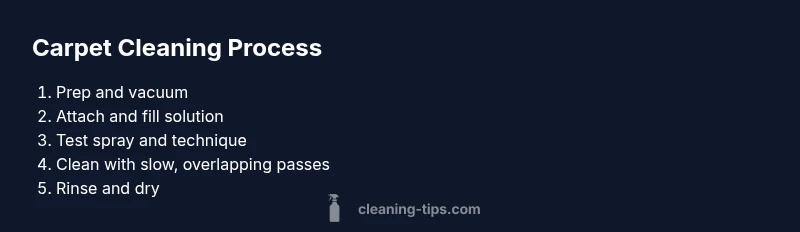
- 1
Inspect and assemble attachments
Power off the machine, check that all hoses and attachments are clean, and assemble brushes, nozzles, and wands as directed by the manual.
Tip: Confirm that the attachments match your model and are properly secured before starting. - 2
Fill clean water tank and prepare solution
Fill the water tank with fresh water up to the indicated line and add the recommended cleaning solution according to the dilution chart.
Tip: Avoid overfilling; use a measuring cup to avoid dilution errors. - 3
Test spray pattern on a hidden area
Power on, test the spray and suction on a discreet spot to ensure even distribution and no leaks.
Tip: If spray is weak, check nozzle and clean; if leaks occur, stop and reseat seals. - 4
Begin cleaning with slow, overlapping passes
Slowly push the machine forward while pulling back to overlap passes, ensuring thorough extraction of soil.
Tip: Keep a steady pace to prevent overwetting and avoid streaks. - 5
Rinse and optionally extract with clean water
If your model supports a rinse cycle, repeat with clean water to remove detergent residues that attract dirt.
Tip: Rinsing reduces residue and speeds up drying. - 6
Handle edges and stairs carefully
Use appropriate attachments to reach corners and stair treads without straining muscles.
Tip: Take breaks for safety and use proper lifting techniques. - 7
Finish and power down
Turn off the machine, unplug, and empty the recovery tank before cleaning the unit.
Tip: Rinse hoses and the tank to prevent buildup. - 8
Dry the carpet and machine
Open windows, use fans, and allow the carpet to dry; wipe the machine and store in a dry area.
Tip: Avoid heavy foot traffic until dry to prevent re-wetting. - 9
Clean and store attachments
Rinse and dry all tools, remove debris, and store in their designated compartments.
Tip: Label hoses for quick assembly next time.
Questions & Answers
Can I use a carpet cleaning machine on stairs?
Yes, but use stair attachments or a lightweight unit and take breaks to avoid strains. Start at the bottom and work upward.
Yes—use stair attachments and take frequent breaks to avoid strain.
Do I need to pre-vacuum before using a carpet machine?
Pre-vacuuming helps remove surface soil and yields better extraction. It’s recommended for most cleaning tasks.
Pre-vacuum first for best results.
What cleaning solutions are safe for carpet machines?
Use cleaners approved by the machine manufacturer. Avoid bleach unless the manual permits it, and dilute according to guidelines.
Use manufacturer-approved cleaners and follow dilution rules.
How long does it take for carpets to dry after using a machine?
Drying time depends on room temperature, humidity, and airflow. In well-ventilated spaces, expect several hours to dry completely.
Expect several hours for carpets to dry in a well-ventilated room.
How often should I service my carpet cleaning machine?
Follow the manufacturer’s guidance; generally, perform routine inspections after every use and schedule professional service as recommended.
Inspect after each use and service per manufacturer guidance.
Watch Video
The Essentials
- Choose the right machine for your space.
- Prep thoroughly to maximize results.
- Follow dilution and drying guidelines for best results.
- Maintain the machine after every cleaning.
- Schedule routine maintenance for longevity.