Clean Carpet Stairs: A Step-by-Step Cleaning Guide
Learn to clean carpet stairs safely and effectively with a practical, step-by-step approach. Discover tools, stain removal, drying tips, and maintenance to keep stairs fresh and allergen-free.


By following this guide, you’ll deep-clean carpet stairs safely and effectively. You’ll learn how to prep the area, choose the right cleaners, perform a thorough cleaning in steps, and prevent future buildup. The plan covers stain removal, drying tips, and simple maintenance routines for a healthier home for busy households.
Why clean carpet stairs matter
Carpeted stairs accumulate dirt, dust, and allergens just like any other high-traffic area in your home. When you regularly clean carpet stairs, you reduce pet dander, pollen, and skin flakes that can trigger allergies and asthma. The Cleaning Tips team emphasizes that maintaining clean stair runners also extends carpet life by removing grit that wears fibers down over time. In many homes, stairs are the first thing visitors notice, so a well-kept set of steps signals overall cleanliness. For homeowners, this isn’t just about looks; it’s about a healthier living environment for every resident. According to Cleaning Tips, a proactive cleaning routine lowers odor retention and makes daily use more pleasant for everyone in the household.
Common challenges with carpet stairs
Stairs present unique cleaning challenges: uneven surfaces, tight corners, and limited space to maneuver a full-size machine. Nap direction matters; aggressive brushing can flatten fibers. Stains here tend to be stubborn due to frequent tracked-in moisture from shoes. Color transfer from previous runners or pads can occur if cleaners are too strong. Grit accumulates in the tread edges where dirt brushes into the carpet fibers. Addressing these challenges requires a targeted approach and the right tools, plus patience. The Cleaning Tips analysis shows that a focused method yields the best long-term results for stair carpets.
Safety first: protect yourself and home
Before you start, protect floors surrounding the stairs with a drop cloth or old towels to catch drips. Wear gloves to prevent skin irritation and a mask if you’re sensitive to dust. Ensure good ventilation by opening a nearby window or turning on a fan. Keep liquids off the wooden handrails to avoid warping finishes. If you have pets or kids, schedule cleaning when they’re out of the house or use a baby gate to separate the work area. Safety isn’t optional here; it keeps you and your home protected while you work.
Tools and cleaners: choosing the right combo
Choose a vacuum with a stair tool attachment to remove loose dirt and pet hair before any moisture. A soft-bristled brush helps agitate fibers without damaging them, and a microfiber cloth is ideal for blotting spills. For cleaning solutions, use a mild carpet cleaner or a vinegar-baking-soda mix for eco-friendly options. Test any cleaner in an inconspicuous spot to ensure colorfastness. Have white towels ready for blotting, and a spray bottle for even application. With the right kit, you’ll avoid over-wetting and long drying times. The goal is to lift soil without saturating the carpet.
Step-by-step: deep-clean method A (prepping and pre-treating)
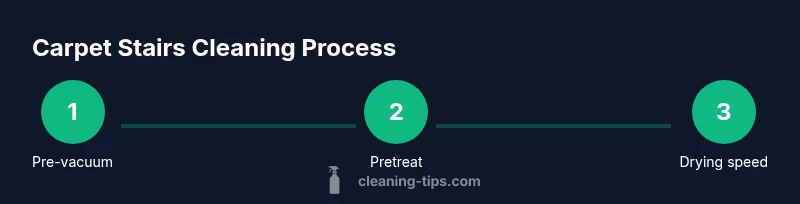
- Pre-vacuum the stairs thoroughly to remove loose dirt and hair. This reduces the amount of moisture needed later and helps prevent fiber damage.
- Identify stained areas and pretreat with a spray solution; let it sit for 5–10 minutes to break down soils.
- Mix your chosen cleaner according to label directions, or apply a mild vinegar solution for eco-friendly cleaning.
- Gently agitate fibers with a soft brush in the direction of the nap, focusing on stained spots. Do not scrub aggressively, or you may fray fibers.
- Apply cleaner to the entire stair surface in a fine mist, avoiding saturation. Allow a few minutes for the solution to work, then blot with a clean white cloth.
- For tough stains, reapply and repeat the agitation and blotting until the color lifts. Let the carpet begin to dry between applications.
- If you use water-based cleaners, extract moisture using a wet-dry vac or carpet extractor, working inch by inch from top to bottom.
- Finish by rinsing lightly with clean water and blotting to remove any remaining residue. This helps prevent sticky residues that attract more dirt later.
tip: Always test cleaners on a small, hidden area first to prevent color fading or fiber damage.
Tools & Materials
- Vacuum with stair tool attachment(Choose a model with good suction and a narrow nozzle for edges.)
- Soft-bristle brush(Use on nap direction for gentle agitation.)
- Microfiber cloths(Stack of white cloths preferred for visibility of stains.)
- Spray bottle(For applying pretreatments evenly.)
- Mild carpet cleaner or eco cleaner (vinegar+baking-soda option)(Test colorfastness before full use.)
- White towels or rags(For blotting moisture; avoid dyed fabrics.)
- Bucket and water (for rinsing)(Optional if using spray-cleaner; handy for dilution.)
- Fan or dehumidifier(Facilitates faster drying.)
- Step stool(Safety first when reaching high steps.)
Steps
Estimated time: 1.5–2.5 hours (plus drying time)
- 1
Pre-vacuum the stairs
Thoroughly vacuum each stair to remove loose dirt, dust, and hair. This step reduces soil transfer during cleaning and minimizes fiber abrasion.
Tip: Use the crevice tool at the edge where dirt hides. - 2
Pretreat stains
Identify any stains and apply a targeted pretreatment solution. Allow 5–10 minutes for the soil to loosen.
Tip: Spot-test the pretreatment in a hidden area first. - 3
Apply cleaner lightly
Spray a fine mist of cleaner across the surface; avoid soaking. Excess moisture increases drying time and can damage wood or padding.
Tip: Work in small sections to keep control over saturation. - 4
Agitate fibers gently
Using a soft-bristled brush, work the cleaner into the nap in the direction of the fibers. Do not scrub aggressively.
Tip: Let the nap lift dirt rather than forcing it out. - 5
Blot, don’t rub
Blot stains with a clean, white cloth to lift moisture and soil. Rubbing can damage fibers and spread stains.
Tip: Place a towel underneath to catch bleed-through. - 6
Rinse and blot
Rinse lightly if using a soapy cleaner, then blot with a dry cloth to remove excess moisture.
Tip: Avoid leaving soap residues that attract new dirt. - 7
Moisture extraction
Use a wet-dry vac or carpet extractor to remove as much moisture as possible. This speeds up drying.
Tip: Aim for a nearly dry surface, not a puddle. - 8
Final dry pass
Let the stairs air-dry in a well-ventilated area; use a fan to speed up evaporation if needed.
Tip: Do not walk on stairs until fully dry. - 9
Re-inspect and touch up
Check for remaining spots and repeat treatment if necessary. A second pass often lifts stubborn stains.
Tip: Don’t over-wet; over-drying can cause stiffness. - 10
Protection and upkeep
Place a door mat at entry to reduce future soil transfer and schedule regular vacuuming to maintain freshness.
Tip: Set a realistic cleaning cadence (e.g., monthly deep clean).
Questions & Answers
Should I vacuum stairs before washing them?
Yes. Vacuuming removes loose dirt and hair, reducing grinding action when you scrub. This step improves cleaning efficiency and protects fibers.
Yes—vacuum first. It removes dirt and hair that would just get ground into the carpet during washing.
What cleaner is best for carpet stairs?
Use a cleaner formulated for carpet fibers, or a mild eco-friendly option like vinegar with baking soda. Always test in a hidden area first to ensure colorfastness.
Use a carpet-safe cleaner or mild eco-friendly option, and test first to avoid color fade.
How long does it take stairs to dry after cleaning?
Drying time varies with airflow and humidity, typically 4–24 hours. Use fans or dehumidifiers to shorten drying, and avoid walking on damp stairs.
Drying can take several hours; improve air circulation with a fan to speed it up.
Is it okay to use DIY cleaners on stairs?
DIY cleaners like vinegar solutions can work on many carpets, but test first and avoid concentrated mixtures on delicate fibers. For tough stains, a commercial cleaner may be more effective.
DIY cleaners can work, but test first and avoid overly strong mixes on delicate fibers.
Should I steam clean stairs or use a shampooer?
Both can work; steam cleaning provides deep extraction but may require longer drying. A shampooer is simpler for routine maintenance. Choose based on carpet type and stain severity.
Steam cleaning gives deep extraction; a shampooer is good for regular upkeep, pick based on fabric.
What if stains return after drying?
Stains can reappear if you didn’t fully remove the soil or if dyes bleed. Re-treat lightly and repeat the cleaning steps, ensuring complete drying.
If stains show up again, re-treat and clean again, making sure the carpet dries fully.
Watch Video
The Essentials
- Vacuum before cleaning to remove loose soil
- Test cleaners on hidden areas first
- Avoid over-wetting; moisture slows drying
- Dry thoroughly to prevent mold and odor
- Maintain a regular cleaning schedule for best results