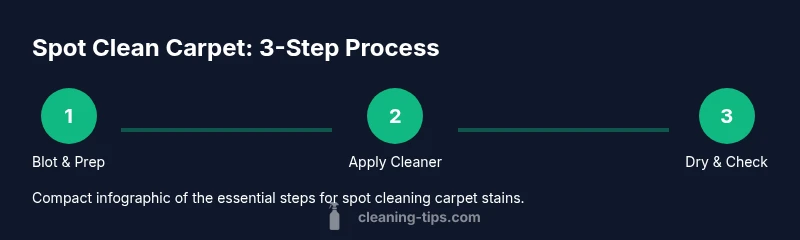
Spot Clean Carpet: A Step-by-Step Guide to Stain Removal
Learn how to spot clean carpet effectively with practical, enzyme-safe methods, DIY solutions, and pro tips from Cleaning Tips. Remove spills fast, protect fibers, and extend carpet life with a simple, repeatable process.


Spot clean carpet to remove fresh stains and prevent setting. In 2–3 quick steps you’ll learn how to treat common spills, test cleaners, and lift color without soaking the carpet. This approach reduces odor, speeds up drying, and protects fiber integrity. According to Cleaning Tips, timely spot cleaning is a simple, effective way to keep carpets looking newer longer.
Why spot cleaning matters for carpet longevity
Carpets face constant wear from foot traffic, spills, and dust. Spot cleaning is the first line of defense against permanent stains and fiber damage. The Cleaning Tips team emphasizes that acting quickly can prevent staining compounds from bonding with fibers, reducing the need for full carpet cleaning later. According to Cleaning Tips, regular, targeted spot care keeps fibers resilient, maintains color, and minimizes odors between deep clean sessions. When you manage stains promptly, you also extend carpet life and preserve indoor air quality by reducing irritants and trapped allergens. Keep in mind that different materials behave differently; nylon, polyester, wool, and blends each respond to cleaners in unique ways. The goal is to remove visible marks without saturating the backing or padding.
When to spot clean
Spills happen: coffee, juice, wine, ketchup, and pet accidents. Spot cleaning isn't just for obvious stains; you should also address sticky residues from sauces or sugary drinks, as they attract dirt and can dull fiber color over time. For high-traffic areas, consider a quick blot and treat routine weekly to prevent soils from becoming embedded. If you notice odors, slight color change, or a sticky feel, it's a sign to act now rather than waiting for a full carpet shampoo. The key is consistency: quick attention after each incident reduces the chance that stains set in and requires harsher cleaners later. As Cleaning Tips notes, developing a small, repeatable process saves time and keeps your home cleaner between major cleanings.
Understanding carpet fibers and stain chemistry
Carpet fibers come in a range of varieties, each with different colorfastness and cleaning tolerance. Nylon and polyester are generally durable and respond well to gentle cleaners, while wool requires extra care to prevent damage or color fading. Stains create chemistry challenges: protein-based stains (milk, blood) react best with cold water and enzyme cleaners, tannin-based stains (coffee, tea, wine) respond to alkaline cleaners, and oil-based stains (grease, cosmetics) need solvent action. Knowing the fiber type helps you choose a cleaner and avoid over-wetting. The Cleaning Tips team recommends testing any product on a hidden area first and using the mildest effective cleaner to protect fiber integrity and dye stability.
The 5 common stain types and how to handle them
- Protein-based stains (milk, blood): Blot, then treat with a gentle, enzyme-based cleaner or cold water. Do not rub, which can push stain deeper.
- Tannin-based stains (coffee, tea, wine): Use a mild alkaline solution or color-safe oxidizer and blot from outside in. Quick action helps preserve color.
- Oil-based stains (grease, makeup): Apply a small amount of a solvent-based cleaner and blot carefully; avoid saturating fibers.
- Dye-transfer stains (color from fabrics): Blot and use a color-safe cleaner; rinse thoroughly to prevent migration.
- Fresh fruit or juice stains: Rinse with water, blot, and treat with a mild detergent solution to lift pigment before it sets.
The 6-step spot-clean method (overview)
Spot cleaning follows a repeatable sequence that minimizes fiber stress. First, act quickly and assemble supplies. Next, blot to remove moisture, apply a cleaner, and work from the outside of the stain toward the center. Then rinse with clean water, blot dry, and finally check for any remaining color. This overview sets the stage for the detailed, step-by-step instructions that follow in the dedicated guide. The method emphasizes minimal moisture and gentle agitation to protect fibers and padding, reducing the need for full-depth cleaning in between major sessions.
Testing cleaners safely
Always test any cleaner in an inconspicuous area before applying to a visible stain. Wait 5–15 minutes and observe for color transfer or fiber damage. If the fabric looks affected, discontinue use and switch to a milder solution or a product recommended for that fiber. This precaution helps you avoid unsightly rings or shading while preserving carpet quality. Cleaning Tips reinforces that careful testing is essential for ongoing carpet health.
DIY spot-clean solutions: vinegar, baking soda, and water
DIY solutions can be effective for light stains and routine maintenance. A wide-mouth spray bottle helps you apply solutions precisely without soaking surrounding fibers. A diluted white vinegar solution (one part vinegar to two parts water) can help lift mineral-based stains; a baking soda paste (baking soda with a small amount of water) can absorb oily residues. For tougher stains, a color-safe enzymatic cleaner is recommended. Always rinse after using any DIY mix and blot dry to prevent moisture buildup that invites mildew.
Tools and products: store-bought vs DIY
Choosing between store-bought cleaners and DIY solutions depends on stain type and fiber. For delicate fibers or persistent stains, a mild, enzyme-based cleaner designed for carpets is often best. DIY options can work for routine maintenance and lighter soils but may require extra rinsing to remove residue. Regardless of choice, use clean cloths, blotting motions, and a test area first. Vacuuming before and after treatment helps remove loosened soils and improves results.
Drying and preventing re-soiling
After treatment, dry the area thoroughly to prevent mold and odor. Use towels to blot excess moisture, then increase airflow with a fan or open windows if possible. Do not walk on damp carpet until fully dry. Re-dampening can attract dirt and cause new staining if the surface remains wet too long. A dry, clean surface dries faster and reduces the chance of re-soiling. Regular vacuuming after drying helps lift any remaining soils and preserves carpet texture.
Special cases: wool, oriental, or delicate fibers
Wool and delicate fibers require special care. Always check fiber-specific guidance and consider using a cleaner formulated for wool or delicate fabrics. Avoid hot water and aggressive scrubbing that can cause shrinking, fuzzing, or dye bleed. When in doubt, consult a professional cleaner for sensitive areas or large spills. The goal is to protect the carpet’s natural feel while removing stains with minimal risk.
Quick maintenance plan to prevent future stains
Create a simple routine: 1) blot spills immediately, 2) treat with a mild cleaner, 3) rinse and blot dry, and 4) vacuum regularly. Also consider applying a stain-repellent product after a thorough cleaning (following manufacturer directions). A small, repeatable routine reduces the chance of deep-set stains and keeps carpet fibers looking fresh between deep cleans. Cleaning Tips suggests documenting spills to identify recurring trouble spots and adjust your approach accordingly.
What to avoid
Avoid hot water on protein-based stains, scrubbing aggressively, or using bleach on colorful carpets. Do not oversaturate the carpet, which can lead to padding damage and odors. Never use high-heat drying methods until you’re sure the stain is removed and the area is completely dry. If you’re unsure, seek professional guidance or refer to carpet manufacturer care instructions to prevent warranty issues.
Tools & Materials
- Microfiber cloths or white cotton towels(For blots and lifts; use new cloths for each pass to avoid re-depositing stain)
- Spray bottle(Fine mist helps control application; label with cleaner type)
- Soft-bristle brush(Gentle agitation only; avoid fraying fibers)
- Mild liquid dish soap(Dilute for gentle cleaning; avoid concentrated soap that leaves residue)
- White vinegar(Dilute for cleaning; avoids color reaction in many fibers)
- Baking soda(Absorbs moisture and odors; make a paste if needed)
- Hydrogen peroxide (3%)(Color-safe use only; test first on wool or dark fibers)
- Dish sponge or bowl(For mixing rinsing solution; not essential if using spray bottle)
- Clean water (distilled preferred)(Rinsing helps remove cleaner residues)
- Vacuum cleaner(Vacuum before and after treatment to remove loosened soils)
- Flood-tolerant towel or old towels(Place under stain area to catch runoff)
Steps
Estimated time: 25-40 minutes
- 1
Assess stain and prep
Identify stain type and fiber; gather supplies; ensure area is well-ventilated. This reduces decision fatigue and speeds up the process.
Tip: Lay towels around the work area to catch drips and prevent floor staining. - 2
Blot, don’t rub
Gently blot the stain from the outside toward the center to lift moisture without spreading it. Avoid aggressive rubbing that embeds fibers.
Tip: Use a clean section of cloth for each blot to prevent re-depositing pigment. - 3
Apply cleaner lightly
Spray or dab a small amount of cleaner on the stain. Let it sit briefly if using enzyme or oxidizing cleaners, then gently agitate.
Tip: Do not soak the carpet; moisture should be just enough to lift the stain. - 4
Rinse and blot
Rinse with a small amount of clean water or a mild rinse solution, then blot again to remove cleaner and lifted pigment.
Tip: Blot from outside inward to prevent spreading. - 5
Dry thoroughly
Place towels over the area and press to remove as much moisture as possible. Use a fan or open windows to speed up drying.
Tip: Avoid walking on the area until completely dry to prevent re-soiling. - 6
Check and repeat if needed
Once dry, inspect for any remaining stain. Repeat steps as necessary with a lighter cleaner if required.
Tip: If stain persists after two attempts, consider professional cleaning.
Questions & Answers
What should I do first when a spill happens?
Blot with a clean cloth to absorb as much liquid as possible. Do not rub, as rubbing pushes stain deeper into the fibers. Then choose an appropriate cleaner and test it on a hidden area.
Blot the spill right away, then test a cleaner on a hidden spot before proceeding.
Can I use bleach on carpet stains?
Avoid bleach on colored carpets as it can weaken fibers and cause color loss. Use color-safe cleaners or specialized stain removers designed for your carpet type.
Bleach can damage colors; use color-safe cleaners instead.
How long does it take for a spot-cleaned area to dry?
Drying time depends on carpet fiber and air flow. In a well-ventilated room, expect 2–6 hours; use fans to speed up drying and prevent mildew.
Most spots dry in a few hours with good airflow.
Is spot cleaning enough for old stains?
Some old stains respond to repeated spot-cleaning, but others may require a full carpet cleaning or professional service. Always assess after a couple of attempts.
Old stains may need professional cleaning if spot cleaning doesn’t remove them.
Can I vacuum after I spot-clean a stain?
Wait until the area is completely dry, then vacuum to lift any remaining fibers and soils. Vacuuming while damp can spread moisture and stain residues.
Wait for it to dry, then vacuum to finish the job.
What should I do for protein-based stains like blood or dairy?
Blot with cold water, then use an enzyme cleaner or mild detergent. Heat can set protein stains, so avoid hot water and hot irons.
Blot with cold water and use the right cleaner; avoid heat.
Watch Video
The Essentials
- Act quickly to prevent stain setting
- Blot, don’t rub, to lift stains from fibers
- Test cleaners first on inconspicuous areas
- Rinse and dry thoroughly to prevent mold
- Choose fiber-appropriate cleaners to protect color