Spray Clean Carpet: A Practical Step-by-Step Guide
Learn how to spray clean carpet effectively between deep cleanings with simple solutions, proper technique, and safety tips for a fresher, healthier home.


By the end of this guide you’ll know how to spray clean carpet to refresh a room between deep cleanings. You’ll learn when spraying is appropriate, how to apply a light mist without saturating fibers, how to blot and dry effectively, and how to choose safe cleaners for different carpet types. Safety tips and spot-testing are included to protect colors and integrity.
Why spray cleaning carpet matters
Spray cleaning your carpet offers a practical way to refresh a room without pulling out a full steam cleaner or renting equipment. The goal is to lift surface soils, reduce odors, and restore the carpet’s appearance between deeper cleanings. When you spray clean carpet, you apply a light, controlled mist of a carpet-safe solution and give fibers a chance to relax, rather than saturate them. This approach is particularly valuable in high-traffic zones, homes with pets, or rooms that can’t be shut down for hours. A properly executed spray clean can extend the time between expensive deep cleanings and keep your floors looking brighter. The technique also helps you target problem areas—stairs, entryways, and under furniture—where soils tend to accumulate first. As you work, ensure you test any cleaner on a small hidden area to protect color and fiber integrity. According to Cleaning Tips, using a measured spray reduces the risk of over-wetting and helps fibers rebound quickly after blotting. With the right tools and a steady hand, you can spray clean carpet effectively without soaking the padding or pad area.
How spray clean carpet differs from full deep clean
Spray cleaning is not a replacement for a full deep clean across all carpet types, but it fills an important maintenance niche. A deep-clean uses more moisture and agitation to lift embedded soils and restore pile uniformity. By contrast, spray cleaning relies on lighter applications and quick drying, making it ideal for routine upkeep and odor management. For a household with kids, pets, or frequent foot traffic, spray cleaning helps manage surface soils quickly. The method uses minimal water, which means your room can be back to normal sooner, reducing the downtime that full-clean sessions require. However, spray cleaning will not remove deep-seated staining or heavy embedded soils as effectively as hot-water extraction or shampooing. It’s best seen as a bridge between full cleanings, not a substitute for a periodic deep clean. When deciding between the two, consider carpet type, stain severity, and drying conditions. For instance, looped wool or high-pile fibers may need gentler products and shorter contact times. The key to success is selecting the right cleaner, applying a precise mist, and allowing ample drying time so fibers stand upright again after treatment.
Stain-specific spray approaches
Some stains respond better to targeted spray treatment. For fresh food or drink spills, blot gently to remove excess, then spray a light mist from several inches above the stain and work from the outside in. For pet accidents, use an enzyme-based cleaner designed for urine; enzymes help break down organic compounds and fight odors. Avoid bleach on colored carpets and never spray directly on delicate fibers like wool or silk. For everyday dirt, a mild detergent solution or a vinegar-water mix can lift soils without leaving residue. Always test on a hidden area first to ensure colorfastness. For set stains, you may need a repeat application and additional blotting. The spray method shines when you can isolate the problem area and avoid saturating the entire room, which speeds up drying and reduces chance of mold growth. If odor persists after a spray treatment, consider a dry deodorizer or repeat the process with a fresh cleaning solution, ensuring proper ventilation during drying.
Choosing the right cleaning solution
Your choice of solution should match carpet type and stain severity. For routine refreshes on synthetic fibers, a commercially labeled carpet cleaner or a DIY mixture with a small amount of mild dish soap can work well when diluted in water. A common DIY option is a vinegar-water solution, about one part vinegar to three parts water, which helps with light odors and mild soils. Rinse this off well if the carpet feels sticky after drying. For households with pets or strong odors, enzyme-based cleaners are often more effective because they target organic matter without leaving sticky residues. Never mix cleaners with bleach or ammonia, as dangerous fumes can form. Always follow the product’s label instructions, and test the solution in a hidden spot before broad use. If you’re unsure about the fiber content, consult your carpet manufacturer’s care guidelines. The idea is to choose a cleaner that is safe for colorfast fibers and effective for the specific soil or odor you’re addressing.
Application technique and coverage patterns
Apply spray clean carpet with a steady, controlled mist, keeping the nozzle roughly 6-8 inches (15-20 cm) above the surface. Move in evenly spaced passes across the entire area, rather than haphazard sprays, to avoid wet spots. Use a light circular motion with a soft-bristled brush or microfiber cloth to work the solution into the fibers without twisting or pulling. For large rooms, divide the area into grid sections and complete one section at a time. After spraying, timing is important: a short dwell time (5-10 minutes) allows soils to loosen, but avoid letting cleaners dry onto the carpet. Blot gently with clean towels, pressing rather than rubbing, to lift moisture and soils toward the surface. Finally, open windows or run a fan to increase air circulation and speed up drying. If you notice persistent odor, repeat the process on the affected patch after verifying colorfastness. The goal is a fresh carpet that dries evenly and looks uniform rather than splotchy.
Drying, odor control, and maintenance
Drying is the critical phase after spray cleaning. Proper ventilation can dramatically reduce drying time and help prevent musty odors or mold growth. Place fans around the treated area, keep doors open, and consider pointing a floor fan toward a window for cross-ventilation. While the carpet dries, avoid walking on the area and remove any throw rugs or furniture to prevent re-soiling. Once dry, vacuum to re-fluff the pile and remove any residual loose fibers. If odors linger after the surface is dry, sprinkle a light layer of baking soda on the carpet and vacuum again once the baking soda has had time to sit (about 15-20 minutes). Always ensure the room is completely dry before placing furniture back, and consider using a dehumidifier in humid environments. Spray cleaning is a maintenance tool, not a substitute for periodic deep cleanings, and should be integrated into your cleaning routine accordingly.
Troubleshooting and safety considerations
Common issues include over-wetting, streaking, and discoloration if the cleaner isn’t suitable for the carpet. To prevent over-wetting, mist lightly and avoid applying large amounts of liquid in one pass. If you notice staining or color bleed, stop and perform a spot test again, then adjust your solution or switch cleaners. Safety considerations: wear protective gloves if you’re using concentrates, ventilate the space, and avoid mixing cleaners with ammonia or bleach. Always read the cleaner’s label for dilution ratios and contact times. For stubborn odors or soils, you may need to escalate to a deeper cleaning solution or professional service. In the end, spray cleaning should complement your carpet care routine, extending the results of a full cleaning rather than replacing it. If you’re unsure about the best approach for your carpet’s fiber type, seek guidance from the manufacturer’s guidelines or a professional cleaner. This careful, methodical approach helps you spray clean carpet safely and effectively.
Tools & Materials
- Vacuum cleaner(Before starting, remove loose debris)
- Spray bottle(Prefer a trigger bottle for even mist)
- Cleaning solution(Carpet-safe product or diluted DIY solution)
- Soft-bristled brush or microfiber cloth(To work solution into fibers)
- White cloths or microfiber towels(For blotting and moisture pickup)
- Fan or open window for drying(Helps speed up drying)
- Protective gloves(Optional for skin protection)
- Stain remover (optional)(Use for stubborn stains)
Steps
Estimated time: 40-60 minutes
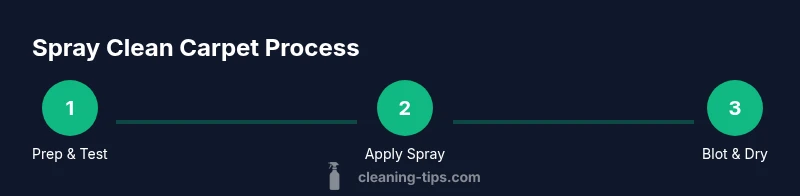
- 1
Prepare the area and test a spot
Clear the space, remove furniture, and vacuum the carpet. Test a hidden area with your cleaner to check colorfastness before applying to the whole area.
Tip: Test on a hidden spot and wait 24 hours to confirm colorfastness. - 2
Mix and fill your spray bottle
Dilute your cleaner according to the label or your chosen DIY ratio and fill the spray bottle. Label it and store away from children.
Tip: Use warm water for better dissolution and easier spraying. - 3
Pre-treat stains
Spray a targeted amount on stains and blot from the outside in to limit spreading. Allow a brief dwell time if the stain is set.
Tip: For pet odors, consider an enzyme-based pre-treatment. - 4
Apply a light mist
Spray a light, uniform mist across the carpet from about 6–8 inches away. Avoid soaking to prevent padding saturation.
Tip: Keep the nozzle steady and avoid long, heavy passes. - 5
Work the solution into fibers
Gently brush or blot in sections to help lift soils. Use circular motions with a soft brush to avoid fiber damage.
Tip: Work in small grids to ensure even coverage. - 6
Blot and remove moisture
Place clean towels over damp areas and press firmly to absorb liquid. Do not rub, which can spread soils.
Tip: Use multiple towels and change them as they become damp. - 7
Dry, vacuum, and scent refresh
Ventilate the room with a fan and/or open windows. Once dry, vacuum to restore pile and remove any loosened fibers.
Tip: If odors persist, a light baking soda application after drying can help.
Questions & Answers
Is spray cleaning safe for all carpet types?
Spray cleaning is generally safe for most carpet fibers when you dilute cleaners and avoid over-wetting. Wool, silk, and some delicate pile types require extra caution; always test first and follow the manufacturer's care guidelines.
Most carpets are fine with diluted cleaners, but always test first and check your fiber type.
Can I use vinegar in my spray solution?
Vinegar can help with mild odors when diluted, but avoid using it undiluted on natural fibers and never mix vinegar with bleach or ammonia.
Diluted vinegar is okay for mild odors; avoid mixing with bleach or ammonia.
Drying time after spray cleaning?
Drying varies with humidity and airflow. In well-ventilated spaces, expect several hours for the surface to dry; avoid walking on the carpet until fully dry.
Drying usually takes a few hours with good airflow; don’t walk on it until dry.
Stains persist after spray cleaning?
If stains persist, re-treat the spot with a targeted spray or switch to a more specialized stain remover. For stubborn cases, professional cleaning may be needed.
Re-treat the stain or switch cleaners; consider a professional for stubborn stains.
How often should I spray clean?
Use spray cleaning as a routine refresh between deep cleanings. In high-traffic areas, do this every few weeks; in quieter zones, monthly maintenance is typically sufficient.
Use it as a regular refresh between deep cleans, depending on traffic.
Should I vacuum before or after spray cleaning?
Vacuum before to remove loose soils and debris. Vacuum again after the carpet is fully dry to re-fluff the pile and remove any loosened particles.
Vacuum first, then again after it dries to lift the pile.
Watch Video
The Essentials
- Test a hidden spot before spray cleaning carpet.
- Apply a light mist to avoid soaking fibers.
- Blot, don’t rub, to lift soils and prevent spread.
- Ensure thorough drying with airflow to prevent odors.
- The Cleaning Tips team recommends spray cleaning as a quick refresh between deep cleans.