Clean 21: A 21-Minute Quick-Clean Routine for Home
Discover clean 21, a practical 21-minute cleaning routine you can use daily. Learn steps, tools, and tips to create a healthier home with a fast, repeatable process.


Clean 21 is a 21-minute, room-by-room cleaning routine designed for quick, consistent results. In 3 blocks of 7 minutes each, you target essential zones with a simple toolkit, building momentum for a healthier home. This how-to guide breaks down the steps, tools, and timing you need to start today.
What is clean 21 and why it matters
According to Cleaning Tips, clean 21 is a structured, 21-minute cleaning approach that helps busy households maintain a healthier, more organized home with minimal friction. The concept centers on constant small cleans rather than large, sporadic efforts, which reduces buildup and makes upkeep feel manageable. For homeowners and renters alike, adopting a consistent, repeatable routine lowers stress and provides measurable daily improvements in freshness and airflow. The idea is simple: dedicate a short, focused window to a handful of high-impact tasks, then repeat. This keeps surfaces gleaming, floors clear, and clutter under control without demanding long, uninterrupted sessions.
In practice, clean 21 emphasizes a top-to-bottom, room-by-room method that minimizes backtracking. By investing time in small, disciplined blocks, you create a healthier living environment and a cleaner sense of organization. The Cleaning Tips team recommends keeping a compact kit ready and a timer nearby so you can start immediately when the need arises.
The 21-minute framework: how it works
The clean 21 framework breaks a quick-clean into three zones or tasks that you rotate across seven-minute intervals, totaling 21 minutes. The philosophy is that short, repeatable sessions beat sporadic, longer cleans, especially in homes with kids, pets, or busy schedules. With a consistent cadence, you reduce the chance of buildup and make upkeep feel effortless. A single routine can be adapted to small apartments or larger spaces by adjusting which zones you prioritize first and how you allocate time within each seven-minute block.
To maximize efficiency, set a visible timer, stay in the current zone until the timer sounds, and then transition. This habit trains your brain to work in focused bursts, which increases motivation and prevents fatigue. Clean 21 also scales with your needs: if a zone is especially dirty, you can allocate a few extra seconds or extend the block to address it, but always return to the seven-minute rhythm. The result is a dependable rhythm your household can rely on. The Cleaning Tips analysis shows that a quick, repeatable routine strengthens cleanliness habits over time, even when daily life is hectic.
Essential tools and environment setup
A compact cleaning kit is all you need to start clean 21. Keep it stocked with essential tools that are easy to grab, store, and customize for each space. A lightweight, portable kit reduces setup friction and helps you stay in the flow for all seven-minute blocks. Ensure the area is well-lit, open any blinds or curtains to improve visibility, and place a small bin or bag near the entry to collect clutter quickly. This setup lowers resistance and makes each seven-minute segment purposeful rather than rushed and chaotic.
Key kit components include an all-purpose cleaner, microfiber cloths, a feather duster or dusting mitt, a small broom or handheld vacuum, a mop, and a timer. If you have wooden floors, test your cleaner in an inconspicuous spot first, and use a minimal amount of water to prevent damage. For apartments or shared living spaces, consider color-coding cloths to prevent cross-contamination and to speed up transitions between zones.
Room-by-room preparation and micro-checklists
Divide your home into three core zones for seven-minute blocks: Zone A (high-traffic living areas), Zone B (kitchen or prep area), Zone C (bathroom and entry). Within each zone, create a micro-checklist to address the highest-impact tasks first: remove clutter, wipe surfaces, dust, and treat floors last. The strength of clean 21 lies in its consistency—two or three cycles per day, even for a few minutes, are more effective than a single long session.
For example, in Zone A you might dedicate the seven minutes to decluttering, quick dusting, and a wipe-down of visible surfaces. In Zone B, focus on counters, appliances, and trash, then sweep or vacuum. Zone C should target sinks, mirrors, and the toilet exterior before a quick mop if needed. Adjust the sequence based on your space and priorities, but always start with decluttering and finish with a quick floor pass to prevent recontamination of freshly cleaned surfaces. The goal is to leave each zone looking refreshed, not perfect, so you can sustain the routine with minimal effort.
Common pitfalls and how to avoid them
A few common obstacles can derail the clean 21 process if you’re not prepared. First, avoid trying to clean too much in a single seven-minute block; this leads to burnout and incomplete tasks. Second, don’t skip decluttering—it's the quickest path to noticeable improvement. Third, beware over-wetting floors or using harsh cleaners that leave residues; stick to mild products and minimal water. Finally, resist the urge to constantly rework a zone after the timer ends—move on and trust the seven-minute cadence, then revisit if needed in the next cycle. By anticipating these pitfalls, you’ll preserve momentum and keep the routine sustainable over weeks and months. The Cleaning Tips team emphasizes that consistency beats intensity for long-term cleanliness and comfort.
Extending clean 21: variations for small spaces
In small spaces, you can adapt clean 21 by narrowing zones and using vertical space to maximize impact. For example, treat zones as “kitchen, living area, and entry,” but you can also do a mini-block in each room: seven minutes in the kitchen, seven in the bathroom, and seven in the living room. If you have kids or pets, involve them in simple tasks (put away toys, wipe small surfaces). For high-traffic households, consider a fourth seven-minute cycle split across two days to maintain momentum without feeling overwhelmed. The key is to keep the cadence steady and the tasks targeted so you never feel like you’re dedicating too much time at once. The Cleaning Tips team recommends making Clean 21 a regular habit for a healthier home.
Tools & Materials
- All-purpose cleaner(Choose a mild formula suitable for multiple surfaces.)
- Microfiber cloths(Have 2–3 cloths in different colors for zones or tasks.)
- Dusting tool (feather duster or microfiber mitt)(Use for quick reach areas and corners.)
- Broom or handheld vacuum(Lightweight option speeds transitions.)
- Mop and bucket(Minimal water; wring well to prevent puddles.)
- Trash bag(Keep near the entry to collect clutter quickly.)
- Timer(Set for 7-minute blocks to maintain rhythm.)
Steps
Estimated time: 21 minutes total
- 1
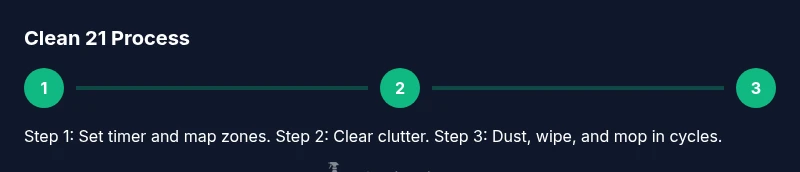
Set timer and map zones
Set a 21-minute timer and quickly map three zones to cover in seven minutes each.
Tip: Keep zones simple (e.g., kitchen, living area, entry). - 2
Clear clutter
Remove items that don’t belong in each zone and place them in a bin or basket.
Tip: Use a dedicated bin near the door to speed relocation. - 3
Dust surfaces
Dust high surfaces in the current zone, moving from top to bottom to prevent re-dusting.
Tip: Work from ceiling to floor for efficiency. - 4
Wipe surfaces
Wipe counters, tables, and fixtures with microfiber cloths in a consistent pattern.
Tip: Use a single cloth per zone to minimize cross-contamination. - 5
Vacuum or sweep floors
Vacuum or sweep floors in the zone to remove debris.
Tip: Overlap passes to catch hidden dust. - 6
Mop floors
Mop hard floors with a light, even motion and minimal water.
Tip: Rinse the mop frequently to avoid spreading dirt.
Questions & Answers
What is clean 21?
Clean 21 is a concise, 21-minute cleaning routine that targets key zones in three seven-minute blocks. It emphasizes consistency, simplicity, and quick wins to maintain a healthier home.
Clean 21 is a short, structured cleaning plan you do in 21 minutes, split into three blocks.
How long does Clean 21 take in real life?
The formal framework is 21 minutes, but you can adjust slightly up or down depending on space. The goal is to complete three focused seven-minute segments.
Generally about 21 minutes, with small tweaks possible based on your space.
Can Clean 21 work in a small apartment?
Yes. In small spaces, keep zones tightly defined (e.g., kitchen, living area, entry) and rely on compact tools. The cadence stays the same, helping you stay consistent.
Absolutely, it adapts well to apartments with careful zone planning.
What if I have kids or pets?
Involve kids in simple tasks and use quick, targeted spots to clean between activities. Pets may require more frequent quick cleans to manage hair and dirt.
Kids can help with simple tasks, and you can tweak zones to suit pets.
Do I need special products for Clean 21?
No special products are required. Stick to mild cleaners, basic cloths, and a timer. The routine works with what most homes already have.
No special products are required; basic cleaners and a timer are enough.
Watch Video
The Essentials
- Use a consistent 21-minute cadence
- Start with decluttering for immediate impact
- Work top-to-bottom to minimize re-dusting
- Regular practice improves perceived cleanliness over time