How to Clean a Roof Safely: Step-by-Step Guide for Homeowners
Learn safe, effective methods to clean a roof, protect shingles, and prevent moss. This guide covers tools, techniques, safety, and maintenance for homeowners.


This article shows you how to clean a roof safely, without damaging shingles, gutters, or landscaping. You'll learn why roof cleaning matters, what gear you need, and a clear step-by-step approach that minimizes risk. By following these steps, you can remove moss, algae, and stains while protecting your home from leaks.
Why Clean a Roof Matters
Keeping a roof clean helps extend its life, prevent moisture intrusion, and improve curb appeal. If you clean a roof regularly, you remove moss, algae, and debris that trap moisture and cause shingle deterioration. According to Cleaning Tips, routine, careful roof cleaning can reduce the risk of leaks and costly repairs by minimizing trapped moisture and preventing organic growth that can degrade shingles. This guide focuses on safe, effective methods that homeowners can perform without specialized equipment. We'll cover weather considerations, gear, cleaning solutions, and maintenance practices to help you protect your investment and keep your home looking its best. Clean a roof not only looks better, it also reduces the long-term risk of roof-related damage when done with the right precautions.
Assess Your Roof and Weather Window
Before you pick up a brush or hose, inspect the roof from the ground and, if safe, from a ladder to identify moss growth, damaged shingles, or loose flashing. Note sections that gain heavy buildup after wet seasons, and choose a dry day with temperatures in a comfortable range for cleaning. Weather matters: rain or high humidity can increase slip risk and wash cleaning solutions where you don’t want them. By planning a cautious window for cleaning, you minimize the chance of triggering a leak mid-project and ensure better results for your roof’s surface.
Safety First: Gear, Ladders, and Scaffolding
Roof cleaning requires a strong emphasis on safety. Wear a properly fitting harness connected to a stable anchor point, use non-slip footwear, and never lean over the edge. Position a sturdy ladder on level ground with a stabilizer and someone to hold the base if possible. Keep a first-aid kit accessible and avoid cleaning alone if you’re new to ladder work. Safety isn't optional here—it's the foundation that makes any other step effective and risk-free.
Roof Types and How They Influence Cleaning
Asphalt shingles, metal roofs, tile, and wooden shakes each react differently to cleaners and pressure. Asphalt shingles are sensitive to aggressive scrubbing and high-pressure water; metal roofs can tolerate rinsing but may require gentler cleaners to avoid staining. Tile roofs need careful attention to grout lines and potential cracked tiles. Understanding your roof type helps you choose appropriate cleaners and brushing techniques, protecting the integrity of the surface while removing moss and stains.
Cleaning Methods: Soft Washing vs Pressure Washing
High-pressure washing can damage shingles and lift granules, reducing roof life. Soft washing with low pressure and a biodegradable cleaner is typically safer for most roof types and effective for moss removal. For tougher growth, consider a dedicated garden sprayer and a gentle scrub, followed by thorough rinsing. If you’re unsure about the right method for your roof material, start with a small test area and consult product guidelines before broad application.
Preparing Your Roof: Debris, Gutter, and Access
Clear debris from the roof surface, eaves, and gutters so water can flow freely during rinsing. Use a plastic tool to lift leaves without scratching shingles and remove loose moss patches by hand if needed. Protect surrounding plants with tarps or plastic to prevent chemical runoff from reaching flower beds or lawns. This preparation minimizes mess and improves cleaning efficiency while reducing environmental impact on your landscape.
Cleaning Solutions: Detergents, Moss Killers, Eco Options
Choose roof-safe, biodegradable cleaners designed for your roof material. Eco options often include surfactants derived from plant-based ingredients and milder pH levels. For moss and algae, products that oxidize organic growth or lift it from the surface are commonly used. Always follow label instructions, apply evenly, and avoid mixing cleaners with bleach or ammonia, which can release harmful fumes. Remember, gentler cleaners protect both the roof and the surrounding garden.
Step-By-Step Visual Approach (Overview)
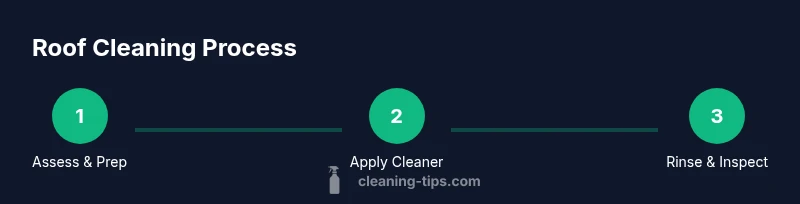
Begin with a safety assessment and prep, then apply your cleaner from the bottom up to prevent streaks. Allow dwell time as directed by the product, scrub gently where moss is thick, rinse with a broad, low-pressure spray, and inspect the roof as it dries. This overview is intended to complement the detailed steps that follow; use it as a quick-reference map for the cleaning process. The goal is to remove buildup while keeping shingles intact and preserving color and integrity over time.
Rinsing, Drying, and Post-Clean Inspection
Rinse thoroughly to remove all cleaner residue, starting from the top and moving downward to avoid streaks. Allow the roof to dry completely before walking on it again or performing minor repairs. Inspect for any loosened shingles, damaged flashing, or remaining moss patches and plan a follow-up treatment if needed. Proper drying helps you assess true roof condition and ensures long-lasting cleanliness.
Common Mistakes to Avoid
Avoid scrubbing aggressively, using high-pressure water on delicate shingles, and neglecting gutters during cleaning. Skipping safety gear or rushing through steps increases injury risk and may cause damage to your roof. Don’t spray cleaners directly onto landscaping or rainwater outlets; improper runoff can harm plants and soil. Taking time to plan and execute each phase reduces the chance of regrets after the job is done.
Maintenance to Prolong Roof Cleanliness
After cleaning, implement a light maintenance routine: schedule annual or biennial cleanings, inspect for new moss growth after wet seasons, and consider preventive measures such as trimming nearby branches and keeping debris off the roof edge. A well-maintained roof cleans easier and lasts longer, while a consistent approach helps prevent heavy buildup that requires harsher methods later on.
Tools & Materials
- Ladder with stabilizer(Extend 3 ft above roof edge; have a helper stabilize.)
- Safety harness & rope(Full-body harness with anchor point.)
- Roof-safe cleaning solution(Biodegradable detergent suitable for shingles.)
- Soft-bristle brush(Non-abrasive; use on moss without scratching.)
- Garden sprayer or spray bottle(For even cleaner application.)
- Garden hose with spray nozzle(Wide spray setting for rinsing.)
- Gutter cleaning tools(Clear debris to ensure proper drainage.)
- Protective gloves and eyewear(Waterproof gloves; safety glasses.)
- Tarps or drop cloths(Protect plants and outdoor furniture from runoff.)
- Non-slip shoes(Sturdy grip for slippery surfaces.)
Steps
Estimated time: 2-4 hours
- 1
Set up safety gear and inspect roof
Begin by evaluating the roof from a safe vantage point. Check for loose flashing, missing shingles, and heavy moss. Set up the ladder with a stabilizer and secure a harness to an anchor point.
Tip: Never stand on the top rung; maintain three points of contact. - 2
Clear debris and gutters
Remove leaves and branches from the roof surface and gutters. This reduces runoff obstruction and makes cleaning more effective. Use a plastic tool to lift debris to avoid shingle damage.
Tip: Have a partner assist with ladder stability if possible. - 3
Apply cleaning solution evenly
Spray cleaner from the bottom edge up to prevent streaking. Keep cleaner away from plant beds and water outlets. Use a spray pattern that covers mossy patches without excessive saturation.
Tip: Test a small area first to ensure roof material compatibility. - 4
Let solution dwell
Allow the cleaner to sit for the recommended dwell time (usually 5–15 minutes) so it can break down organic matter. Avoid letting it dry completely in direct sun.
Tip: Monitor the surface and re-apply if moss remains prominent. - 5
Gently scrub moss and stains
Use a soft brush and gentle, vertical or diagonal strokes to lift growth. Avoid aggressive scrubbing that can loosen granules from asphalt shingles.
Tip: Work small sections to maintain control and safety. - 6
Rinse thoroughly
Rinse from the top down with a wide spray setting to wash away cleaner and dislodged debris. Do not let runoff reach garden beds or lawn without a barrier.
Tip: Keep water pressure low to protect shingle granules. - 7
Inspect and tidy up
Walk the roof only if necessary and safe, verify all moss is removed, and check for any residual stains. Clean up tools and store away safely.
Tip: Note any damage for professional review if found.
Questions & Answers
How often should I clean my roof?
Most roofs benefit from cleaning every 2–5 years, depending on moss growth and climate. Regular inspections help catch buildup early and prevent costly repairs.
Roofs typically need cleaning every two to five years, depending on climate and moss growth. Regular checks help catch buildup early.
Is it safe to use a pressure washer on a roof?
Generally not. High-pressure washers can damage shingles and force water under the roof. For most homes, use low-pressure rinsing and gentle cleaners instead.
Usually not safe. High-pressure washers can damage shingles; use low-pressure rinsing and gentler cleaners.
Should I hire a professional or do it myself?
If you have sloped, high, or fragile roofs, or you’re unsure about safety, hiring a professional is prudent. For simple, dry, low-slope roofs, DIY with proper safety is feasible.
If your roof is steep or damaged, hire a pro. For simple, dry roofs, DIY with safety precautions can work.
What cleaners are safe for shingles?
Use roof-safe, biodegradable detergents designed for your roof type. Avoid mixing cleaners with bleach or ammonia, and follow label directions for dwell time and rinse.
Use biodegradable, roof-safe cleaners and avoid bleach or ammonia. Follow the label for safe use.
How can I protect plants during cleaning?
Cover plants with tarps or move potted plants away from the work area. Use gutters guards and route runoff away from landscaping whenever possible.
Cover plants or move them away, and keep runoff away from landscaping.
What signs indicate roof damage after cleaning?
Look for cracked shingles, lifted edges, exposed nails, or lingering moss that recurs quickly. If you notice damage, consult a professional to assess structural integrity.
Watch for cracks, lifted edges, or quick moss regrowth; contact a pro if you see damage.
Can cleaning a roof affect warranties?
Cleaning a roof with proper methods typically does not void warranties, but aggressive techniques or harsh chemicals can. Always check with the manufacturer or installer guidelines.
Using proper methods usually won’t void warranties, but avoid harsh chemicals or aggressive methods.
What’s the best season for roof cleaning?
Late spring to early fall when temperatures are moderate and roofs are dry is ideal. Avoid cleaning in extreme heat or during wet seasons.
Moderate temperatures in spring to fall are best; avoid extreme heat or wet conditions.
Watch Video
The Essentials
- Set up safety gear before starting any roof work.
- Choose low-pressure cleaning to protect shingles.
- Test cleaners on a small area first.
- Protect landscaping with tarps to prevent runoff damage.
- Inspect after cleaning and plan follow-ups as needed.