Roof Clean: Safe and Effective Roof Cleaning Guide
In-depth, step-by-step guidance for safely cleaning a roof with a soft-wash method, enzyme cleaners, and low pressure. Learn gear, techniques, safety, and maintenance to extend roof life.


Roof clean is achievable with a careful, low-pressure approach. You’ll prepare the roof, choose safe cleaning solutions, and apply them with a soft-wash technique, then rinse and inspect for damage. Always prioritize safety, use a harness, and avoid climbing on wet or icy surfaces. This guide covers methods, common mistakes to avoid, and tool choices to keep your roof clean safely.
Why Roof Clean Matters
Roof clean isn't just about curb appeal; it's a maintenance task that prevents damage from moss, lichens, algae, and accumulated debris. A dirty roof can trap moisture, degrade shingles, and shorten the roof’s life. The Cleaning Tips team notes that regular, safe roof cleaning helps prevent costly repairs and extends the roof’s life. A clean roof sheds water more effectively, improves energy efficiency in some roofing materials, and minimizes staining that can lead to further damage. Homeowners who inspect gutters, flashing, and shingles during and after cleaning can catch issues early, such as lifted shingles or cracked sealants. Start by evaluating the roof’s condition from the ground or a safe vantage point. If you notice loose granules, missing shingles, or damaged flashing, address these issues before applying any cleaner. Quick, proactive maintenance saves time and money in the long run.
According to Cleaning Tips, a consistent, safe roof clean routine helps homeowners protect their investment and avoid costly repairs when issues are caught early.
Methods for Roof Cleaning
There are several approaches to roof cleaning, and choosing the right one depends on your roof type, local climate, and the level of staining. The soft-wash method uses low-pressure water and specialized cleaners to loosen moss, algae, and mineral stains without dislodging shingles. Enzyme-based cleaners and oxygen bleaches are common because they break down organic matter without harsh abrasion. Pressure washing is generally discouraged on asphalt shingles because high pressure can lift granules and cause leaks. For metal, tile, or slate roofs, consult manufacturer guidelines before cleaning, as some materials tolerate higher pressures or specific cleaners. Always perform a spot test on a small, inconspicuous area first to verify colorfastness and shingle integrity. After cleaning, rinse thoroughly to remove chemical residues that can re-stain or harm plants.
Experts agree that starting with a test patch helps you gauge material compatibility and colorfastness before treating the entire roof.
Safety First: Gear and Precautions
Working on a roof carries fall risks and exposure to cleaning chemicals. Wear non-slip footwear, a properly fitted harness, and a sturdy ladder with stabilizers. Use roof anchors if you have them, and never lean a ladder against the eaves alone. Check weather: avoid cleaning on windy, wet, or icy days, and never work on a roof during rain. Keep pets and children away from the workspace and protect nearby landscaping with tarps. If you have any doubt about climbing or chemical exposure, hire a professional. Your safety matters more than a spotless roof.
For added protection, follow local regulations and always have a buddy to assist with hand signals and spot checks.
Tools and Cleaning Solutions
Essential tools and supplies for a safe, effective roof clean include:
- Oxygen-bleach based roof cleaner (preferred for many shingles)
- Non-corrosive detergent
- Soft wash brush and long-handled sprayer
- Garden hose with adjustable nozzle
- Extension wand or telescoping lance
- Plastic scraper or putty knife for moss, not metal blades
- Tarps or plastic sheeting to shield plants
- Protective gloves and eye protection
- Ladder stabilizers and harness anchors (for safe access)
- Testing surfaces on plants before use (if applicable)
Note: Avoid chlorine bleach on roof surfaces containing metal components or copper; test paints and coatings for compatibility. Use cleaners specifically designed for roofs and follow label instructions.
Having the right gear minimizes slip and chemical exposure risk and helps you complete the job efficiently.
Step-by-Step Overview
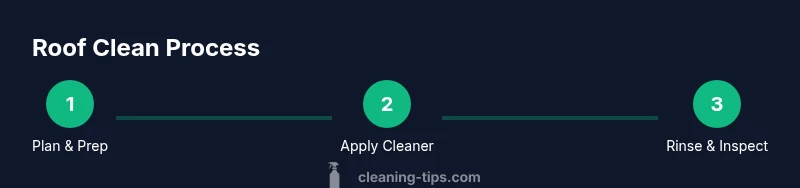
A high-level, safe workflow helps ensure you don’t miss key steps. Start with planning and prep, then move through inspection, debris removal, cleaning, rinsing, and final inspection. Reserve time for drying and any follow-up maintenance. This overview gives you the spine of the process without overwhelming you with on-roof actions for novices. For complex roofs or sensitive materials, consider hiring a professional.
This overview aligns with the step-by-step instructions below and emphasizes safety, efficiency, and environmental responsibility.
Common Mistakes and Troubleshooting
Common mistakes include using high-pressure washing on shingles, skipping a patch test, applying cleaner in direct sun, and letting runoff reach vegetation or gutters. Not wearing PPE increases risk of chemical exposure or falls. If staining remains after a cleaning pass, reapply a milder cleaner or switch methods, and always rinse thoroughly. If you see lifted granules or damaged flashing, stop and address structural issues first.
Troubleshooting tips: test small areas first, avoid mixing cleaners, and never spray directly toward the eaves where water can run into the home.
Environmental Considerations and Runoff
Roof cleaning runoff can affect landscaping and stormwater systems. Use biodegradable, low-toxicity cleaners and collect runoff with tarps or containment if possible. Water plants promptly after rinsing and avoid letting cleaning solutions flow into ponds or streams. Always follow local regulations on disposal and consider midday timing to minimize evaporation and maximize cleaner contact time.
Tools & Materials
- Ladder with stabilizers(Secure on level ground; use a stabilizer for roof access.)
- Harness and anchor(Wear a safety harness and attach to a secure anchor when possible.)
- Non-slip footwear(Shoes with good grip for steep, slippery surfaces.)
- Oxygen-bleach roof cleaner(Choose cleaner labeled safe for roofing materials.)
- Non-corrosive detergent(Mild detergent to boost cleaning power without damage.)
- Soft wash brush and long-handled sprayer(For scrub and reach without stepping on every tile.)
- Garden hose with adjustable nozzle(Low-to-moderate pressure; avoid high flow on shingles.)
- Extension wand or telescoping lance(Gives reach without climbing higher.)
- Plastic scraper(Moss removal tool; avoid metal blades to protect shingles.)
- Tarps/plastic sheeting(Shield plants and collect runoff.)
- Protective gloves and eye protection(Prevent chemical exposure and injury.)
Steps
Estimated time: 2-4 hours
- 1
Assess safety and prep
Evaluate roof condition from ground and prepare your equipment. Check weather and daylight, secure your ladder, and put on PPE. If you notice damaged flashing or loose shingles, address these issues before cleaning.
Tip: Wear a harness and have a spotter to manage tools and debris. - 2
Protect the area and set up
Lay tarps to protect landscaping and create a clear workspace on the ground. Set up the ladder safely and ensure all cleaning tools are within reach. Avoid climbing with loaded hands.
Tip: Keep gutters clear and avoid placing tarps where water could backflow into the roof edge. - 3
Test cleaner on a small patch
Apply cleaner to a hidden patch to verify colorfastness and shingle response. Wait 10–15 minutes to assess any adverse effects before treating the full roof.
Tip: If discoloration appears, stop and switch to a milder cleaner. - 4
Apply cleaner with soft-wash technique
Spray cleaner onto shingles using a downward angle from the eaves to the peak. Keep nozzle at a distance recommended by the product and avoid direct, high-pressure spray.
Tip: Work in shaded sections to prevent rapid drying of cleaner. - 5
Rinse with low-pressure water
Rinse slowly from top to bottom using a wide spray pattern. Do not use high-pressure streams that can lift granules or damage sealants.
Tip: Use the extension wand to reach difficult areas without stepping on tiles. - 6
Inspect and maintain
Once dry, inspect for any missed stains or damaged areas. Re-treat only if necessary and remove all protective coverings. Clean up tools and store chemicals safely.
Tip: Document any repairs needed for future maintenance.
Questions & Answers
Is roof cleaning necessary every year?
Not every year. Frequency depends on climate, nearby trees, and roof material. Inspect annually for moss, stains, and damaged flashing, and clean as needed to prevent buildup.
Not every year; inspect annually and clean when you see moss or staining.
Can I clean my roof myself, or should I hire a professional?
DIY is possible if you have safe access, proper gear, and follow cleaner instructions. Hire a professional if you’re unsure about working on a slope, using chemicals, or if the roof is fragile.
You can do it yourself if you’re comfortable with heights and safety gear, otherwise hire a pro.
What cleaners are safe for asphalt shingles?
Use oxygen-bleach based roof cleaners or milder detergents approved for shingles. Avoid chlorine bleach and harsh solvents that can damage the asphalt. Always test a small area first.
Oxygen-bleach cleaners are usually best for shingles; avoid harsh chemicals.
Will roof cleaning remove moss and algae?
Yes, a proper soft-wash or enzyme cleaner can remove moss and algae. Severe or deep-rooted growth may require repeated treatments or professional help.
Yes, with the right cleaner and technique, though some cases need more than one treatment.
How long does a typical roof cleaning take?
Duration depends on roof size and complexity. Most projects take several hours, including setup, cleaning, and final inspection.
Most roof cleaning takes several hours depending on roof size.
Should I use a pressure washer on my roof?
Generally not for asphalt shingles. High pressure can lift granules and cause leaks. Use a soft wash with low pressure instead.
Avoid high-pressure wash on shingles; use a soft wash instead.
Watch Video
The Essentials
- Plan safely before you start
- Use low-pressure, roof-safe cleaners
- Protect plants and landscaping from runoff
- Inspect and maintain after cleaning