How to Clean and Maintain Your Company Office Efficiently
Discover a practical, step-by-step method to clean and maintain your company office. Get actionable checklists, safe products, and time-saving routines for a healthier, more inviting workspace.


With this guide, you will learn a practical, step-by-step method to clean and maintain your company office efficiently. You’ll outline a standard cleaning routine, choose safe, effective products, and set a schedule that fits your team’s rhythm. By the end, you’ll have a repeatable process that keeps shared spaces healthy and professional.
Why Clean and Company Matters
Maintaining a clean and organized workspace is essential for any company, whether you own a small office or manage a multi-site facility. A steady, measured approach to cleaning reduces the spread of germs, protects equipment, and creates a professional impression for clients and staff. According to Cleaning Tips, establishing a shared standard for cleanliness helps teams work more efficiently and reduces the cognitive load of deciding what to clean and when. When you say 'clean and company' in practice, you mean a routine that protects people, preserves assets, and supports productive work. The goal is not perfection, but consistency: predictable routines that teammates can follow without micromanagement. In many workplaces, the biggest gains come from clarifying roles (who cleans what, when, and how) and documenting procedures so that replacements and new hires can ramp up quickly. A strong plan also considers safety: using the right PPE, choosing low-toxicity products, and ventilating spaces during cleaning sessions. A thoughtful approach benefits morale, reduces illness-related absences, and reinforces a culture of care.
Defining a Practical Office Cleaning Plan
A practical cleaning plan for a company office starts with a clear scope, defined goals, and a realistic budget. Start by auditing typical routines: where dust collects, which surfaces are touched most often, and how long cleaning takes between occupants. From there, translate findings into a written plan: frequencies (daily/weekly/monthly), responsibilities, and stocking levels for supplies. A well-structured plan includes a zone map that divides the space into kitchens, bathrooms, workstations, conference rooms, and entry areas. For each zone, assign specific tasks, tools, and cleaners, so staff know exactly what to do. When you adopt a 'clean and company' mindset, you also create a feedback loop: team members report issues, suggest product changes, and celebrate successes. The plan should be dynamic: it's a living document that adapts as floor plans change, as teams grow, or as new products become available. Finally, pair the plan with a basic schedule: morning checks, mid-day touch-ups, and end-of-day reset, so spaces stay welcoming from opening to close.
Zoning Your Office for Efficient Cleaning
Zoning helps you target effort where it matters most. Create four to six zones based on foot traffic, contamination risk, and equipment needs. Example zones: high-traffic entry/desk hubs, shared kitchens and break rooms, meeting spaces, and restrooms. Within each zone, prioritize high-touch surfaces (door handles, light switches, shared keyboards) and durable surfaces (desks, countertops) that accumulate grime. The benefits of zoning are tangible: cleaners can move quickly between areas, inventory snapshots stay accurate, and teams understand expectations. When setting zones, document the order of cleaning: dusting first to avoid recontaminating lower surfaces, then wipe-down, then sanitize. For 'clean and company' operations, place extra emphasis on personal work areas because employees spend a large portion of their day there. A zone-based approach also makes it easier to train part-time cleaners, new hires, or temporary staff, since each zone has a clear, repeatable checklist. Finally, consider signage and color-coded tools to keep zones distinct and reduce cross-contamination.
Daily, Weekly, and Monthly Routines
Different tasks demand different cadences. A robust plan separates daily tasks (curb appeal, trash removal, wipe-down of desks and break-room surfaces) from weekly tasks (mopping, polishing, deep-clean of restrooms) and monthly tasks (carpet extraction, vent cleaning, ceiling dusting). This separation helps teams manage workload and prevents tasks from piling up. For each cadence, define the standard operating procedure: what to clean, which products to use, and how to verify completion. Build simple checklists for morning, afternoon, and closing shifts, so nothing is overlooked. In an office environment, the aim is to reduce disruption while maintaining hygiene. Scheduling light-touch tasks during the workday, and more thorough tasks after hours, minimizes interference with staff. The 'clean and company' framework benefits from a rotating calendar that assigns responsibilities evenly, helping prevent burnout and ensuring consistent cleanliness across all spaces.
Tools, Products, and Safety Considerations
Choosing the right tools and products is the backbone of an effective cleaning plan. Equip a mobile cart with a spray bottle, microfiber cloths, sponges, and a small squeegee for glass surfaces. Stock an all-purpose cleaner, a disinfectant registered for the surfaces you clean, glass cleaner, and a degreaser for kitchens and break rooms. Always favor non-toxic cleaners when possible, especially in spaces where people eat or store personal items. For safety, wear nitrile gloves and, if you are sanitizing electronics, use products designed for electronics or follow manufacturer guidance. Store chemicals in clearly labeled bottles and keep the cart organized to avoid cross-contamination. Training matters too: teach staff to follow the label directions, respect contact times, and ventilate rooms during disinfection. A well-organized toolkit reduces waste, speeds up routines, and minimizes the chance of mixing incompatible products.
Safe and Eco-Friendly Cleaning Solutions
Green cleaning is not a compromise on effectiveness; it is a smarter use of safer formulations. Emphasize products with biodegradable ingredients, low VOCs, and reusable cloths to cut waste. Simple, effective options include baking soda for odor control, vinegar for mineral deposits, and lemon for surface brightness, all used in appropriate dilutions. For offices, prioritize EPA-registered disinfectants that are effective against the pathogens you expect to encounter and avoid mixing cleaners. Encourage refillable spray bottles and microfiber cloths instead of disposable wipes. Ergonomics matter too: lightweight tools reduce fatigue, and carts should be designed for easy mobility. The 'clean and company' approach benefits from a careful balance of safety, environmental responsibility, and performance, ensuring staff feel good about the products used in their spaces.
Cleaning for High-Touch Surfaces and Electronics
High-touch surfaces are the battleground of everyday cleanliness. Prioritize doors, switch plates, shared keyboards, phones, and conference room controls. Use a two-step approach: a light wipe for visible grime, followed by a contact-time disinfection. When cleaning electronics, apply cleaners to a cloth rather than directly on devices, and avoid moisture in ports and keyboards. Follow manufacturer guidelines for electronics to prevent damage. In shared spaces, create a routine where high-touch areas are disinfected multiple times per day, especially during flu season or after a large meeting. Document any issues that show wear or potential contamination and escalate promptly. The goal is not to overwhelm staff, but to create confidence that critical surfaces stay safe between deeper cleanings.
Scheduling, Staffing, and Communication
Coordination between management, facilities, and cleaning staff is essential. Define roles clearly: cleaners, supervisors, and on-site point people. Build a rotating schedule that covers all shifts and ensures weekend coverage if needed. Communicate changes through a simple channel (digital board, email, or app) so the team knows what to expect. Provide ongoing feedback loops: quick daily huddles, a shared checklist, and a way to report concerns. For office teams, align cleaning duties with occupancy patterns—intense usage times require more frequent touch-ups, whereas holidays may reduce the need for deep cleanings. The result is a transparent program that reduces confusion, improves reliability, and keeps the environment welcoming for employees and visitors alike.
Measuring Success and Documentation
Tracking progress matters as much as performing the tasks. Use simple metrics: completion rates, defect counts (missed areas), and time spent per zone. Maintain a central cleaning log that records dates, staff, and notes about issues or supplies that ran out. Regular audits help identify gaps and opportunities to improve efficiency. Visual cues, such as color-coded tools and clearly labeled bottles, reduce mistakes and speed up training. By documenting outcomes, you create a feedback loop that informs future scheduling and product choices. The aim is continuous improvement, not perfection.
Authority Sources and Further Reading
For further guidance, consult established authorities and industry literature. Cleaning Tips Analysis, 2026, supports practical approaches to office cleaning and scheduling. For more general cleaning standards and safety, you can reference these sources: U.S. EPA (epa.gov) on safe cleaning products, OSHA guidelines on workplace hygiene, and university extension resources (e.g., .edu sites) offering evidence-based cleaning practices. These references provide a solid backbone for a 'clean and company' program, balancing effectiveness with safety and sustainability.
Tools & Materials
- Nitrile gloves(Size medium, powder-free)
- Microfiber cleaning cloths(2-3 packs, lint-free)
- All-purpose cleaner(Suitable for most surfaces)
- Disinfectant spray or wipes(EPA-registered)
- Glass cleaner(For mirrors and glass)
- Bucket(With wringer if available)
- Mop and sponge(Microfiber mop head preferred)
- Trash bags(Various sizes)
- Spray bottles(Labelled and diluted cleaners)
- Safety goggles(For chemical handling)
- Baking soda(Odor control)
- Vinegar(Dilute for mineral deposits)
Steps
Estimated time: 60-90 minutes
- 1
Prepare the space
Survey the area, remove clutter, and set up the cleaning cart. Open windows for ventilation and ensure lights are on so cleaners can work efficiently.
Tip: Keep a dedicated cleaning checklist nearby and photograph any pre-existing damage. - 2
Dust and declutter
Dust from top to bottom to prevent redepositing dirt. Remove items that block access to surfaces and clean horizontal surfaces before moving to lower areas.
Tip: Work in small sections to avoid missing spots. - 3
Wipe and sanitize high-touch surfaces
Wipe down door handles, switches, and shared keyboards with a 1:10 dilution of cleaner, then apply a surface disinfectant with proper contact time.
Tip: Always apply disinfectant to the surface, not the cloth, to ensure contact time. - 4
Tackle zones methodically
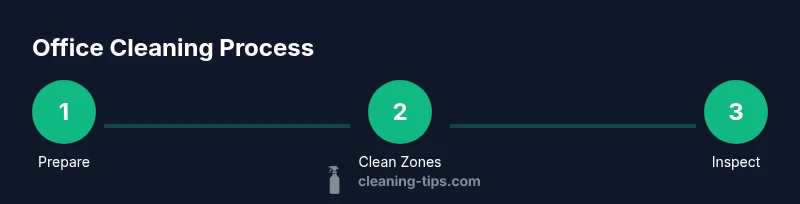
Clean zone by zone, following the established order: dust, sanitize, and inspect. Move to the next zone only after finishing the current one.
Tip: Use color-coded tools to avoid cross-contamination between zones. - 5
Clean floors and soft surfaces
Vacuum carpets and mop hard floors. Allow floors to dry fully before employees return to work areas.
Tip: Spot-clean spills immediately to prevent staining. - 6
Empty waste and refresh spaces
Empty trash, replace liners, and wipe down trash cans. Refresh break rooms with clean towels and stocked supplies.
Tip: Check restrooms and kitchens for any lingering odors. - 7
Final checks and touch-ups
Do a final walk-through to catch missed spots and ensure everything looks presentable. Update inventory if supplies ran low.
Tip: Keep a running list of needed supplies. - 8
Document and review
Record results in a central log and note any issues for follow-up. Review the plan weekly and adjust as needed.
Tip: Schedule a quick weekly review with the team.
Questions & Answers
What is the first step to start an office cleaning program?
Begin with a quick audit of the space to identify high-traffic zones and high-touch surfaces, then set a baseline cleaning schedule.
Start with an audit of high-traffic areas and then set a baseline cleaning schedule.
How often should high-touch surfaces be sanitized in an office?
High-touch areas should be sanitized multiple times per day, especially during peak usage or illness seasons.
Sanitize high-touch areas several times daily, especially at peak times.
Are green cleaning products as effective as traditional ones?
Green products can be as effective when properly chosen and used with correct dilution and contact times. Look for EPA-registered options.
Green products can be effective if used correctly and with proper contact times.
How can I train staff to follow the cleaning plan?
Provide hands-on training, simple checklists, and a quick onboarding guide. Pair experienced cleaners with new hires for mentorship.
Use hands-on training and clear checklists to onboard new cleaners.
What should I do if there's a spill outside of cleaning hours?
Contain the spill with absorbent materials, report to facilities, and schedule a quick follow-up cleaning as needed.
Contain the spill and report it for follow-up cleaning.
Watch Video
The Essentials
- Establish a clear, written cleaning plan.
- Zone spaces to optimize efficiency.
- Prioritize high-touch surfaces.
- Choose eco-friendly products when possible.
- Document results to enable continuous improvement.