Clean and Unclean Food in the Bible: A Comparative Look
A rigorous, analytical comparison of Old Testament clean/unclean dietary rules and New Testament perspectives, exploring historical context, key passages, and practical modern application for households and communities.


TL;DR: The debate over clean and unclean food in the bible compares Old Testament dietary laws with the New Testament shift toward dietary freedom in Christ. This quick answer highlights how Levitical rules defined ceremonial purity, how Jesus and the early church reframed those categories, and what modern readers should consider when applying biblical food guidance in everyday life. It emphasizes context, purpose, and practical relevance.
Overview of clean and unclean food in the bible
The concept of clean and unclean food in the bible appears most prominently in Leviticus 11 and Deuteronomy 14. It defined which animals were permissible for Israelites to eat and established ritual boundaries that connected diet to worship, purity, and communal identity. This framework is not simply about nutrition; it embeds theological meaning, ritual practice, and social order. In this analysis we treat the phrase as a historical descriptor, not a universal command for all readers. Across the biblical narrative, the categories extend beyond dietary taste into questions of holiness, stewardship, and community responsibility. For modern readers, this examination emphasizes context and purpose, helping to distinguish between ancient ritual prescriptions and enduring ethical principles.
Within the broader biblical canon, scholars note that clean and unclean food in the bible often intersects with purity codes, sacrifice practices, and covenant fidelity. The aim is not only to regulate consumption but to teach the community about cleanliness, obedience, and reverence. Readers must weigh the ceremonial dimensions against broader theological themes such as mercy, inclusion, and responsibility to the vulnerable. This opening section sets the stage for a careful, historically grounded comparison that honors the text while acknowledging its interpretive layers.
Historical context: Mosaic law and Leviticus
Understanding the clean vs. unclean distinction requires situating it within Mosaic law and the covenantal framework of ancient Israel. Leviticus presents explicit lists of approved and prohibited categories—land animals, aquatic life, birds, and even creatures considered ceremonially impure. These rules emerged in a context of priestly service, temple worship, and communal identity. The logic traced in the law connects dietary discipline with ritual purity, preparing the people for worship in a way that underscores surrender to the divine command. Deuteronomy expands the discourse by recasting some provisions in a covenantal lens, emphasizing obedience and the consequences of covenant faithfulness. For students of biblical ethics, the mosaic dietary code is best read not as a standalone cookbook but as a system designed to shape character, communal practice, and milestones of faith.
What qualifies as clean or unclean
The lists of clean and unclean foods in the bible categorize animals by observable traits: land animals that chew cud and have split hooves are clean; sea creatures must have fins and scales; birds of prey and winged insects with wings over six legs are considered unclean. The rationale behind these distinctions intertwines ritual purity with agricultural and dietary practices. Importantly, the criteria reflect ancient worldviews and temple-centered worship rather than universal health guidelines. Readers today should recognize that the system served as a teaching tool—presenting order, discipline, and a shared moral imagination—rather than a comprehensive medical standard. Interpreters emphasize the symbolic dimension of these categories and the way they structured holiness within a community.
Ceremonial purity vs moral principle
A central challenge in the clean and unclean food in the bible discussion is separating ceremonial purity from enduring moral principle. Ceremonial laws governed ritual cleanliness tied to temple service, sacrifices, and communal worship. In contrast, moral principles—such as compassion, honesty, and care for the vulnerable—transcend dietary specifics. Many scholars argue that Jesus’ ministry invites readers to distinguish between ritual requirements and ethical living. The gospel narratives show him challenging ceremonial rigidity when it obscured love, mercy, and justice. This distinction—ceremonial purity versus moral impact—helps readers decide what applies in modern life without reducing faith to a model of dietary compliance.
Jesus and Acts: shift from ritual to principle
The trajectory from Jesus’ ministry through the book of Acts marks a turning point for how believers understand dietary rules. Jesus reorients purity concerns by foregrounding mercy and faith over ritual performance. In Acts 10, Peter’s vision opens the door to eating with Gentiles, signaling a move away from strict kosher boundaries. The apostle Paul reinforces the shift in Romans 14 and 1 Corinthians 8–10, arguing that personal conscience and love for others must govern practices that could cause disagreement within the body. While this does not erase all dietary discussion, it reframes it from obedience to ceremonial rules toward principled liberty guided by wisdom, unity, and neighbor love. For contemporary readers, this passage invites a careful balance between personal conscience and communal impact.
Interpretive approaches across denominations
Across Christian traditions, interpretations of clean and unclean food in the bible vary. Some communities maintain traditional dietary laws as part of cultural heritage or worship practice, while others emphasize freedom in Christ and interpret dietary instructions as historically contextual. The interpretive spectrum includes covenantal, ethical, and hermeneutical approaches that prioritize different aspects of the text—covenant identity, social justice, or spiritual discernment. A rigorous study acknowledges both continuity and change, recognizing that the biblical authors wrote within distinct communities and moments. This section surveys notable perspectives, providing readers with a framework to evaluate their own tradition’s stance while respecting pluralism within the broader Christian family.
Practical guidance for modern homes
Bringing the ancient conversations about clean and unclean food in the bible into modern kitchens requires prudent, compassionate discernment. For many households, the focus shifts from codifying dietary rules to cultivating habits that align with informed conscience, personal health, and ethical considerations. Practical steps include understanding the historical context behind dietary texts, discussing food choices with household members, and avoiding legalistic policing that undermines community unity. In addition, readers can apply principles of hospitality, care for vulnerable neighbors, and stewardship of resources—values that are consistent with biblical ethics even when specific food laws no longer govern everyday meals. The key is to translate ancient principles into present-day habits that reflect love, responsibility, and thoughtful discernment.
Common myths and misreadings
Misreadings of clean and unclean food in the bible often arise from taking ancient categories as universal dietary commands. Another frequent error is treating New Testament passages as a blanket rejection of all distinctions without considering context. A careful approach differentiates ceremonial symbolism from moral imperatives and avoids equating purity rituals with medical advice. Skepticism about textual interpretation should give way to patient exegesis, cross-referencing with historical scholarship and contemporary theology. By identifying myths about dietary purity, readers can pursue a more accurate, respectful understanding of how biblical texts address holiness, community life, and ethical conduct.
Comparison
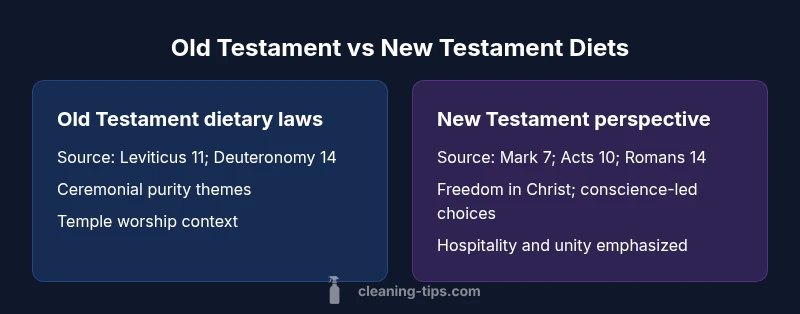
| Feature | Old Testament dietary laws (clean/unclean) | New Testament dietary perspective (freedom in Christ) |
|---|---|---|
| Source passages | Leviticus 11; Deuteronomy 14 | Mark 7; Acts 10; Romans 14 |
| Core distinction | Ceremonial purity and ritual identity | Fulfillment in Christ; emphasis on conscience and neighbor |
| Health interpretations | Historically framed within purity rites; not medical guidance | Primarily ethical and relational—health is contextual |
| Ritual practice | Priestly enforcement; specific dietary bans and sacrifices | Less emphasis on universal dietary commands; focus on ethics |
| Modern applicability | Varies by tradition; some preserve cultural laws | Principle-based approach guided by Christian liberty |
| Best for | Communities emphasizing covenant identity and holiness | Christian liberty and pastoral application |
Strengths
- Provides historical clarity on ceremonial purity and how it shaped communal worship
- Encourages careful distinction between ritual law and ethical principles
- Prompts readers to study scripture with attention to context and purpose
- Fosters respect for diverse Christian interpretations while maintaining core values
Weaknesses
- Can lead to confusion if readers treat ancient rules as universal today
- Risk of legalistic readings when ritual specifics are overemphasized
- Potentially diverts focus from gospel-centered ethics if not balanced
- Ambiguity around modern dietary practices in diverse church contexts
New Testament perspective offers greater flexibility for modern believers while preserving historical insight
The shift from ritual purity to gospel liberty clarifies how to apply biblical food guidance today. A principled approach respects historical context and community impact, helping readers avoid legalism while embracing ethical living.
Questions & Answers
What are the clean and unclean foods listed in Leviticus 11?
Leviticus 11 enumerates several categories of clean foods (such as land animals that chew cud and have split hooves, certain fish with fins and scales) and lists unclean options (like predatory birds and creatures without fins). The passage frames purity within ritual worship and covenant faithfulness, not a general health manual. Keep in mind that these prescriptions served a ceremonial purpose for an ancient Israelite audience.
Leviticus 11 outlines which animals are clean and unclean for ceremonial purposes in ancient Israel, not a universal health guide.
Are Christians still bound by dietary laws today?
Most traditions understand the New Testament as shifting the emphasis from ritual dietary restrictions toward principles of love, conscience, and neighborly care. While some groups retain cultural or religious food practices, there is no universal Christian obligation to follow Old Covenant dietary bans. The broader message emphasizes freedom in Christ balanced by wisdom and community harmony.
Most Christians aren’t bound by Old Testament dietary bans, but should follow wise, loving practices.
How does Acts 10 influence the view on clean foods?
Acts 10 presents Peter’s vision and guidance that God has made all foods clean, signaling a move beyond strict dietary boundaries. This event, together with Paul’s discussions in Romans 14 and 1 Corinthians 8–10, supports a liberty-based framework for meals within a community, so long as love and unity are protected.
Acts 10 shows God opening dietary limits, encouraging liberty—paired with responsible community conduct.
What is the difference between ceremonial cleanliness and moral law?
Ceremonial cleanliness concerns ritual purity and temple worship, while moral law concerns character and ethics (love, justice, mercy). The former is typically tied to specific rites and times, whereas the latter endures across contexts and cultures. In biblical studies, readers look for how ceremonial rules illuminate deeper moral aims rather than prescribing universal behavior today.
Ceremonial cleanliness is about ritual purity; moral law teaches timeless ethics like love and justice.
How should modern households study these passages?
Approach these passages with historical context, consider your faith tradition, and focus on principles rather than exact rules. Discuss food choices with household members, seek guidance from trusted scholarship, and prioritize hospitality and care for others. The goal is informed discernment, not legalistic adherence.
Study with history in mind, talk with your community, and focus on principles and compassion.
What resources help with deeper study of biblical dietary laws?
Consult biblical commentaries, scholarly articles on Leviticus and Acts, and reputable theology journals. Cross-reference passages to understand the covenantal framework and its implications for modern ethics. Worship communities and seminary resources can also offer helpful perspectives for balanced interpretation.
Look to scholarly sources and trusted theologians for deeper, balanced interpretation.
The Essentials
- Interpret historical dietary rules within their covenantal context
- Differentiate ceremonial purity from enduring ethical principles
- Recognize Acts 10 and Pauline teaching as turning points
- Apply biblical insights with conscience and neighbor love
- Consult scholarly resources to navigate denominational differences