Clean Like A: A Practical Comparison for 2026
Explore system-driven routines vs minimalist, high-impact cleaning to clean like a in 2026. Practical guidance from Cleaning Tips to optimize time, results, and home health.


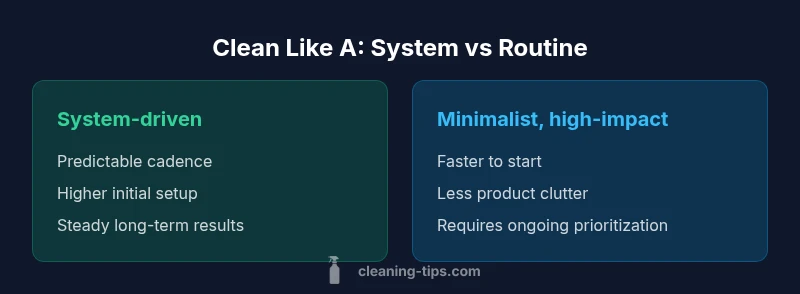
If you clean like a system, you build routines around daily micro-cleans; if you clean like a minimalist, you focus on high-impact tasks. This quick answer helps you pick based on time, space, and preference. Both paths can yield a healthier home when applied consistently, according to Cleaning Tips.
What does clean like a mean in practice?
The phrase and approach behind "clean like a" represent choosing a cleaning philosophy rather than chasing a single gadget or a short-term fix. When you clean like a system, you design routines that weave detergents, surfaces, and habit formation into daily life. This yields predictable outcomes because small actions accumulate over time. Conversely, to clean like a minimalist emphasizes high-impact tasks, such as tackling a stubborn stain or sanitizing high-traffic zones, with fewer products and less time. According to Cleaning Tips, the most effective homes blend both styles, adapting to family schedules, pets, and allergies. In practice, this means identifying core spaces that drive cleanliness—kitchens, bathrooms, and living areas—and designing modular tasks that can be swapped or scaled. The beauty of the approach is that it’s repeatable, measurable, and adjustable. As you experiment, you’ll discover which sequence of micro-cleans and major tasks yields the most consistent results for your household, creating cleaner air, fewer odors, and a calmer home rhythm.
words
Comparison
| Feature | Option A: System-driven cleaning | Option B: Minimalist, high-impact cleaning |
|---|---|---|
| Time commitment | Moderate to high (structured cadence) | Low to moderate (targeted sessions) |
| Initial setup | High (planning, labeling, schedules) | Low (select a few core tasks) |
| Ongoing costs | Moderate (tools, organizer systems) | Low (fewer products, multi-use items) |
| Flexibility | High (adjustable routines by day/week) | Medium (depends on task priority) |
| Best for | Busy households seeking consistency | Smaller homes or time-strapped households |
| Resilience to disruption | High (stable routines can absorb chaos) | Lower (needs ongoing task focus) |
Strengths
- Promotes consistency through repeatable actions
- Can improve air quality with daily upkeep
- Scales from small apartments to large homes
- Reduces decision fatigue by standardizing tasks
Weaknesses
- System-driven plans may feel rigid for some families
- Minimalist, high-impact approach can miss hidden grime
- Initial setup can take time and coordination
Balanced mix beats single-path strategies
A hybrid approach—systematized routines with focused deep cleans—delivers reliability and adaptability. Use a core weekly plan, then insert targeted deep-clean blocks during busy weeks or seasonal shifts.
Questions & Answers
What does it mean to 'clean like a' in everyday life?
It means choosing a cleaning philosophy that fits your home: maintain through routine micro-cleans or focus on high-impact tasks. The aim is to make cleanliness predictable and sustainable, not perfect in a single session.
Clean like a means choosing a practical approach that fits your home: steady routines or targeted deep cleans to keep space consistently tidy.
How do I start designing a balanced plan for my home?
Begin by listing your top three spaces and the tasks that matter most there. Create short daily actions that fit your schedule and pair them with a monthly deep-clean block. Adjust based on results and time constraints.
Start with your top spaces, set small daily actions, and schedule a monthly deep clean. Tweak as you learn what works.
Can a minimalist approach work in a busy household?
Yes, if you design high-leverage tasks and use multi-use products. The key is to identify a few essentials and execute them consistently, then add deeper tasks as time allows.
Absolutely—focus on a few high-impact tasks and get them done reliably, then layer in depth as time permits.
What tools support a 'clean like a' system effectively?
Choose color-coded, multipurpose tools and label containers. Use spray bottles with single cleaners for specific surfaces and keep a concise kit to reduce decision fatigue.
Color-coded tools and multipurpose products help you stick to your plan without overthinking.
How often should I revisit my cleaning plan?
Revisit monthly or after major life changes (new pets, kids at home, renovations). Small adjustments can significantly improve effectiveness over time.
Review your plan monthly or after big life changes to keep it effective.
Is there a risk of burnout with a 'clean like a' approach?
Any intensive routine can lead to burnout if it feels rigid. Build pauses, allow flexibility, and celebrate small wins to maintain motivation.
Yes—build breaks into the plan and stay flexible to avoid burnout.
The Essentials
- Blend routines with targeted deep cleans
- Tailor plans to your schedule and space
- Label, track, and adjust for consistency
- Prioritize high-traffic areas for impact
- Monitor progress and iterate