Clean Like a Monk: Minimalist Cleaning for a Healthier Home
Adopt a monk-inspired cleaning routine with minimal products, steady habits, and mindful practices to keep a healthier home. Learn practical steps, tools, and routines from Cleaning Tips.


Goal: clean like a monk with a minimalist toolkit and reliable routine. This guide shows how to build a simple, repeatable cleaning process that fits a busy life, plus a compact supplies kit and a durable schedule. By following 8 practical steps, you’ll reduce clutter, save time, and improve indoor air quality while keeping surfaces spotless.
Embrace a monk-like mindset to cleaning
To clean like a monk, you adopt a minimalist, intentional approach. The goal is consistency, not perfection, so you focus on routines rather than chasing after every new product. According to Cleaning Tips, true cleanliness comes from habits that reduce clutter and friction. The phrase clean like a monk captures a discipline that translates into your home—calm spaces, fewer bottles, and less mental load. Start with a mental model: one area, one tool, one task at a time, and maintain a cadence you can sustain.
Define your core cleaning rituals
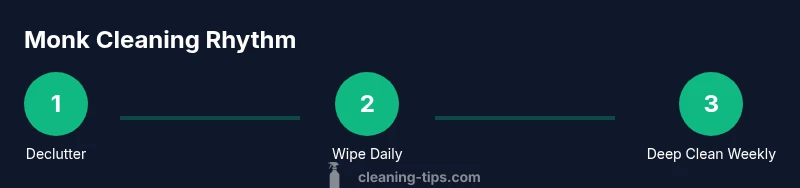
A minimalist cleaning routine rests on three core rituals. First, a quick daily wipe of high-touch surfaces to prevent grime buildup. Second, a weekly deep-clean session focused on the most used spaces. Third, a monthly reset that reorganizes, purges duplicate supplies, and refreshes storage. Each ritual should be short enough to fit into a busy schedule, yet consistent enough to deliver noticeable results. This rhythm reduces decision fatigue and makes cleaning predictable rather than chaotic.
Tools and supplies for a minimalist kit
Choose tools that do one job well and can be used across multiple surfaces. A small set of microfiber cloths, a spray bottle, white vinegar, baking soda, a non-abrasive sponge, and mild dish soap form a versatile core. Add a bucket, lint-free dusters, and a timer for structure, but keep optional items to a minimum. The goal is to minimize cost and clutter while maximizing cleaning power. With this kit, you can tackle most tasks without subscribing to a hundred specialty products.
How to translate ideas into action: a practical routine
This section connects the philosophy to concrete steps. Start with a 10-minute declutter before any cleaning to clear the most visible surfaces. Follow with 2-3 minutes of daily wipes, 20-30 minutes for a weekly reset, and a longer 60-minute monthly purge. The routine emphasizes order, efficiency, and repeatability, so you build momentum rather than burning out. A compact kit stays in a single cabinet or lazy Susan for easy access.
Habits that sustain monk-like cleanliness
Consistency beats intensity. Set a fixed time each day for a quick wipe, a scheduled Sunday reset, and a midweek tidying session. Use alarms or calendar reminders to reinforce the habit. Keep surfaces dry and storage labeled to prevent re-accumulation of clutter. These habits support better air quality by minimizing chemical use and reducing dust habitats.
Tackle stains without adding clutter
For stains, start with a gentle approach: damp microfiber, warm water, and a tiny amount of dish soap. For tougher spots, a baking soda paste can exfoliate without harsh scrubs. Avoid mixing cleaning agents or using heavy abrasives that damage finishes. Test any cleaner on a hidden area first, especially on delicate surfaces like wood or granite.
Renters vs homeowners: tuning the routine
Renters often face restrictions on products and storage. Adapt by using multi-surface cleaners and reusable cloths that won’t damage walls or floors. Homeowners can expand the kit slightly but should still aim for simplicity and predictable routines. In either case, the monk-cleaning mindset remains the same: fewer products, smarter habits, steady cadence.
Maintenance mindset: healthier home, healthier you
A minimalist approach reduces exposure to fumes and harsh cleaners, supporting better indoor air quality. Small, repeatable actions accumulate into a noticeably cleaner home and a calmer mind. The key is to treat cleaning as a daily ritual rather than a sporadic chore, which aligns with a mindful, health-forward lifestyle.
Tools & Materials
- Microfiber cloths (assorted sizes)(2-3 cloths; use damp cloths for most tasks)
- Empty spray bottle(Fill with water or diluted cleaner)
- White distilled vinegar(Dilute for general surfaces)
- Baking soda(For gentle abrasion and deodorizing)
- Non-abrasive sponge(Avoid scratches on delicate surfaces)
- Mild dish soap(For grease and light soils)
- Bucket or small basin(Optional; for rinsing fabrics or tools)
- Dusting tool (microfiber duster)(Use as needed for ceiling/ledge areas)
- Timer or smartphone(Track step durations and keep pace)
- Trash bags(For decluttering and disposal)
Steps
Estimated time: 2 hours
- 1
Declutter and prep
Clear visible surfaces and toss obvious trash. This baseline step prevents re-cleaning and helps you see what truly needs attention.
Tip: Set a 5-minute timer to keep this step focused. - 2
Wipe high-touch surfaces daily
Use a damp microfiber cloth to wipe counters, light switches, and doorknobs. A quick daily wipe prevents grime buildup.
Tip: Wipe from clean to dirty to avoid recontamination. - 3
Dust from top to bottom
Start with ceiling corners and shelves, then work down to tables. Dust captures can settle on surfaces you’ll clean later.
Tip: Use a microfiber duster to trap dust rather than push it around. - 4
Kitchen quick cleanse
Wipe counters and the sink with a mild solution. Rinse and dry to prevent watermarks and residue.
Tip: Keep a single spray bottle for all-purpose use. - 5
Bathroom wipe-down routine
Wipe sink, mirror, and toilet weekly or as needed. Use baking soda paste for tough soap scum if safe for fixtures.
Tip: Avoid vinegar on natural stone surfaces. - 6
Floor care basics
Vacuum or sweep before mopping with a minimal amount of solution. Dry floors quickly to prevent slips and streaks.
Tip: Use separate mop head for bathrooms to reduce cross-contamination. - 7
Refresh textiles
Launder towels and pillowcases monthly or when needed. Use hot water if fabrics allow it.
Tip: Bundle textiles to minimize laundry trips. - 8
Monthly reset and audit
Review storage, purge duplicates, and reorganize spaces. Refill only what you truly use.
Tip: Schedule the audit on a consistent day each month.
Questions & Answers
What does 'clean like a monk' mean in practice?
It means simplifying your toolkit and routines to keep your home clean with mindful, repeatable habits rather than chasing every new product.
It means simplicity, consistency, and mindful cleaning habits.
Which items are essential in a minimalist cleaning kit?
An essential kit includes microfiber cloths, a spray bottle, a mild cleaner like dish soap or vinegar, baking soda, a sponge, a timer, and trash bags. This covers most surfaces with minimal clutter.
A small, versatile kit covers most surfaces without clutter.
Can vinegar and baking soda be used on all surfaces?
Vinegar and baking soda are versatile but not universal. Test on delicate surfaces and avoid acids on natural stone or untreated wood.
Test first on a hidden area; avoid stone and certain woods.
How often should I deep clean?
Aim for a monthly deep clean of one area and a quarterly refresh of storage spaces, in addition to your daily and weekly rituals.
Do a bigger clean monthly and refresh storage quarterly.
Is this approach suitable for renters?
Yes. Use multi-surface cleaners and compact tools to minimize damage risk and storage needs, while maintaining a simple routine.
Perfect for renters with limited storage and restrictions.
How do I maintain air quality with fewer products?
Choose non-toxic cleaners, ventilate during cleaning, and reduce fragrance products to minimize indoor air pollutants.
Ventilate and use fewer chemicals for cleaner air.
Watch Video
The Essentials
- Start with decluttering to reduce cleaning time
- Keep a compact kit to minimize waste and storage
- Build a repeatable routine to sustain results
- Prioritize safety and surface compatibility to protect your home