Clean vs Salvage Title: A Comprehensive Comparison
A rigorous comparison of clean vs salvage title, detailing definitions, financing, insurance, legal considerations, and how to decide which title type fits your needs.


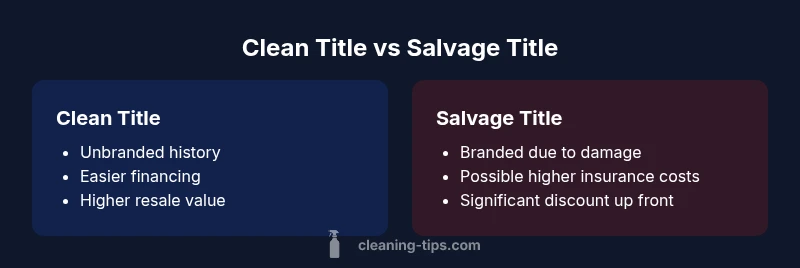
When buying or insuring a vehicle, the clean vs salvage title distinction matters: a clean title usually means easier financing, fewer insurance hurdles, and higher resale value, while a salvage title signals significant prior damage and branding that can complicate lenders and insurers. For most buyers, a clean title is the safer, more flexible option, but a salvage title can be acceptable if fully disclosed, properly repaired, and legally cleared. In short, the title type drives cost, risk, and future resale.
What clean vs salvage title means and why it matters
Understanding the clean vs salvage title distinction is essential for any vehicle purchase or sale. According to Cleaning Tips, the term clean vs salvage title is not just jargon; it signals how a vehicle has been branded by the state and how that branding affects finance, insurance, and resale. A clean title indicates no branded history—no brands such as salvage, rebuilt, or flood. A salvage title shows the vehicle has experienced substantial damage or loss, and the insurer branded it accordingly. This distinction can influence how a dealer prices the car, the type of loan you can secure, and even whether a future buyer will be willing to pay a premium. For homeowners tackling this topic, the clean vs salvage title decision also maps onto broader questions about risk tolerance, documentation quality, and long-term maintenance plans. In many markets, the clean vs salvage title phrase is used interchangeably by non-experts, but the nuance matters when you’re evaluating safety, reliability, and total cost of ownership.
What is a clean title and what does a salvage title really mean?
A clean title signifies a vehicle with an unbranded history—no brand lies on the record due to significant damage, flood, or theft. A salvage title, by contrast, indicates the vehicle has sustained damage severe enough to be deemed a total loss by an insurer or to require branding under state law. The phrase clean vs salvage title is more than semantics: it governs disclosure obligations, the pool of potential buyers, and the likelihood of obtaining favorable financing. When you see clean vs salvage title in listings, you should expect a different journey through appraisal, inspection, and registration processes. The most important point is transparency: ensure any claimed salvage status has a verifiable report and that repairs were performed to acceptable safety standards before considering a purchase.
The practical effect on cost and resale value
Vehicle pricing typically reflects title branding. In many cases, a clean title buyer will enjoy a wider pool of lenders and insurance options, plus stronger resale demand. The clean vs salvage title difference can translate into lower overall cost of ownership over the life of the vehicle. Conversely, salvage-branded vehicles often command a discount, but that discount can be offset by higher insurance costs, restricted financing, and a slower sales cycle. For the long-term owner, the choice between clean and salvage titles hinges on how much risk you’re willing to assume for potential savings up front. In this context, the clean vs salvage title decision should be evaluated through a total-cost lens, not just the purchase price.
Step-by-step overview of the owning path for a salvage title
If you’re pursuing a salvage-title vehicle, you should expect a process that includes documentation gathering, repair verification, and potential inspections to qualify for a rebuilt or branded title. The title brand will stay on the record, even after repairs are completed, in most states. This can affect insurance coverage limits, loan terms, and potential future sale. The clean vs salvage title decision thus hinges on both paperwork quality and trusted mechanics who can certify safety and repair quality. While it may be tempting to chase a bargain, the long-term consequences of a salvage title—especially if not properly disclosed—can undermine confidence among buyers and lenders. Careful due diligence reduces risk and improves outcomes.
Practical guidance for buyers and sellers in the clean vs salvage title landscape
For buyers, the key is to verify title branding, examine repair receipts, and obtain a vehicle history report before committing. For sellers, full disclosure, complete repair documentation, and a transparent narrative around the title status improve buyer trust and reduce post-sale disputes. In the end, the choice between a clean title and a salvage title should balance upfront savings with the reality of financing hurdles, insurance considerations, and resale prospects. The clean vs salvage title path is not just about the present moment; it sets the terms for decades of ownership and peace of mind.
How to navigate the clean vs salvage title decision in different states
State rules on branding, rebuilds, and title transfers can vary widely. The clean vs salvage title decision is therefore not universal; always check your state’s DMV or motor vehicle administrator for exact definitions and required forms. In some states, a salvage title can be rebuilt and converted to a clean title after an inspection and a formal process; in others, branding remains on the record and significantly affects resale. The dynamic means you should treat the decision as both a financial decision and a compliance decision, ensuring you understand local requirements and timelines.
Confidential verification: how to spot scams and protect yourself
The clean vs salvage title topic attracts scams that try to misrepresent branding or sell rebuilt vehicles without proper disclosures. Always request official title documents, VIN-level history, and independent inspection results. If a seller resists providing documents or claims the brand is “not important,” walk away. A thorough, transparent approach to the clean vs salvage title question protects you from costly post-purchase problems and sets you up for a smoother ownership experience.
Authority sources and what reputable data say about title brands
When evaluating the clean vs salvage title, turn to authoritative sources to corroborate claims about branding, insurance, and financing. For instance, industry and government publications explain how brands work, what lenders require, and how to interpret history reports. Consumer protection agencies emphasize the importance of disclosure and documentation, especially with salvage-title purchases. In all cases, rely on credible references to inform your decision and avoid relying on rumor or incomplete history.
Comparison
| Feature | Clean Title | Salvage Title |
|---|---|---|
| Definition | Unbranded history; no major damage branding | Branded due to significant damage or loss; may be rebuilt later |
| Insurability | Typically easier; standard policy terms apply | Often requires specialized underwriting or higher premiums |
| Financing Availability | Wider lender pool; standard down payments often possible | Lenders may require larger down payment or have restrictions |
| Resale Value | Higher demand and faster sale with transparent history | Discounted price; potential buyer skepticism persists |
| Disclosure Requirements | No branded title disclosure needed beyond standard history | Full disclosure of branded status is typically required |
| Repair and Inspection Needs | No mandatory branding after repairs if not damaged | Often requires documented repairs and a rebranding process |
| State Variations | Brand definitions and processes vary by state | Branded titles and rebuild processes vary widely by state |
| Recovery Path | Stable history post-purchase with proper maintenance | Recovery path can be lengthy and state-dependent |
Strengths
- Cleaner title status generally eases financing and insurance
- Better resale opportunities and broader buyer pool
- Lower risk of downstream title disputes for buyers
- Standardized disclosures reduce buyer confusion
- More negotiation flexibility with a clean title
Weaknesses
- Salvage titles may offer upfront price savings
- Financing and insurance can be stricter or costlier with salvage
- Branding reduces market demand and resale speed
- Repair documentation and rebuild inspections add complexity
A clean title is the safer default for most buyers, but salvage titles can be viable with full transparency and proper inspection.
For typical buyers, prioritizing a clean title minimizes financing risk and preserves resale value. Salvage titles should only be pursued with rigorous documentation, trusted repairs, and readiness to navigate stricter insurance and lending conditions.
Questions & Answers
What is a clean title and how does it differ from a salvage title?
A clean title indicates no branded history of major damage or loss. A salvage title indicates the vehicle has been branded due to significant damage or a total loss. The distinction impacts financing, insurance, and resale, so buyers should verify branding in vehicle history reports and rely on independent inspections.
A clean title means no branding from damage; a salvage title shows branded damage. Verify branding on the history report and get an independent inspection.
Can I finance a car with a salvage title?
Some lenders offer financing for salvage-title vehicles, but terms are often stricter, with higher down payments or interest rates. Availability varies by lender and state. Always check lender requirements before committing to a salvage-title purchase.
Some lenders will finance salvage-title cars, but terms are stricter and down payments higher. Check with your lender before buying.
How does a salvage title affect insurance?
Insurance options may be limited or more expensive for salvage titles. Some insurers restrict coverage, require specialized policies, or impose higher deductibles until the vehicle passes additional inspections. Always confirm with a few carriers.
Salvage titles can limit options or raise premiums; verify with multiple insurers before purchase.
Is a rebuilt or branded title the same as a salvage title?
A salvage title may be branded; after repairs and inspections, it can be rebranded as rebuilt in some states. Not all states do this, and practices vary. Always check local DMV guidance and obtain formal documentation.
A salvage vehicle can become rebuilt in some places, but it depends on state rules—verify with the DMV.
What should I do to verify title history?
Run a comprehensive vehicle history report from a reputable provider, verify VIN matches, and obtain repair invoices and inspection reports. Cross-check branding notes with state records and request confirmation from the seller.
Get a full vehicle history report, check VINs, and ask for repair and inspection docs.
When might a salvage title be worth considering?
Salvage titles can offer significant upfront savings for buyers with strong inspection documents and a plan for future resale. They are riskier and require due diligence, especially around insurance and title stability. Use salvage titles only when you can verify safety and full disclosure.
Salvage titles may be worth it for savings if you can prove safety and disclose everything clearly.
How can I convert a salvage title to a clean title?
Conversion depends on state rules; typically it requires repairs, inspections, and an application to rebrand. In many cases, the vehicle remains branded, but some states allow a rebuild-title process after passing a certified inspection.
Conversion requires state-approved inspections and paperwork; outcomes vary by state.
What are common myths about clean vs salvage titles?
A common myth is that salvage titles are always unsafe. While riskier, many salvage vehicles are safe after proper repair and inspection. Another myth is that all salvage titles are the same across states; branding and processes differ widely.
Salvage titles aren’t automatically unsafe, but they require verification; branding differs by state.
The Essentials
- Check title branding before any purchase
- Ask for complete repair and history reports
- Compare total ownership costs across title types
- Don’t skip a professional inspection
- Plan for longer sale timelines with salvage titles