Deep Clean vs Regular Clean: A Practical Guide for Homes
Compare deep cleaning with regular cleaning to decide when to invest time, effort, and products. This analytical guide outlines definitions, tasks, timing, and best practices for homeowners and renters seeking healthier, cleaner living spaces.


Deep cleaning is a thorough, task-by-task overhaul that sanitizes hidden grime and microbes, while regular cleaning is routine maintenance to keep spaces presentable. For most homes, deep cleaning is not a daily chore but a periodic investment. This guide compares scope, timing, and outcomes to help you decide when to schedule a deep clean versus sticking with regular cleaning.
What deep clean vs regular clean really means
Deep cleaning and regular cleaning are two distinct approaches to maintaining a healthy home. Deep clean vs regular clean targets hidden grime, accumulated dust, and microbe buildup in corners, behind appliances, and inside vents, cabinets, and grout. Regular cleaning focuses on daily or weekly maintenance: wiping surfaces, sweeping floors, and tidying spaces. According to Cleaning Tips, a deep clean is a periodic, thorough overhaul designed to reset cleanliness to baseline levels, while a regular clean sustains that baseline. Understanding this distinction helps homeowners and renters plan tasks, allocate time, and set realistic expectations. This is especially true for households dealing with allergies, pets, or high-traffic areas. In practice, most homes benefit from both: a planned deep clean every few months and a consistent routine to prevent grime from returning quickly. Recognizing the difference empowers you to schedule the right task at the right time.
Scope and tasks: what each includes
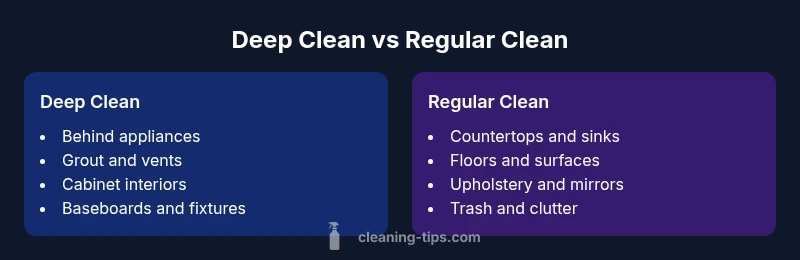
Deep clean tasks go beyond visible surfaces. In the kitchen, you’ll inspect and clean behind appliances, scrub grout, descale taps, clean the interior of the oven and range hood, and wipe cabinet interiors. In bathrooms, you’ll tackle grout lines, caulk where needed, clean vents, and remove soap scum from shower doors and glass. Living areas get baseboards, window tracks, ceiling fans, light fixtures, and under furniture. Laundry rooms and entrances may receive appliance interiors and cabinet shelves. Floors may be steam-cleaned or mopped with attention to corners. Regular cleaning covers the basics: wipe countertops, wash sinks, sweep and mop floors, dust surfaces, vacuum upholstery, and empty trash. In addition, Cleaning Tips emphasizes that both approaches benefit from a consistent routine and seasonal refreshes to keep spaces comfortable and healthy.
Frequency and timing: when to schedule
Most households maintain a regular cleaning cadence of weekly or biweekly maintenance to prevent grime buildup. A deep clean, by contrast, is typically scheduled every 3–6 months for standard homes, more often for families with children, pets, or high traffic, and after big events, renovations, or seasonal changes. The exact timing depends on factors like air quality, allergy sensitivity, and whether you’ve recently moved in or hosted gatherings. Framing deep cleaning as a seasonal ritual helps ensure it doesn’t slip off the calendar, while daily and weekly chores keep surfaces—and minds—clear between sessions.
Time, effort, and cost considerations
Time and effort matter as much as the actual cleaning. A regular clean might take 1–3 hours for a small apartment and 2–4 hours for a larger home when done by a single person. A deep clean can require 6–12 hours and is often performed over multiple sessions or by a team, especially in larger homes. Cost considerations vary with DIY versus professional services. DIY supplies are generally lower in upfront cost but require your time and energy, while professional deep-clean services carry higher price tags but offer efficiency and specialized equipment. Cleaning Tips notes that costs, like effort and time, vary widely by home size, condition, and geographic region. With planning, you can balance DIY tasks and pro help to fit your budget and schedule.
Tools and products you’ll need
A deep clean benefits from a focused toolkit: scrub brushes with stiff bristles for grout, microfiber cloths for streak-free finishes, a steam cleaner or extractor for floors and upholstery, hydrogen peroxide or enzyme cleaners for tough stains, a dedicated oven and range hood cleaner, and an infrared thermometer or hygrometer to monitor humidity and mold-prone areas. Regular cleaning relies on essential cleaners such as all-purpose sprays, bathroom cleaners, glass cleaners, a vacuum with attachments, and a quality mop or steam mop. Having a checklist of rooms and tasks helps ensure you don’t miss hidden areas during a deep clean, while reserving lighter tools for the day-to-day upkeep keeps costs manageable. Always follow label directions and ensure good ventilation when using chemical cleaners.
Safety and hygiene considerations
Safety matters during any cleaning regimen. Wear gloves, masks when appropriate, and eye protection for potent chemicals. Ventilate spaces well, especially in kitchens and bathrooms where fumes can accumulate. For allergy-prone homes, consider HEPA-filter vacuums and air purifiers. Store cleaners out of reach of children and pets, label containers clearly, and never mix cleaners that can react dangerously. Cleaning Tips emphasizes the importance of a well-ventilated plan for both regular cleaning and deep cleaning, particularly in moisture-prone rooms like bathrooms and basements. Regularly inspecting hidden spaces—behind appliances, under sinks, and in ventilation intakes—helps prevent mold and moisture-related issues that could affect indoor air quality.
Scheduling and checklists: a practical plan
Create a two-column plan: regular cleans (weekly) and deep cleans (quarterly). Start with a 6-step approach: (1) assess each room, (2) pick a date for a deep clean, (3) assemble the toolkit, (4) tackle high-impact zones first, (5) document what you did and what needs future attention, (6) schedule the next session. A staged approach works best: begin with the kitchen and bathrooms, then move to living spaces, and finish with floors and vents. Consistency matters, so use calendars or reminder apps to keep on track. Cleaning Tips recommends marking off rooms by priority based on usage and visible grime levels, ensuring you maintain momentum across sessions.
Renters vs homeowners: adapting to constraints
Renters often have limited access to certain areas or appliances and may depend on landlord approval for some tasks (e.g., grout work or appliance replacements). Homeowners can address more thorough improvements, such as resealing grout or repainting as needed. In both cases, a flexible schedule helps: portion the deep clean to areas accessible without disrupting daily life, and align the more invasive tasks with periods when help is available or preferred. Pet households should tailor the plan to reduce exposure to allergens and odors, focusing on washing pet bedding, vacuuming with a HEPA filter, and cleaning air vents regularly.
Measuring success and maintaining results
Success isn’t just about aesthetics; it’s about persistent cleanliness and reduced irritants. Use a simple checklist to rate areas on cleanliness, odor, and humidity levels after each session. Reassess after 2–3 weeks of finishing a deep clean to judge whether a follow-up is needed in specific zones. The goal is to sustain improvements through regular maintenance and a scheduled deep clean. For ongoing health benefits, track indicators like air quality metrics, dust accumulation in problem areas, and surface residues. Cleaning Tips suggests documenting outcomes so you can compare progress over time and refine your routine accordingly.
Comparison
| Feature | deep clean | regular clean |
|---|---|---|
| Definition | Thorough, all-surfaces overhaul tackling hidden grime and microbes | Routine maintenance of visible surfaces and commonly touched areas |
| Scope of tasks | Behind appliances, grout, vents, interiors of cabinets and appliances, baseboards, ceiling fans | Countertops, sinks, floors, dusting, vacuuming, mirrors, trash and clutter control |
| Frequency | Quarterly to biannual, or as needed after events | Weekly to biweekly for standard upkeep |
| Time required (typical) | 6-12 hours total (often split over sessions) | 1-3 hours per session, depending on room count |
| Best for | Homes with allergies, high traffic, after renovations or events | Regular upkeep to prevent buildup and maintain appearance |
| Tools & products | Specialized cleaners, steamers, microfiber tools, professional equipment | Everyday cleaners, basic tools, standard vacuums |
| Cost considerations | DIY: low to moderate product costs; pro options available | DIY-friendly with modest costs; professional services are higher in price |
Strengths
- Addresses hidden grime and microbes for healthier living
- Boosts indoor air quality by reducing dust and contaminants
- Restores the look and feel of kitchens, baths, and floors
- Helps prevent long-term damage by tackling moisture and mold early
- Can increase home value when paired with ongoing maintenance
Weaknesses
- Requires significant time and planning
- Disrupts daily life during multi-room sessions
- May require professional help for large homes or stubborn stains
- Higher upfront effort compared to routine cleaning
Deep cleaning should be scheduled periodically for best hygiene, with regular cleaning sustaining daily cleanliness.
A well-balanced cleaning plan blends a periodic deep clean with steady regular cleans. The deep clean tackles hidden grime and comprehensive areas, while regular cleaning maintains hygiene and prevents buildup. Cleaning Tips recommends treating deep cleaning as a scheduled event and using a consistent routine in between to maximize health and comfort.
Questions & Answers
What is the difference between a deep clean and a regular clean?
A deep clean is a thorough overhaul that addresses hidden grime, mold-prone areas, and interiors not typically touched during routine cleanings. A regular clean focuses on visible surfaces and everyday maintenance. Both are important, but their scope and intensity differ significantly.
Deep cleaning goes beyond daily chores to refresh hard-to-reach areas, while regular cleaning keeps day-to-day spaces tidy.
How often should you deep clean a typical home?
Most homes benefit from a deep clean every 3–6 months, with more frequent sessions for households with pets, children, or allergies. Adjust the cadence based on occupancy, smoke or cooking odors, and moisture levels in bathrooms or basements.
A good rule is to schedule a deep clean a few times a year, depending on your home’s use and needs.
Can you do a deep clean yourself, or should you hire a professional?
Many steps of a deep clean are DIY-friendly, especially surface and organizing tasks. However, professional cleaners bring specialized equipment for grout, vents, and upholstery, and they can complete large homes more quickly.
You can start with a DIY plan, but consider a pro for hard-to-reach areas or a very large home.
Which rooms should you prioritize during a deep clean?
Priority rooms include the kitchen, bathrooms, and living areas where grime and moisture accumulate most. Focus on behind appliances, grout, vents, windows, and high-traffic zones first.
Start with kitchens and bathrooms, then move to living areas and bedrooms.
What tasks are commonly missed in a regular clean but included in a deep clean?
Common misses in regular cleans include behind appliances, grout lines, interiors of cabinets, vent ducts, ceiling fans, and baseboards. A deep clean makes these areas a priority.
Deep cleans catch what routine cleans miss, like grout and behind appliances.
How can you maintain results between deep clean sessions?
Maintain results with a consistent weekly routine, sealing and drying damp areas, promptly addressing spills, and scheduling quick touch-ups to prevent grime from setting in between deeper sessions.
Keep up small daily chores and periodic quick checks to hold onto the deep clean results.
The Essentials
- Schedule a quarterly deep clean for best hygiene outcomes
- Maintain a weekly routine to prevent grime buildup
- Invest in essential tools to simplify deep cleaning
- Involve all household members to spread the workload
- Tailor the plan to your home size, needs, and allergies