Herbal Cleaners Shelf Life: How Long They Last
Learn how long herbal cleaners last, what affects their shelf life, and storage tips to keep homemade cleaners effective and safe for your home.


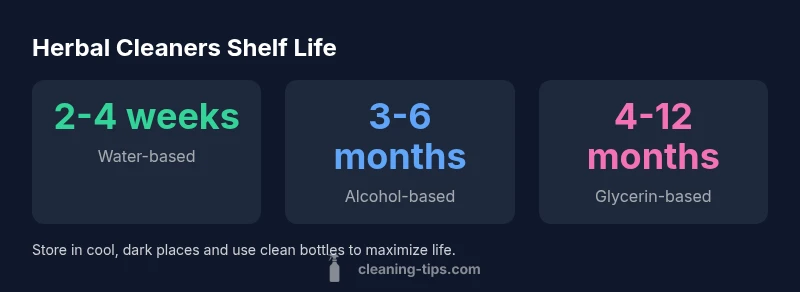
Herbal cleaners don’t have a fixed expiration date; longevity depends on ingredients and storage. In general, water-based blends stay freshest for a few weeks, while alcohol- or glycerin-based cleaners can maintain effectiveness for several months if kept sealed in a cool, dark place. Always check for aroma changes, cloudiness, or separation as signs of degradation.
What determines the shelf life of herbal cleaners
Herbal cleaners vary in longevity because they combine plant extracts with water, alcohol, vinegar, glycerin, or essential oils. For this guide, many readers ask: how long do herbal clean last? The answer depends on formulation and storage conditions. Water-based blends deliver cleaning power quickly but lose potency sooner than those with alcohol or glycerin. Exposure to heat, light, and air accelerates degradation. A careful approach stores any herbal cleaner in a cool, dark place and uses clean, airtight containers to prevent contamination. Freshness is also tied to aroma: a sour or off note usually signals oxidation or microbial growth, even if there is no visible change. If you’re making your own blends, plan to label batches with the date of creation and the base solvent to track aging more accurately. In short, the longevity of herbal cleaners is a function of ingredients, packaging, and storage, not a single universal expiry.
Water-based vs alcohol-based herbal cleaners
Water-based blends rely on water as a solvent; bacteria and mold can grow if the solution contains organic material and is not refrigerated. Alcohol-based formulas use ethanol or grain alcohol as a preservative, slowing microbial growth and extending shelf life. Glycerin acts as a humectant and stabilizer in some blends, which can also extend usability when kept sealed. The stability of these bases shapes the usable window. If a water-based blend is stored in a sealed spray bottle and kept in the fridge, you may see a shorter window; for alcohol-based blends, you may see longer usable windows under similar conditions. Always observe separation, cloudiness, or changes in aroma as potential spoilage signals.
Storage basics that preserve potency
Storage matters almost as much as the recipe. Keep cleaners in airtight bottles made of glass or BPA-free plastic. Store away from direct sunlight and heat sources; a dark cabinet or pantry corner is ideal. Label each bottle with the creation date and base solvent so you can track aging. If you notice the liquid has thickened, shifted color, or produced a strong chemical odor, it’s time to discard and remake. When preparing blends, clean all utensils and rinse bottles to minimize contamination. A simple rule: shorter storage times require stricter hygiene and smaller batch sizes to maintain effectiveness.
How ingredients affect longevity
The base solvent determines how long a cleaner remains usable. Water-based blends are more prone to microbial growth, while alcohol and glycerin provide preservation to different extents. Essential oils can add aroma and may have mild antimicrobial properties, but they can also oxidize and change scent over time. Vinegar-based blends are acidic, which can inhibit some microbes but can degrade certain surfaces if used too frequently. In general, stronger preservatives and alcohol-rich formulas tolerate storage in cooler environments better than water-only mixes.
Practical signs of degradation and safe discard
A cleaner’s degradation signs include a sour or off odor, unusual clouding, separation, or a change in color. If any of these occur, discard the batch regardless of its age. Always err on the side of caution when using homemade cleaners on skin or food-contact surfaces. When in doubt, remake with fresh ingredients in a clean bottle and test on a small inconspicuous area first. Keeping a simple log of batch dates helps you know when to retire older blends instead of guessing.
Making small-batch cleaners for peak freshness
To maximize potency and reduce waste, prepare cleaners in small batches that you can use within a month or two. Use clean equipment, and label bottles with date and solvent type. Consider testing a small amount on a hidden surface before using broadly. A practical approach is to designate a weekly rotation where you use older blends first, ensuring nothing sits unused beyond its safe window. Small-batch projects also reduce the risk of contamination during transfer.
Safe storage containers and labeling practices
Choose amber or cobalt glass bottles for long-term storage to limit light exposure. Use tight-sealing caps to minimize air ingress. Label each bottle with the blend name, base solvent, creation date, and recommended shelf life. In the case of DIY blends, avoid reusing containers that previously held strong solvents without thorough cleaning. A simple, consistent labeling system helps household members understand which blends are freshest and which to retire.
Quick-start test and usage plan
Start with a new bottle of your most-used herbal cleaner and use it for a week or two while monitoring scent, clarity, and effectiveness. Keep a small notebook to track changes and note when you reach the end of the expected window. If you make multiple blends, run a staggered plan where you replace one blend per week. This approach helps you maintain a steady supply of fresh cleaners without risking stale solutions contaminating your cleaning routine.
Shelf life by base solvent for common herbal cleaners
| Herbal blend | Typical shelf life | Storage notes |
|---|---|---|
| Water-based infusion | 2-4 weeks | Refrigerate; seal tightly |
| Alcohol-based extract | 3-6 months | Cool, dark cabinet; shake gently |
| Glycerin-based extract | 4-12 months | Keep sealed; avoid light |
Questions & Answers
What factors most affect the shelf life of herbal cleaners?
The shelf life is mainly influenced by the base solvent, presence of preservatives, exposure to heat and light, and the integrity of the bottle. Water-based blends decompose faster, while alcohol- and glycerin-based blends resist spoilage longer when stored correctly. Always store in a sealed container away from sunlight.
Shelf life depends on the base solvent, preservatives, and storage conditions. Water-based blends go faster; alcohol or glycerin blends last longer when kept cool and sealed.
Can I extend shelf life with essential oils or preservatives?
Essential oils can contribute aroma and minor antimicrobial effects, but they are not reliable preservatives alone. If you’re relying on essential oils for preservation, use small batches and consider adding safe, food-grade preservatives. Always check for changes in scent or texture before reuse.
Essential oils aren’t reliable preservatives. Use small batches and observe changes before reuse.
Should I refrigerate herbal cleaners?
Refrigeration can extend the life of water-based blends by slowing microbial growth, but it’s not always practical for every formula. If you do refrigerate, ensure bottles are tightly sealed and labeled with creation dates. For room-temperature storage, choose stronger bases like alcohol or glycerin and keep them in a cool, dark cabinet.
Refrigeration can help some water-based blends, but choose strong bases for room temperature storage and keep in a dark place.
How can I tell if an herbal cleaner has degraded?
Look for sour or unusual odors, cloudiness, separation, or color changes. If any of these occur, discard the batch and remake with fresh ingredients. Consistent labeling helps you avoid using stale blends.
Odor changes, cloudiness, separation, or color shifts mean discard and remake.
Is it safe to reuse bottles from store-bought cleaners?
Reusing bottles can be safe if you thoroughly wash and sterilize them. Some store-bought bottles may be made of materials not ideal for certain herbal blends. When in doubt, use a clean, dedicated bottle for each blend.
Wash and sterilize bottles, or use dedicated bottles for each blend.
What storage practices help maximize longevity?
Store in airtight containers made of glass if possible, away from heat and sunlight. Label with batch date and base solvent. Small, frequent batches reduce waste and keep products fresh.
Keep them airtight, in a cool, dark place, and label dates.
“Well-made herbal cleaners can offer effective cleaning for weeks to months when stored properly; the key is choosing stable bases and airtight packaging.”
The Essentials
- Store in cool, dark places to extend life
- Water-based blends fade fastest, alcohol-based last longest
- Label batches with dates to track freshness
- Watch for odor, cloudiness, or separation as signs to discard
- Make small batches to preserve potency