How to Clean with Citric Acid: A Practical Guide
Learn how to clean with citric acid safely and effectively. This step-by-step guide covers surfaces, appliances, and eco-friendly tips for a healthier home.


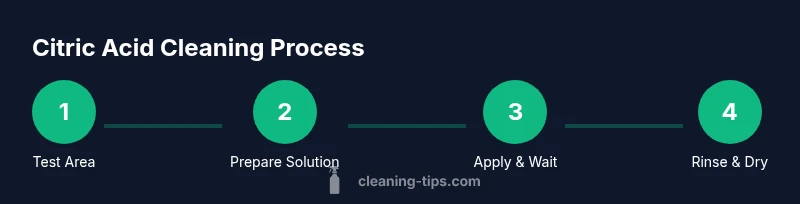
You can clean with citric acid by preparing a gentle cleaning solution, applying it to mineral deposits and soap scum, letting it work briefly, then rinsing and drying. This guide covers surfaces, safety, and step-by-step procedures to keep your home eco-friendly and effective. Start with a small amount of citric acid and adjust as needed.
What citric acid is and why it cleans
Citric acid is a naturally occurring organic acid found in citrus fruits. In cleaning, it acts as a chelating agent, softening hard water minerals and breaking down mineral deposits, soap scum, and certain rust stains. When dissolved in water, citric acid can penetrate mineral buildup on kettles, showerheads, and tile grout, making scrubbing easier and reducing the need for harsher chemicals. It is considered eco-friendly and biodegradable, which aligns with many homeowners’ goals for a healthier home and planet. However, citric acid can interact with some materials, so you should test a small area first and avoid prolonged exposure on delicate surfaces. Cleaning Tips’s team notes that citric acid is most effective on mineral buildup and soap scum rather than truly stubborn stains, and that it works best when surfaces are warmed slightly and rinsed well after treatment.
Quick note on safety and compatibility
- Keep citric acid away from strong oxidizers like bleach, ammonia, or abrasive cleaners; mixing can release harmful gases or create unexpected reactions.
- Do not use on aluminum or certain natural stones (like marble) unless you have confirmed compatibility, as acids can etch metals and some stone surfaces. Always ventilate the area and wear gloves if you are cleaning for extended periods.
- Store citric acid in a dry, sealed container out of reach of children and pets. If you accidentally ingest or inhale a large amount, follow standard safety guidelines and consult a professional if symptoms occur.
How citric acid cleans different materials
Citric acid’s effectiveness comes from its ability to dissolve mineral deposits and remove soap scum without harsh chemicals. It’s especially helpful on glass, ceramic tiles, stainless steel sinks, and bathroom fixtures where mineral buildup is common. On appliances, it can descale kettles, coffee makers, and dishwashers, restoring efficiency and appearance. For fabrics or wood finishes, citric acid is typically not used directly; instead, use gentle cleaning methods recommended for those materials.
Preparing the cleaning solution: general guidance
A light citric acid solution is usually sufficient for routine cleaning. Dissolve a small amount of citric acid powder in warm water until fully dissolved. If you are dealing with heavier mineral deposits, you can increase the concentration slightly, testing a small area first. Avoid creating a paste on non-porous surfaces unless testing shows compatibility. When in doubt, start with a lighter solution and increase gradually.
Surfaces and appliances best suited for citric acid cleaning
Kitchens: stainless steel sinks, faucets, glass surfaces, and tile grout benefit from citric acid to remove lime scale and soap scum. Appliances: kettles, coffee makers, and dishwashers respond well to safe descaling with citric acid. Bathrooms: shower doors, glass tiles, and chrome fixtures often show improved clarity after a citric acid treatment. Surfaces to avoid: natural stone porous surfaces (like some marble and limestone), aluminum, and certain woods that may react to acid. Routine maintenance with citric acid can reduce the need for aggressive cleaners and help keep surfaces gleaming between deep clean sessions.
Step-by-step usage scenarios you can try at home
For descaling a kettle, fill with water and add a small amount of citric acid solution, bring to a boil, and let it sit for several minutes before rinsing thoroughly. For shower doors, spray the diluted solution onto the glass, let sit briefly, scrub with a non-abrasive sponge, and rinse. For sinks and countertops, apply as a spray or paste, let stand briefly, then wipe and rinse. Always finish with a dry microfiber cloth to prevent water spots and streaks.
Tools & Materials
- Citric acid powder or granules(Pure citric acid; avoid scented or flavored products)
- Warm water(Distilled water is best for appliances; otherwise tap water is fine)
- Measuring spoons or scale(To measure small amounts accurately)
- Spray bottle(For general cleaning and even coverage)
- Non-abrasive sponge(Avoid scratches on delicate surfaces)
- Soft microfiber cloth(For wiping and buffing to prevent streaks)
- Old toothbrush or small brush(To reach grout lines and tight corners)
- Latex or nitrile gloves(Protection for extended cleaning sessions)
- Seal-able storage container(Store any leftover solution or paste in a labeled jar)
Steps
Estimated time: Total time: 30-60 minutes
- 1
Gather supplies and prep the area
Collect all essential items and clear the workspace. Put on gloves if you have sensitive skin, and ensure good ventilation by opening a window or turning on a fan.
Tip: Having everything ready reduces the chance of leaving residues or dripping acids on unintended surfaces. - 2
Test a small area to check compatibility
Choose an inconspicuous spot on the surface to test the citric acid solution. Wait 5 minutes to observe any adverse reaction such as discoloration or etching.
Tip: If you see color change or damage, stop and switch to a gentler cleaning method. - 3
Prepare the cleaning solution
Dissolve a small amount of citric acid in warm water until fully dissolved. For tougher deposits, you may slightly increase concentration after testing the area.
Tip: Stir well to avoid clumps; fully dissolved solution cleans more evenly. - 4
Apply and let sit on the target area
Spray or apply the solution to the surface, ensuring complete coverage. Allow it to sit for several minutes to penetrate mineral buildup or soap scum.
Tip: Do not let the solution dry on delicate surfaces; re-wet if needed. - 5
Scrub gently and rinse
Use a non-abrasive sponge or soft brush to scrub, then rinse thoroughly with clean water. Wipe with a microfiber cloth to remove any remaining residues.
Tip: Rinse thoroughly to prevent streaking and residue buildup. - 6
Inspect and store leftovers
Check the cleaned area for any missed spots. If you have leftover paste or solution, store it in a labeled, sealed container away from heat and moisture.
Tip: Label storage containers clearly to avoid misuse.
Questions & Answers
Is citric acid safer than bleach for cleaning?
Citric acid is a more eco-friendly, milder cleaner for many mineral deposits and soap scum. It is not a universal substitute for all cleaning needs, but it reduces reliance on harsher chemicals when used correctly.
Citric acid is generally safer and more eco-friendly for mineral buildup, but it isn’t a one-to-one replacement for all cleaners.
Can I use citric acid on all surfaces?
Not all surfaces are suitable. Avoid aluminum and most natural stones like marble without testing first. Some wooden or porous surfaces may absorb acid and become damaged.
Not on all surfaces; test first and avoid aluminum and some natural stones.
How long should citric acid sit on deposits?
Allow the solution to work for several minutes on mineral deposits, then scrub and rinse. Do not let it dry completely on delicate surfaces.
Let it sit for a few minutes, then scrub and rinse; avoid letting it dry on delicate surfaces.
Can I reuse citric acid solution?
Fresh solutions are generally more effective. Reusing old mixtures can reduce concentration and effectiveness for new cleaning tasks.
Fresh solution is usually more effective; reuse is not recommended for best results.
What about odors and safety when cleaning with citric acid?
Citric acid has a mild scent and is safer than many harsher cleaners when used properly. Ensure good ventilation and avoid mixing with other cleaners.
It has a mild scent; keep the area ventilated and avoid mixing with other chemicals.
Can citric acid be used for grout cleaning?
Yes, a citric acid solution can help lift mineral buildup from grout lines, but use a soft brush and rinse well to prevent residue and avoid damage to surrounding tiles.
Citric acid helps grout buildup; use a soft brush and rinse well.
Watch Video
The Essentials
- Test a small area before full use.
- Dilute citric acid and avoid incompatible surfaces.
- Rinse thoroughly and dry to prevent streaks.
- Store remaining cleaner safely and label it clearly.